
Last updated September 20, 2026
Free on-site gate assessment - hinges, posts, and your LiftMaster or Nice gate operator checked before anything is quoted
The assessment is free and the quote is the invoice.
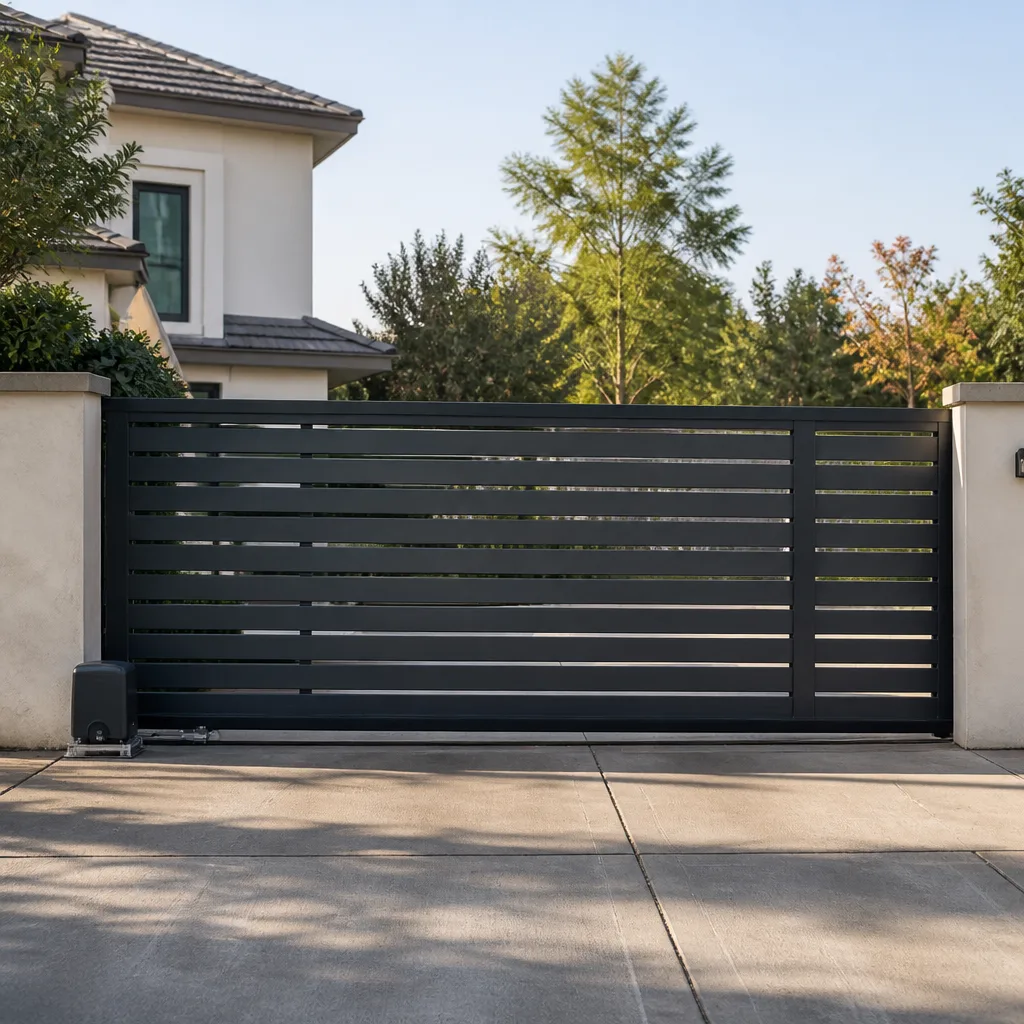
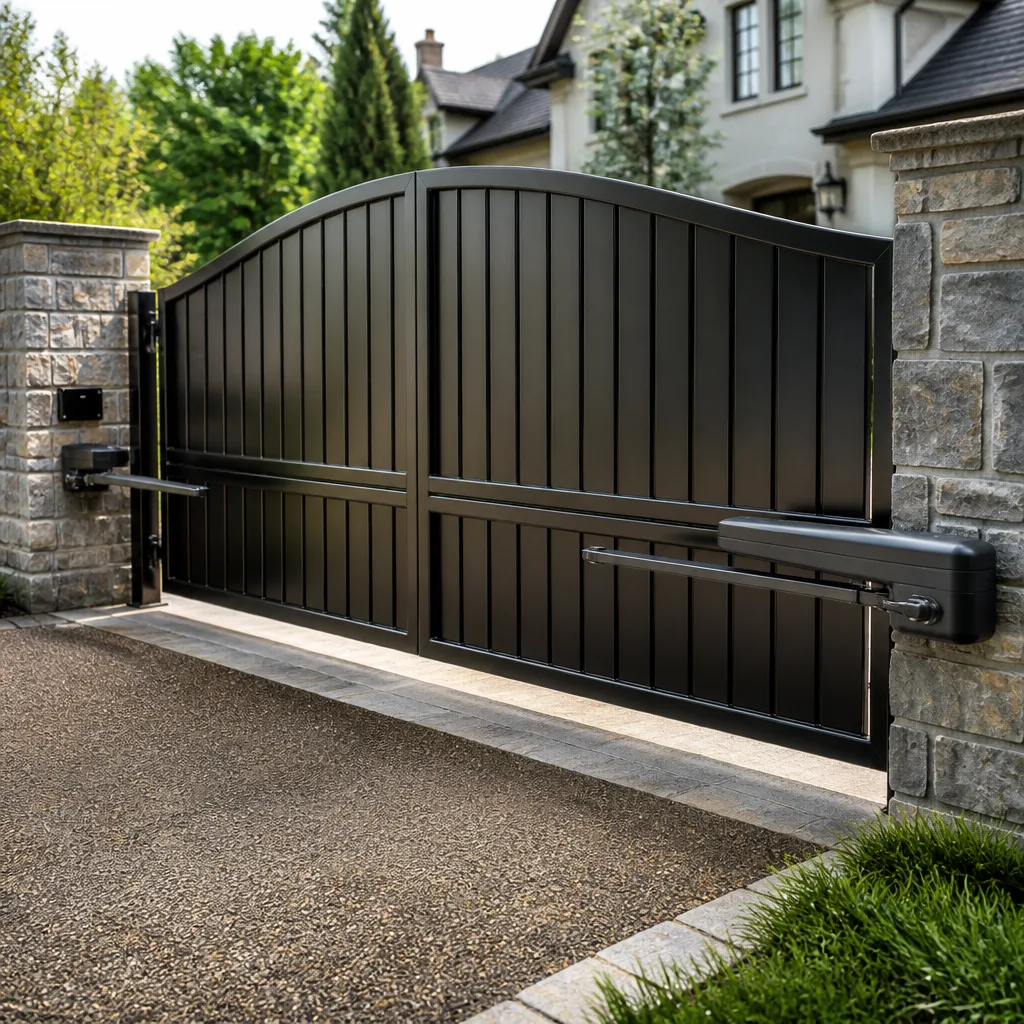
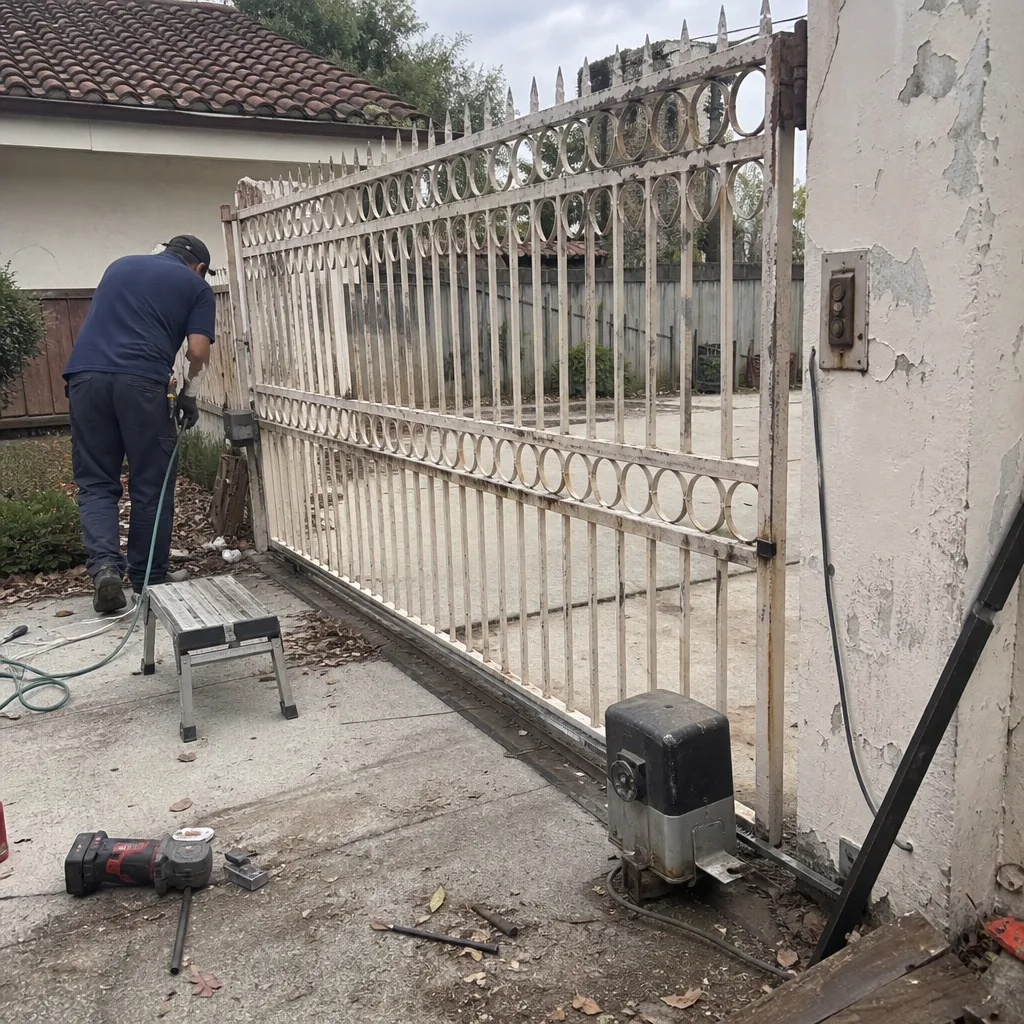 Before
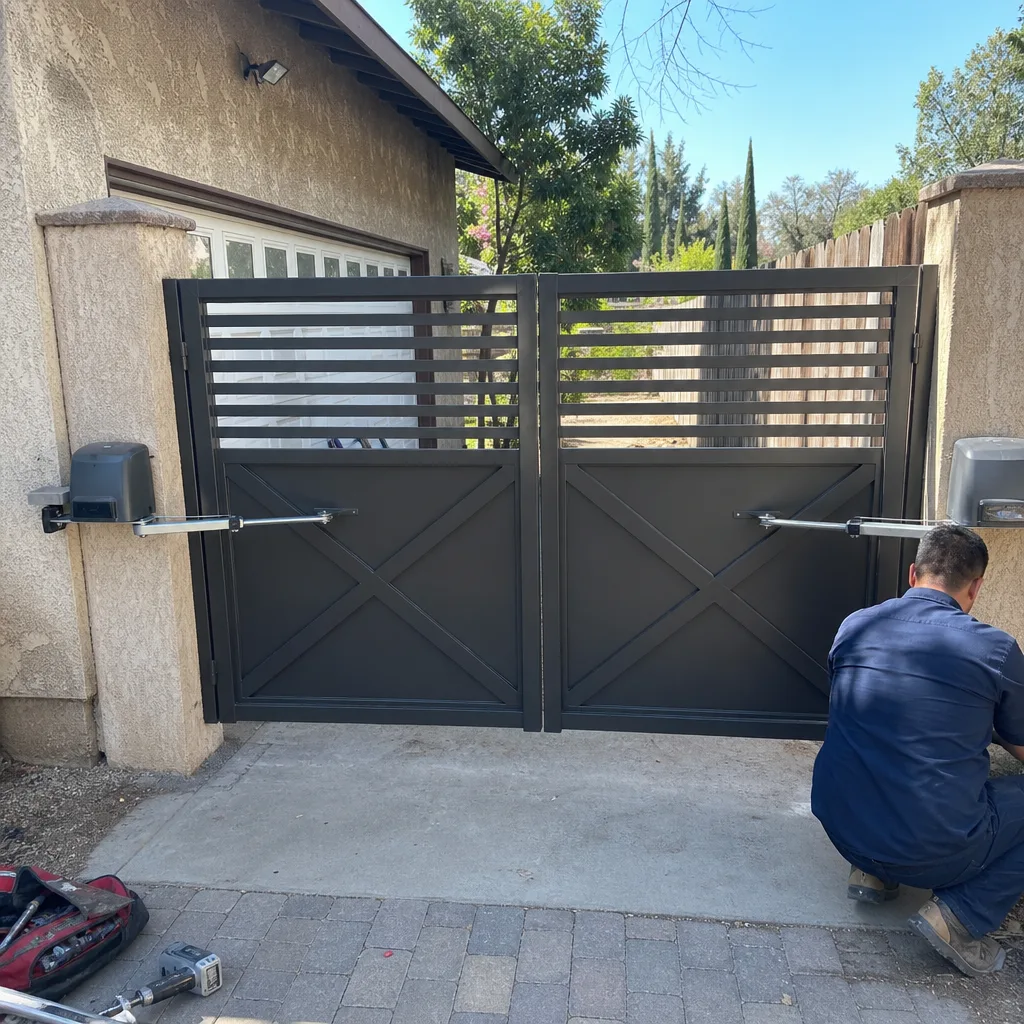 After
After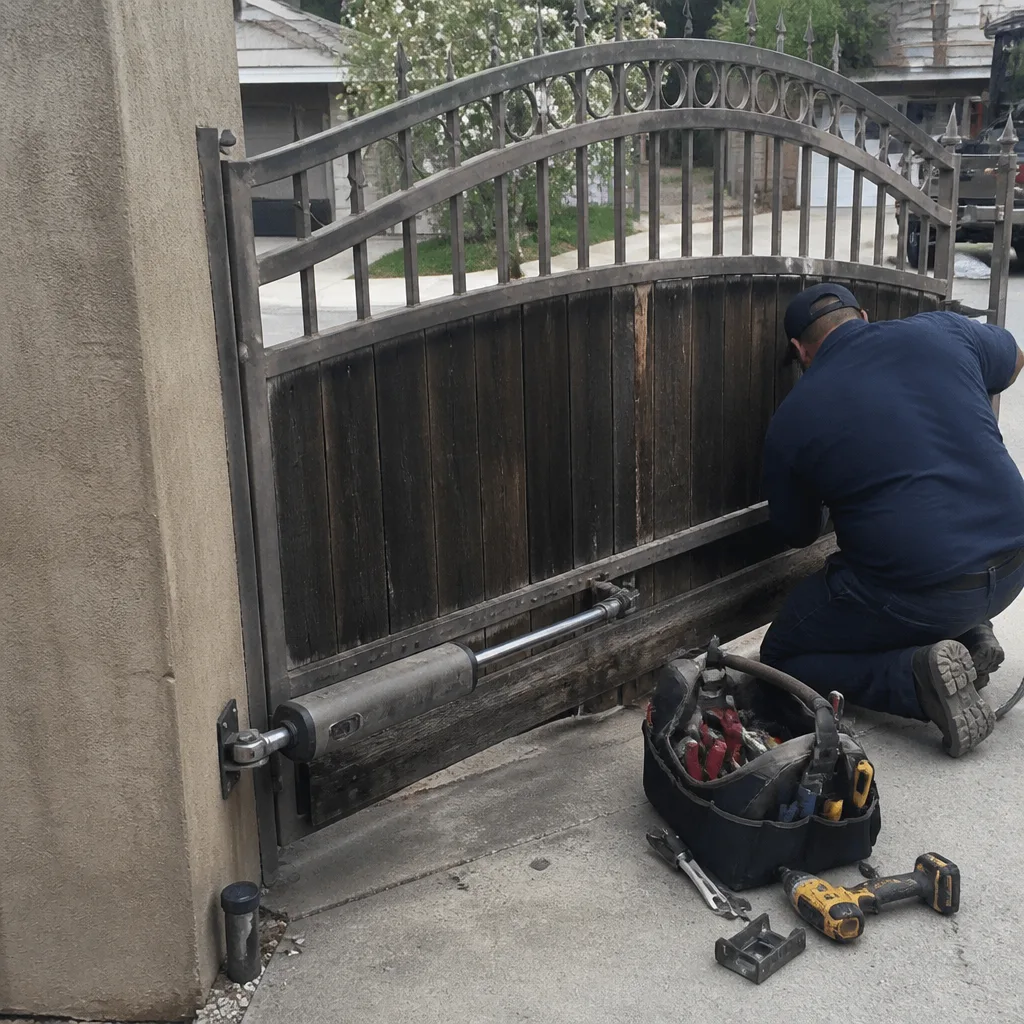 Before
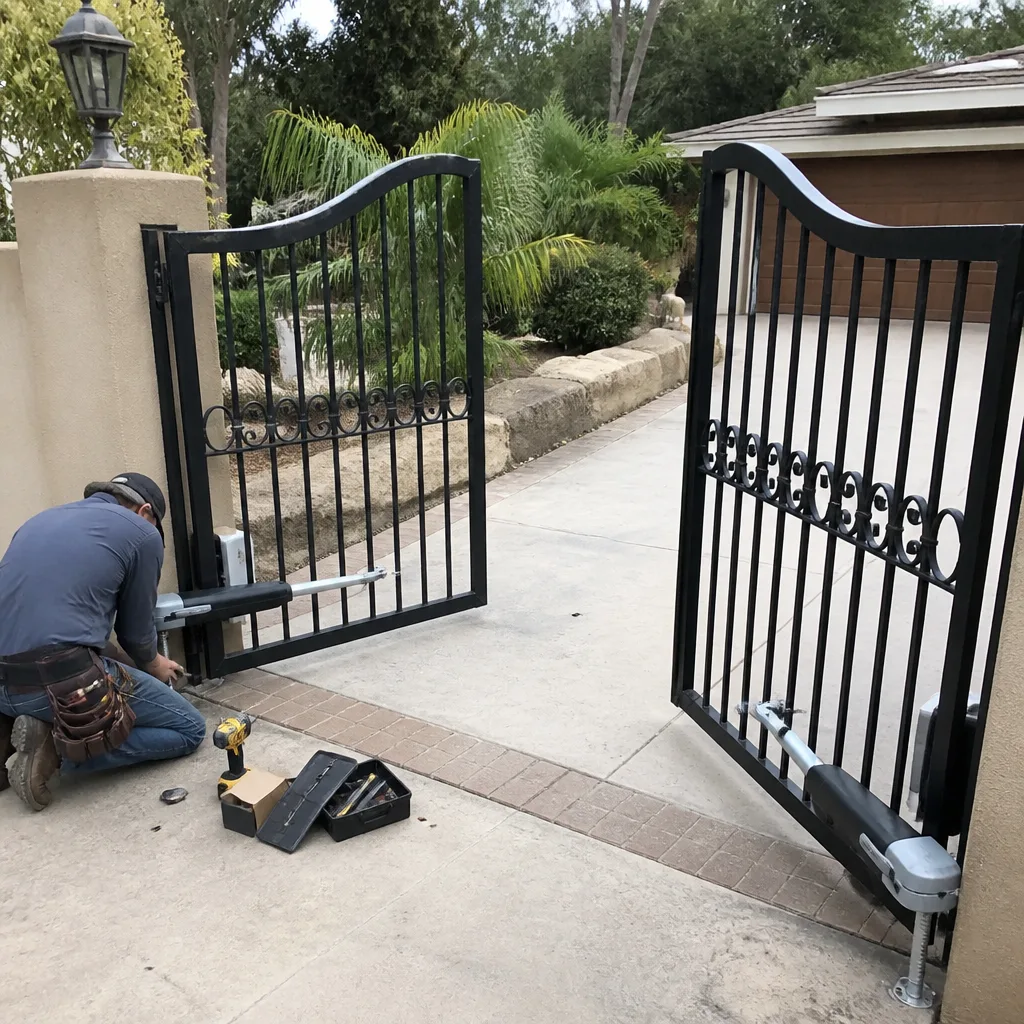 After
After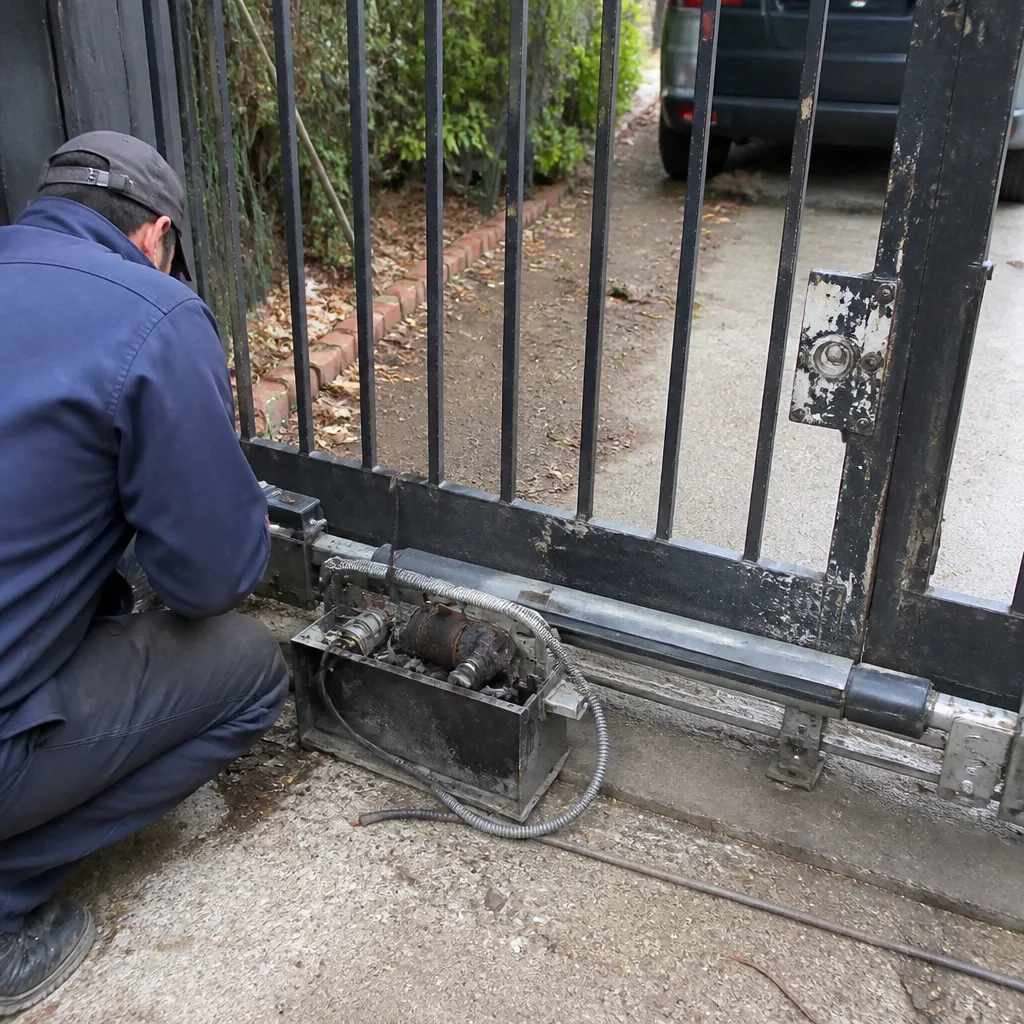 Before
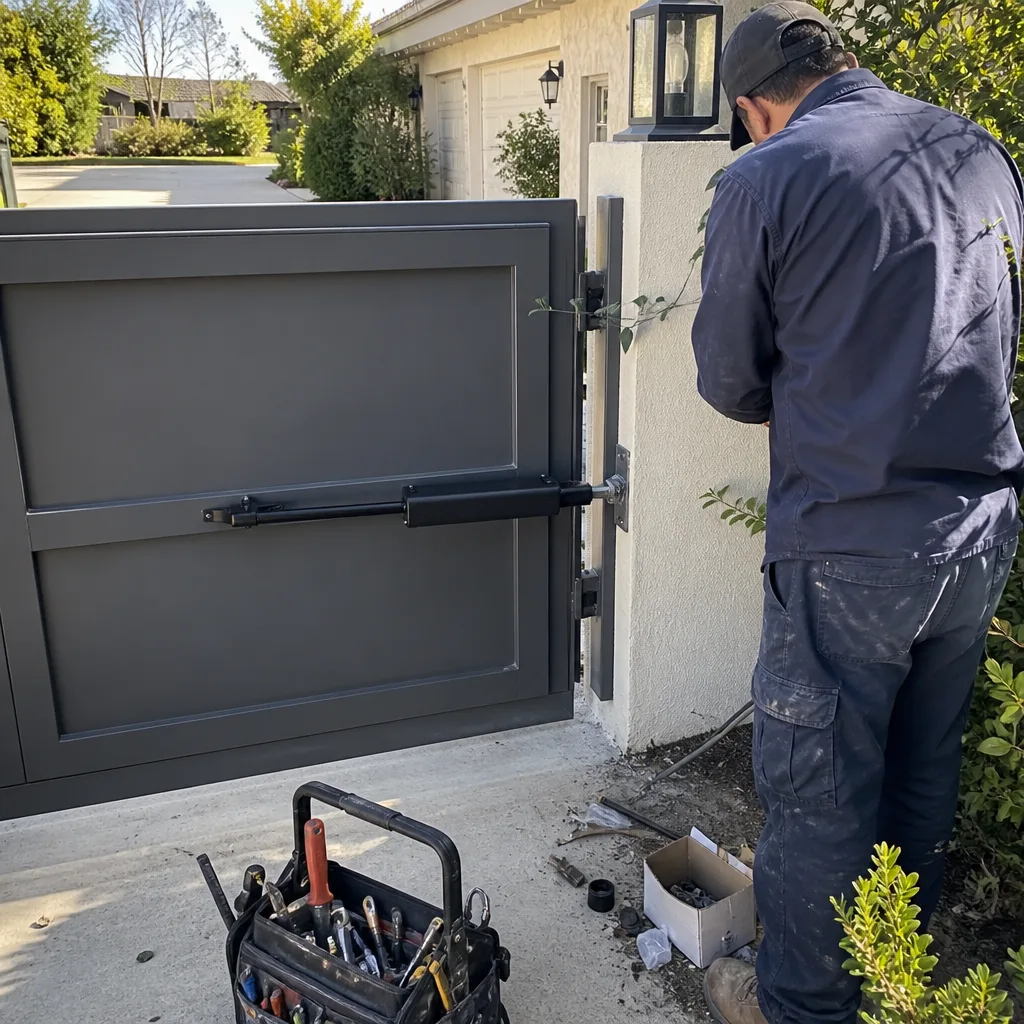 After
AfterSeasonal Gate Repair Care for Chatsworth: Year-Round Homeowner’s Guide
The gate failures that show up in Chatsworth every January aren’t caused by the rain. They’re caused by the dust that packed into every unsealed bearing and corroded contact during the preceding dry season, and the rain just completes the circuit. We’ve pulled apart enough gates in this valley to know the pattern: moisture doesn’t break gates, it exposes what the dry months already compromised. This guide maps the four real stress periods Chatsworth puts your gate through each year, and gives you one specific action per period that prevents the failure mode most homeowners don’t see coming until the gate won’t move. For deeper context on each season, see The Complete Guide to Gate Repair in Chatsworth.
Quick Answer
Chatsworth gate care isn’t a single annual checklist. It’s four distinct maintenance windows: Santa Ana wind season (September through November) for roller load and limit-switch buffer checks, winter rain (December through February) for drainage and post-footing inspection, the spring thermal window (March through May) for expansion gap adjustment, and dry-heat summer (June through August) for photo-eye lens and receiver testing. One targeted check per season, documented with a dated photograph, prevents most mid-year gate failures in the 91311 area.
Table of Contents
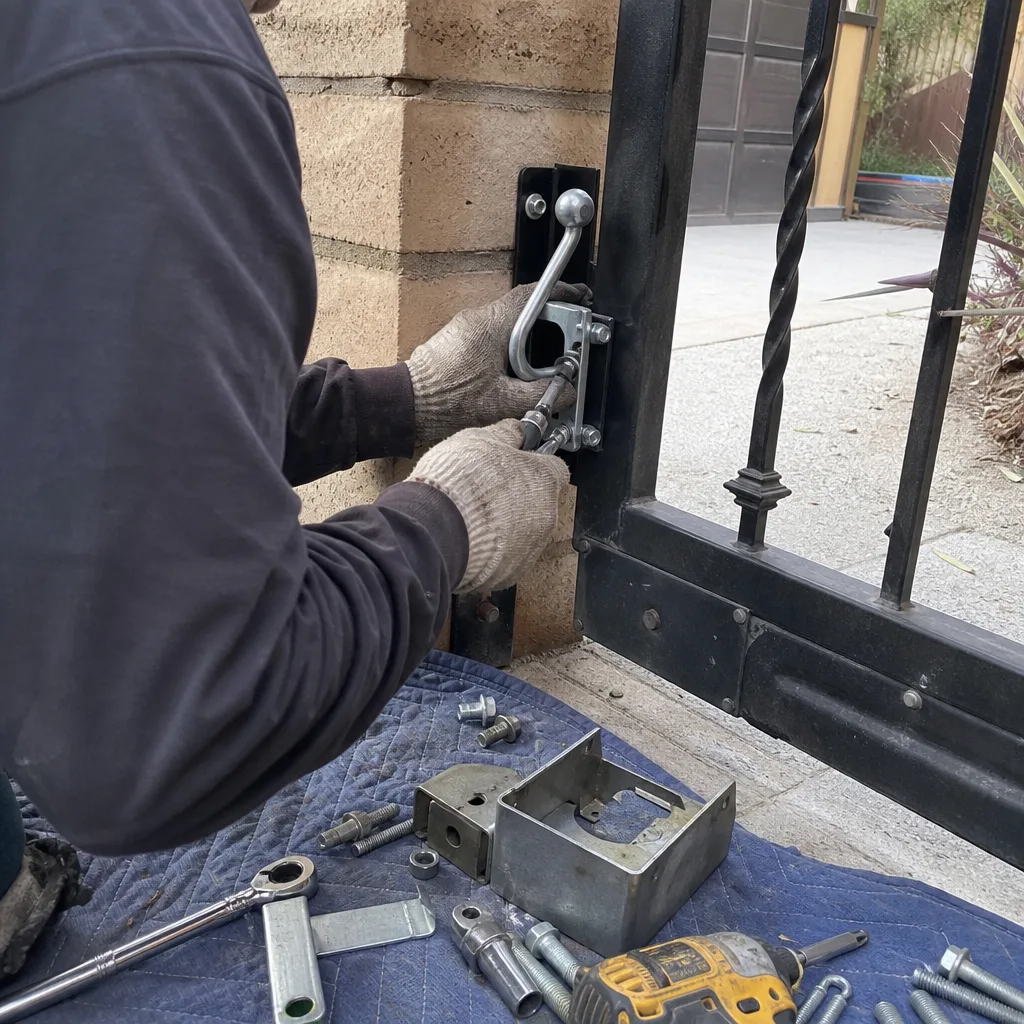
- Santa Ana Season (September-November): Wind Load and Roller Stress
- Winter Rain Period (December-February): Drainage and Post-Footing Saturation
- Spring Thermal Window (March-May): Expansion Tolerance and Gap Measurement
- Dry-Heat Summer (June-August): Photo-Eye Degradation and UV Exposure
- The Year-Round Documentation Anchor: One Photo Per Season
- Chatsworth-Specific Gate Conditions: Soil, Grade, and Local Water Flow
- When to Call a Professional
- Frequently Asked Questions
- The Bottom Line
BeforeAfterSanta Ana Season (September-November): Wind Load and Roller Stress
Chatsworth sits in one of the strongest Santa Ana wind corridors in the San Fernando Valley. Sustained gusts above 40 mph through Brown’s Canyon and the Santa Susana Pass put a lateral load on your gate that no other season replicates. We’ve measured gates deflecting two to three inches off their track line during peak gusts, and that deflection isn’t harmless: it transfers force directly into the cantilever rollers, the track brackets, and the limit-switch mechanism.
What Actually Fails During Wind Season
The failure mode isn’t dramatic. It’s cumulative. A cantilever gate rides on two sets of rollers that carry the gate’s full weight while it slides. Wind pushes the gate sideways, which loads the rollers unevenly. Over eight to ten weeks of repeated Santa Ana events, the roller bearings develop flat spots. Once a bearing flattens, the gate doesn’t glide anymore: it shudders, it binds mid-travel, and the motor pulls higher amperage to compensate. That higher amperage is what eventually cooks the control board.
The One Check That Matters in Fall
- Load-test the rollers with the gate mid-travel. With the gate stopped halfway, push against the leading edge with firm, steady pressure of about 20 to 30 pounds. You’re looking for play: any lateral movement greater than a quarter inch means the roller bearings have worn beyond spec and need replacement before the wind season peaks.
- Check the limit-switch buffer. The limit switch tells the motor where to stop. Wind gusts can push the gate past its normal stop point, which gradually shifts the limit-switch setting. If your gate now stops an inch short or bangs into the end stop, the switch has drifted. A technician can reset it in under ten minutes.
- Photograph the roller condition and the limit-switch position. Date the photo. File it. This becomes your baseline for next fall.
In Chatsworth specifically, gates on the north side of the 118 and up into the Box Canyon area take more wind than most. If your property sits on a slope or at the mouth of a canyon, we recommend doing this check in early September, before the first strong event, rather than waiting until November. For a deeper look at how these systems age, see our page on Gate Motor & Opener service in Chatsworth.
Winter Rain Period (December-February): Drainage and Post-Footing Saturation
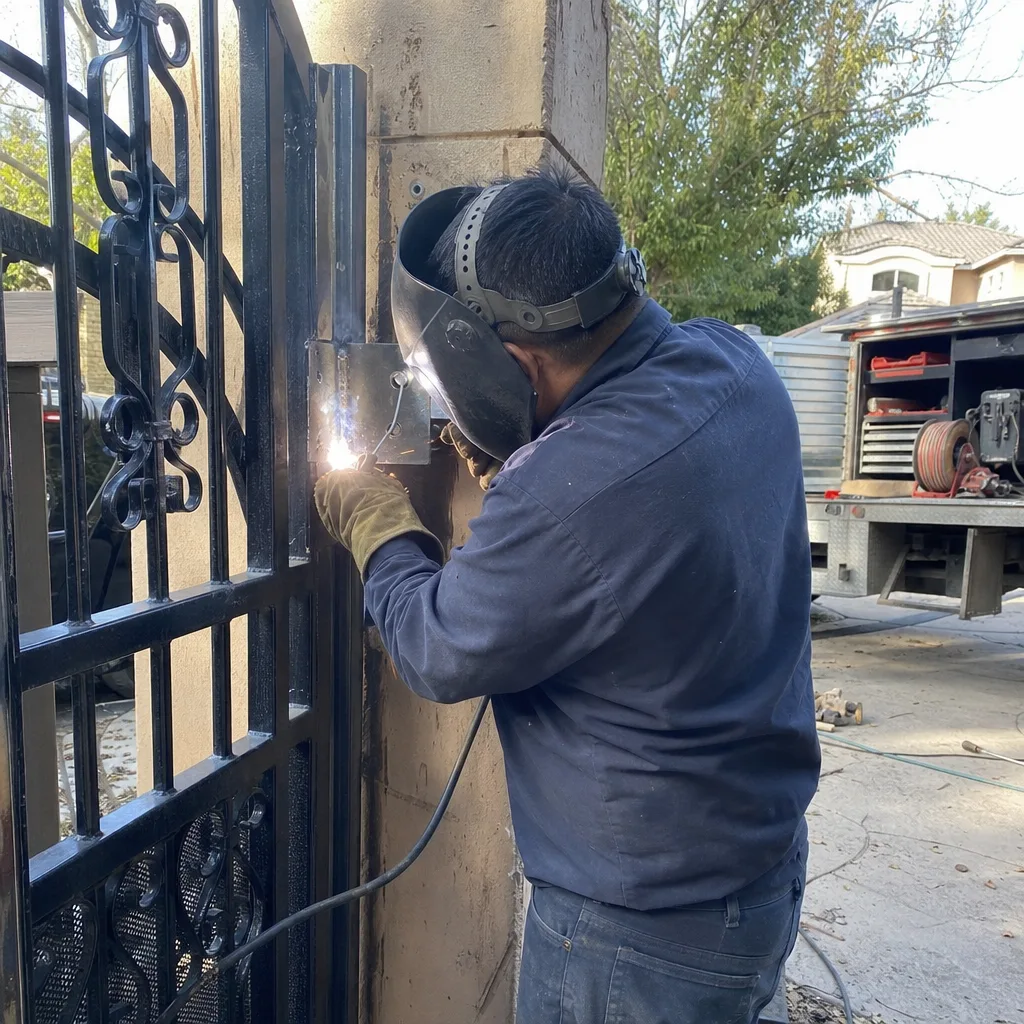
Chatsworth gets between 15 and 20 inches of rain in a wet year, most of it arriving in a handful of intense storm events between December and February. The soil here is heavy clay. When that clay saturates, it expands. When it dries, it contracts. That movement is the closest thing Chatsworth gets to a frost heave, and it acts directly on your gate posts and footings.
What Saturation Does to Gate Posts
A gate post set in concrete is only as stable as the soil around the concrete. When clay soil swells with water, it pushes laterally against the footing. When it dries, it pulls away and leaves a void. After two or three wet-dry cycles in a single winter, a post that was dead plumb in October can be leaning a quarter inch by February. A quarter inch at the base translates to an inch or more of misalignment at the gate latch, and a misaligned latch puts constant strain on the operator.
The Drainage Check That Prevents All of It
- Inspect the grade around every post footing after the first rain. Water should sheet away from the post in all directions. If you see standing water or a mud ring that persists for more than a few hours after rain stops, the footing is sitting in a collection zone rather than draining.
- Clear the weep holes in the gate frame. Tubular steel gates in Chatsworth are almost always built with small drainage holes on the underside. When those holes pack with dust during the dry season, water collects inside the frame. A quart of trapped water rusts a gate from the inside out faster than any external exposure.
- Check the leaf line along the bottom rail. If organic debris is trapping moisture against the steel, clear it. Wet leaves held against metal for weeks at a time is a rust starter on any gate, but especially on the thinner-wall tube gates common in Chatsworth tract homes built in the 1980s and 1990s.
We’ve opened gates in Chatsworth in February that had an inch of standing water inside the horizontal rail. The owner had no idea. The exterior paint was fine. The interior was starting to rust through at the seam. That’s what the drainage check catches before it’s a structural problem. For more on what a full repair scope looks like, see Gate Repair in Chatsworth.
Spring Thermal Window (March-May): Expansion Tolerance and Gap Measurement
Chatsworth’s spring is short, and that’s exactly why it matters. Between the last cold nights of February and the first 90-degree days of May, the temperature swing can be 35 to 40 degrees in a single week. Steel expands with heat. A 20-foot gate made of mild steel will grow roughly three-sixteenths of an inch in length between a 45-degree night and a 95-degree afternoon. That doesn’t sound like much, but it’s enough to turn a gate that clears its latch post by half an inch in March into a gate that binds in May.
Why Spring Is the Adjustment Window
The spring thermal window is the only time of year when you can measure the gate’s expansion behavior before the heat locks the gap. Once summer arrives, the gate has expanded and stayed expanded. If the gap is already tight, the gate will bind at the latch or the end stop, and the motor will fault out repeatedly. Adjusting in March, when the metal is still cycling between cold overnight dimensions and warm afternoon dimensions, lets you set the tolerance correctly for summer rather than chasing it.
What to Measure in March and April
- Latch-side gap at 7 a.m., then again at 3 p.m. The difference between those two measurements tells you how much the gate is cycling. If the gap closes to less than one-eighth of an inch in the afternoon, it will bind in June. Adjust the hinge-side post shims or the latch strike plate now.
- End-stop clearance on slide gates. The gate should stop with at least half an inch of clearance from the physical end stop. If it’s already touching at 3 p.m., it’s over-traveling when the frame expands.
- Weld seam inspection on the top rail. Expansion stress concentrates at welds. Hairline cracks that form in spring start as visible lines in the powder coat. A crack caught in April is a two-inch weld repair. The same crack in August is a full rail replacement.
We recommend doing this measurement on a day when the temperature swing is at least 20 degrees. You need both the cold and the hot reading to establish the range. Write both numbers down. Photograph them. That record is what tells you next spring whether the gate’s expansion behavior is changing, which is an early sign of hinge wear or post movement.
Dry-Heat Summer (June-August): Photo-Eye Degradation and UV Exposure
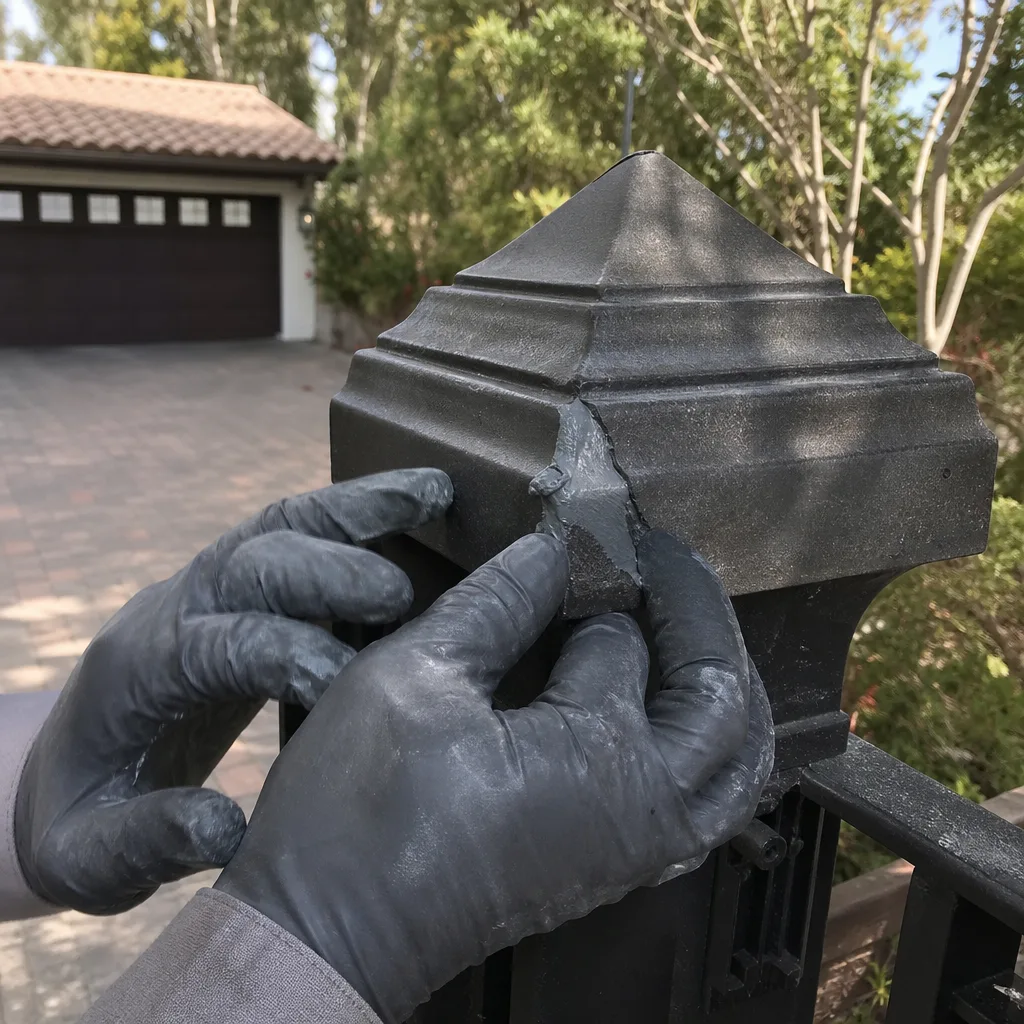
Chatsworth summers are long, dry, and punishing on anything plastic. The photo-eye, which is the infrared beam that stops the gate if something crosses the path, has a polycarbonate lens. Six or seven months of direct high-UV exposure in the 91311 area clouds that lens. The effect is gradual, so most homeowners don’t notice it until the gate starts reversing for no reason or refusing to close at all.
The Threshold Reading That Predicts Failure
A healthy photo-eye receiver in a Chatsworth summer should read its transmitter signal at full strength or within 5 percent of it on a clean day. When UV clouding degrades the lens, that reading drops. We’ve seen receivers reading at 40 percent of signal strength in August, on gates where the owner assumed the sensor was fine because it still worked half the time. The problem is that a weakened signal needs perfect alignment to function. Dust, a small shift in the gate frame, or even a tall weed between the transmitter and receiver will push a marginal sensor into failure.
What to Test in June, Before the Worst Heat
- Visually inspect both lenses. Hold them to the light. If the lens looks frosted or yellowed rather than clear, it’s degraded. Replacement is a five-minute fix. Waiting until the gate intermittently refuses to close means you’ll also be dealing with whatever got hit in the meantime.
- Test the beam interruption. With the gate open, block the photo-eye beam with your hand. The gate should reverse or stop within one second. If the response is slow or intermittent, the receiver’s sensitivity is already compromised.
- Check the sensor housing for UV cracking. The housing is also plastic, and the sun in Chatsworth is merciless. Hairline cracks let dust into the electronics, and dust plus summer heat is how sensor contacts corrode.
Summer is also when the motor’s thermal overload protection gets a workout. Most residential gate motors, including common models from LiftMaster, FAAC, and Elite, have a thermal cutout that trips when the motor gets too hot. In a July heatwave, an unshaded motor in full afternoon sun in Chatsworth can trip that cutout, which presents as a gate that stops working for 20 minutes and then works again. That’s not a mystery. That’s heat. If it happens repeatedly, the motor needs a ventilation check or a shade structure, not a replacement. See Gate Installation in Chatsworth for a full picture of what proper siting looks like.
The Year-Round Documentation Anchor: One Photo Per Season
Here’s the habit that separates homeowners who spend $200 a year on maintenance from those who spend $2,000 on a failure. Take one photograph per season. Same angle, same gate, same lighting conditions if you can manage it. Date the file. Store it somewhere you’ll actually find it.
What the Photo Should Show
- Fall: The cantilever roller assembly, the track, and the limit-switch housing.
- Winter: The post footings, the weeping holes, and the bottom rail with the gate fully closed.
- Spring: The latch-side gap, the hinge welds, and the end-stop clearance.
- Summer: The photo-eye lenses, the sensor housing, and the motor ventilation area.
The point of the photo record isn’t just proof that you checked. It’s a multi-year baseline. When a technician comes out in 2026 and sees a photo of the same roller assembly in 2024, that tells them what’s changed. Rust that was present two years ago and hasn’t moved is a different problem from rust that appeared last month. A gap that was three-eighths of an inch in March 2024 and is now a quarter inch in March 2026 is mechanical movement. Without the baseline, the technician has to guess. With it, they know.
This is the same principle behind the photo documentation we leave with every customer. Every visit gets a record: what was found, what was adjusted, what was installed. Under Clause 4 of our Haven Standard, every visit includes a documented photo record at no additional charge. You leave with the same evidence we do.
Chatsworth-Specific Gate Conditions: Soil, Grade, and Local Water Flow
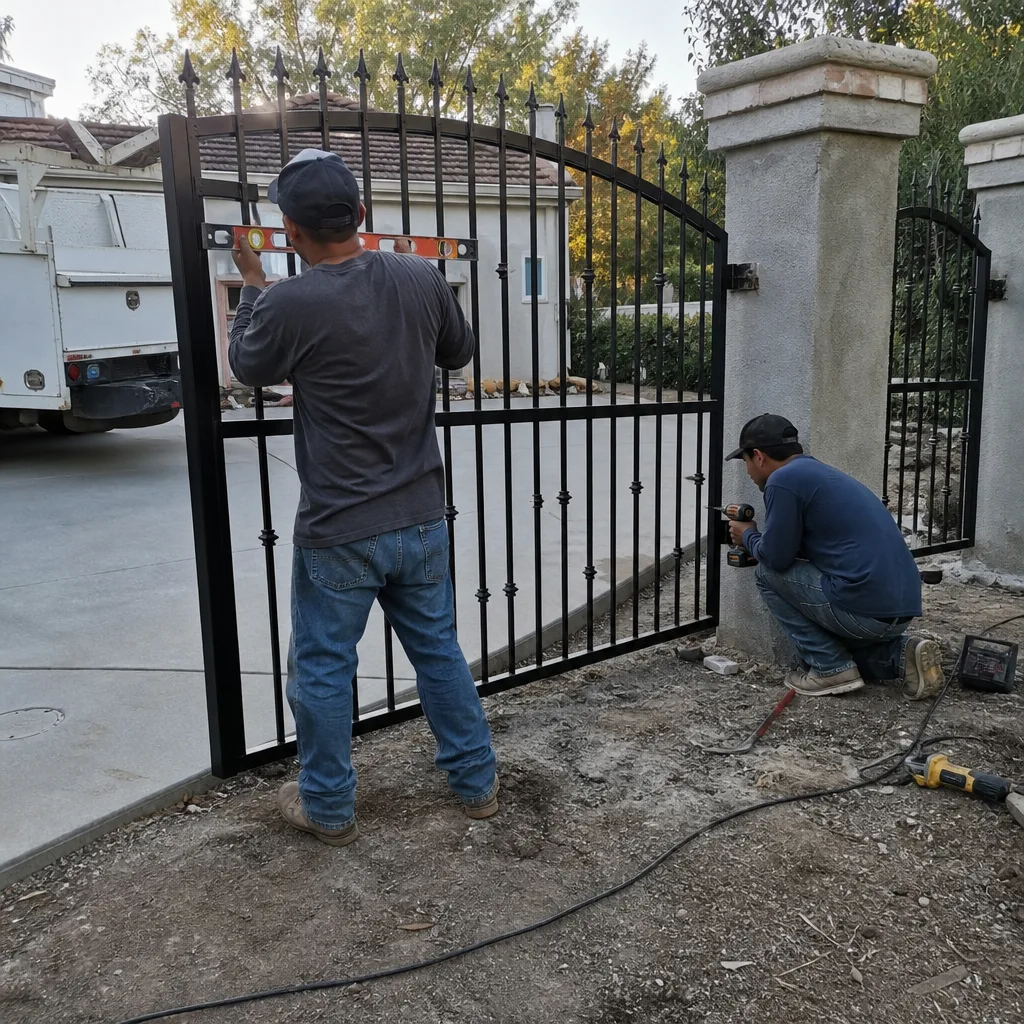
Chatsworth isn’t one soil type. The eastern half of the 91311 area, toward Winnetka and the Northridge side, sits on sandy loam that drains quickly. The western side, up against the Santa Susana foothills and around the Chatsworth Reservoir area, is heavier clay. The gate problems in these two zones are not the same, and a one-size-fits-all maintenance schedule misses that.
On sandy loam, posts shift less with moisture but settle more over time. The fix is periodic compaction checks. On clay, posts don’t settle much, but they heave and tilt with the wet-dry cycle. The fix is drainage management and occasional re-shimming. If you don’t know which soil your gate posts are sitting in, dig a small test hole near one post next time you’re doing any yard work. Twenty minutes of observation will tell you which failure modes to watch for.
Grade and Slope
Chatsworth has more sloped lots than flat ones, especially north of Devonshire and east of Topanga Canyon. A gate on a slope catches more wind load, sees more water flow across the base, and puts more strain on the operator’s brake system. If your gate is on a grade steeper than about five percent, the seasonal checks above matter more, and the consequences of skipping them arrive faster.
We also see gates installed decades ago on posts that were never deep enough for the slope. A post on a slope needs to be set below the natural drainage line, not just to a fixed depth. When it isn’t, the downhill side erodes first, and the post leans into the void. That’s a repair, not a maintenance item, but the early warning signs showing up are the same ones described in the winter drainage section.
When to Call a Professional
Some of what’s covered above is straightforward: clearing weeping holes, photographing components, checking that water drains away from posts. But any of these findings should prompt a call rather than a weekend project: a roller with visible bearing play, a post that has moved out of plumb, a limit switch that won’t hold its setting, a photo-eye reading below 60 percent, or a crack in any weld seam. Gate motors on brands like LiftMaster, FAAC, Elite, and Mighty Mule have specific torque and travel settings that require a meter and a trained hand. And anything involving a spring under tension should never be adjusted without the right tooling. Vance Gate Repair Chatsworth offers free estimates in Chatsworth. Call (661) 495-2023 and you’ll get a live person, a written price, and a photo record on every visit.
Frequently Asked Questions
Four times a year, once per season, with each check targeted to the specific failure mode described above. One inspection per season takes about 20 minutes and catches most issues before they become breakdowns. The total annual time commitment is under two hours.
DIY checks cost only your time, and the inspection list in this guide covers the basics. A professional seasonal service visit for a residential gate in the Chatsworth area typically runs between $125 and $250, depending on how many components need adjustment and whether any small parts like rollers or photo-eye lenses need replacement. We quote the full price in writing before any work starts, so there’s no surprise invoice at the end.
Yes. A live person answers the phone at (661) 495-2023 at any hour, including during a wind event when gates across Chatsworth are taking a beating. We dispatch for emergency gate failures and will give you a written price before any repair begins.
That’s thermal expansion. Steel expands as it heats, and a gate that clears its stops at 7 a.m. can bind at 3 p.m. on a hot Chatsworth afternoon. The fix is a springtime gap adjustment, measured on both sides of the daily temperature swing, so the gate has clearance for its full expansion range before summer locks it in.
The UV exposure in the 91311 area degrades polycarbonate lenses faster than you’d expect. If the lens looks yellowed or frosted, or if the receiver tests below 60 percent of signal strength, replacement is cheap insurance. A new photo-eye costs far less than the damage from a gate that closes on a car because a marginal sensor finally failed.
Keep them in a single folder on your phone or computer, labeled by date and season. Share them with any technician who works on your gate. A photo record gives the technician a baseline that turns a guess into a diagnosis. We include a documented photo record on every visit we make in Chatsworth, and we build on the homeowner’s own records when they’re available.
The Bottom Line
Chatsworth gates don’t fail on a schedule, but they fail on a pattern. Santa Anas load the rollers. Winter rain swells the clay and moves the posts. Spring heat expands the steel and squeezes the gaps. Summer UV cooks the photo-eyes and the plastics. Four targeted checks a year, each mapped to one of those specific failure modes, costs a couple of hours of your time and prevents the vast majority of breakdowns we get called to after the fact. The gate that gets a 20-minute seasonal check is the gate that doesn’t hit the pavement in January or lock you out in July. Call (661) 495-2023 for a free estimate on any Gate Repair, and we’ll hand you a written price before we touch a tool.
Written by Adrian Vance, Owner at Vance Gate Repair Chatsworth, serving Chatsworth since 2014.