
Last updated September 20, 2026
Free on-site gate assessment - hinges, posts, and your LiftMaster or Nice gate operator checked before anything is quoted
The assessment is free and the quote is the invoice.
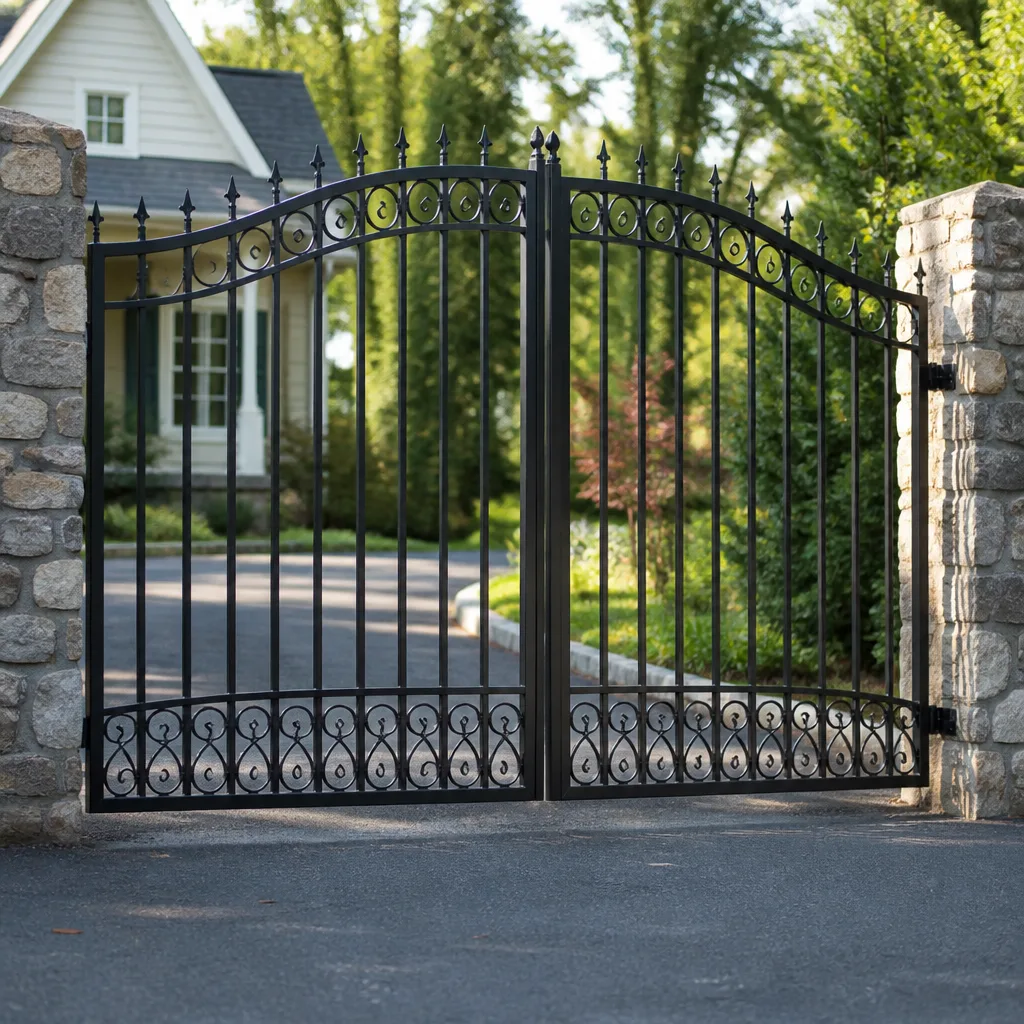
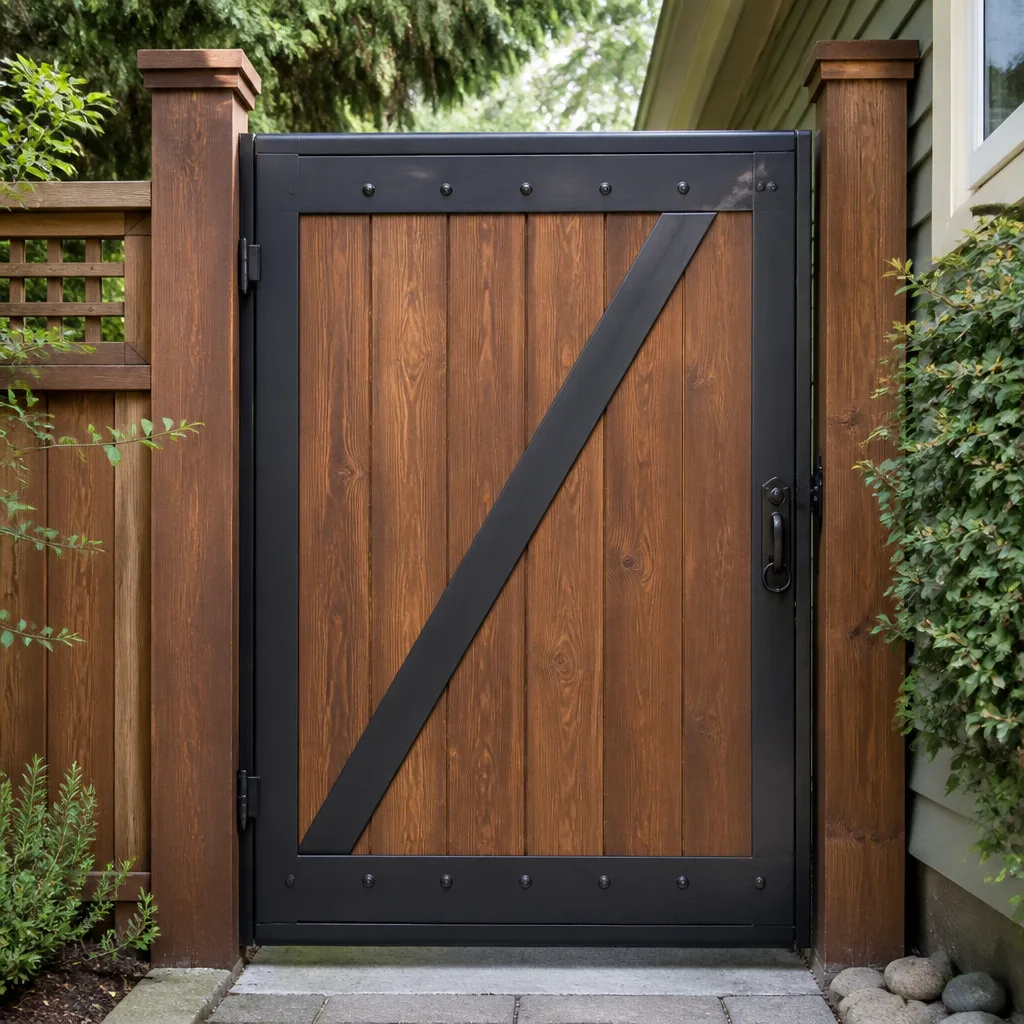
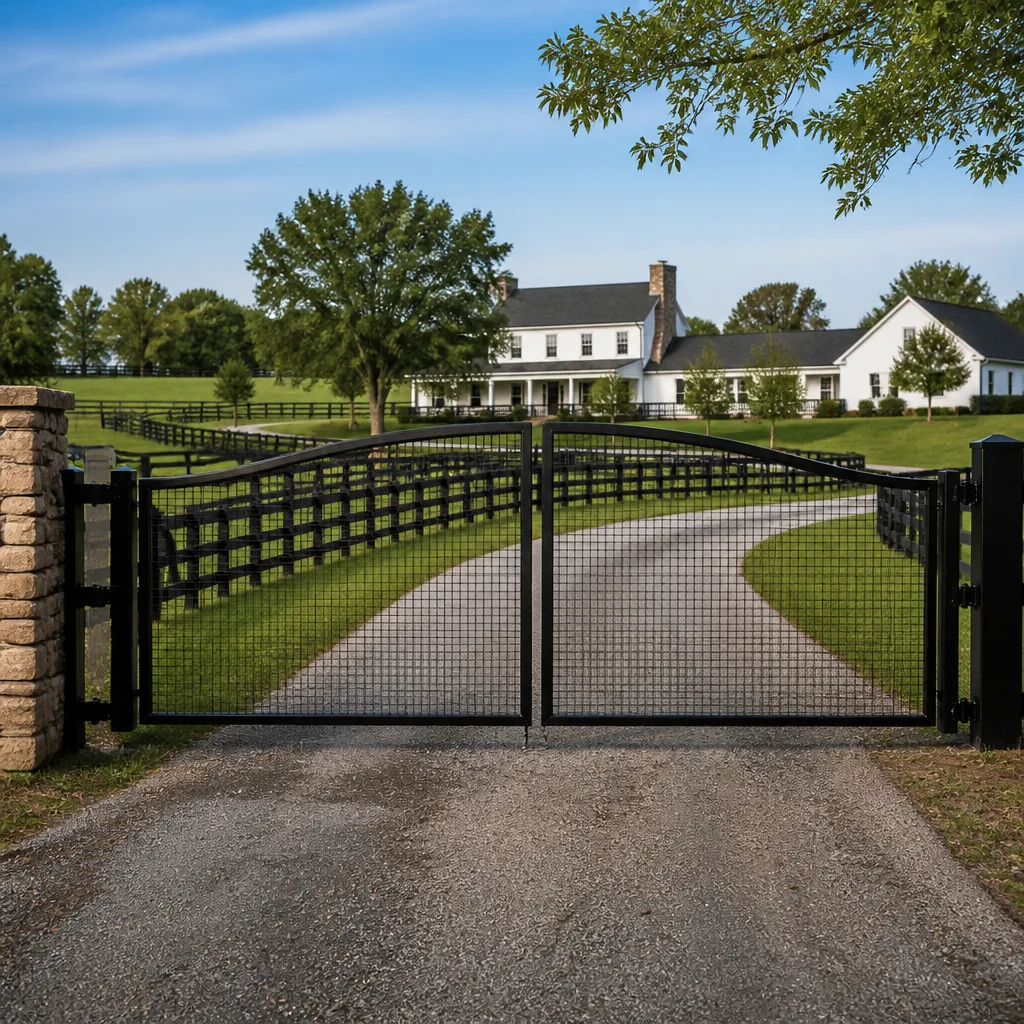
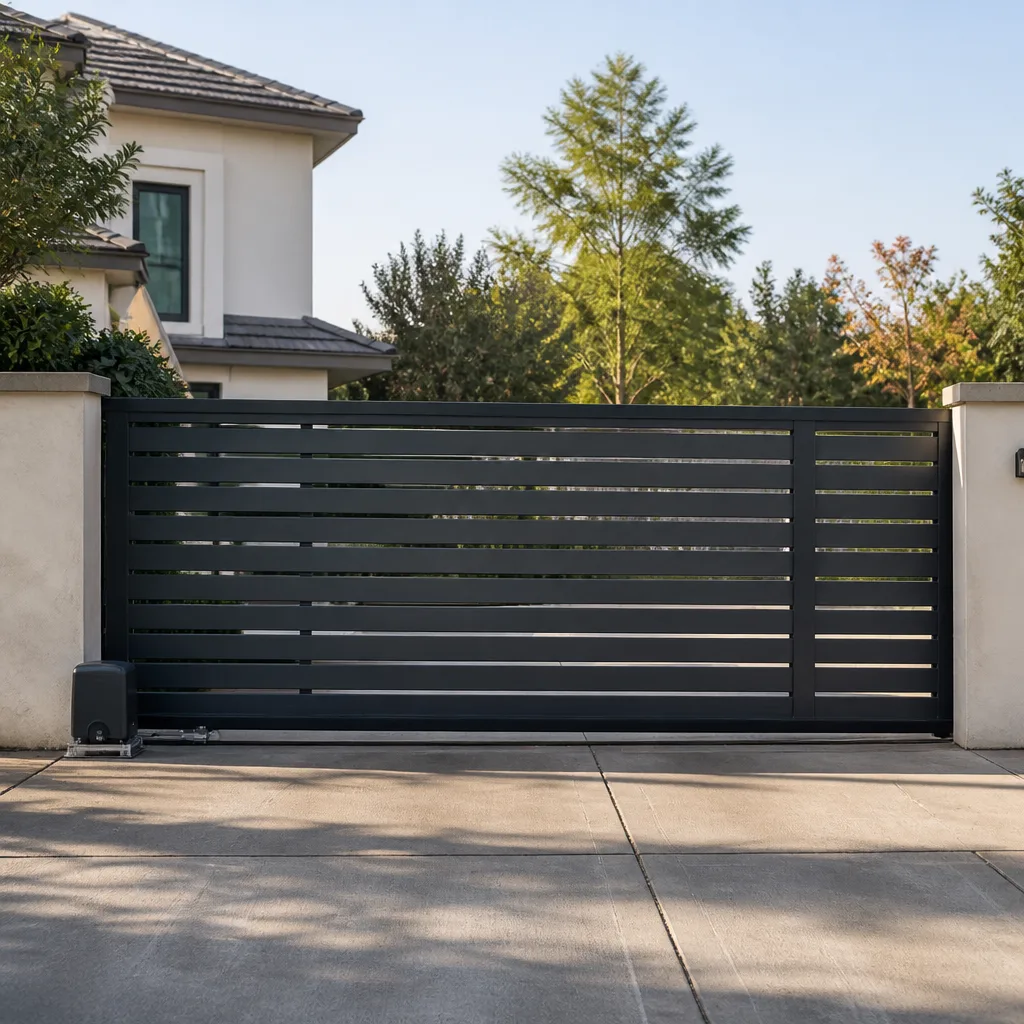
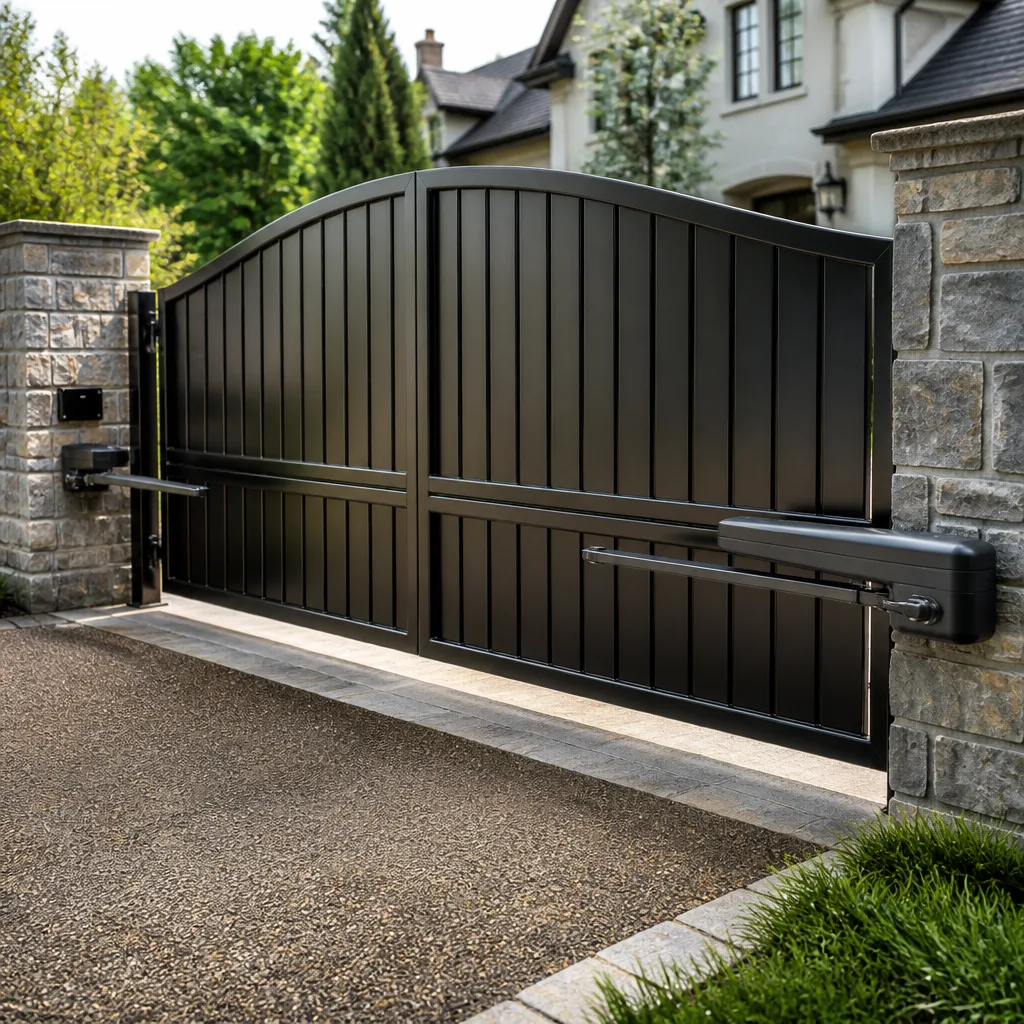
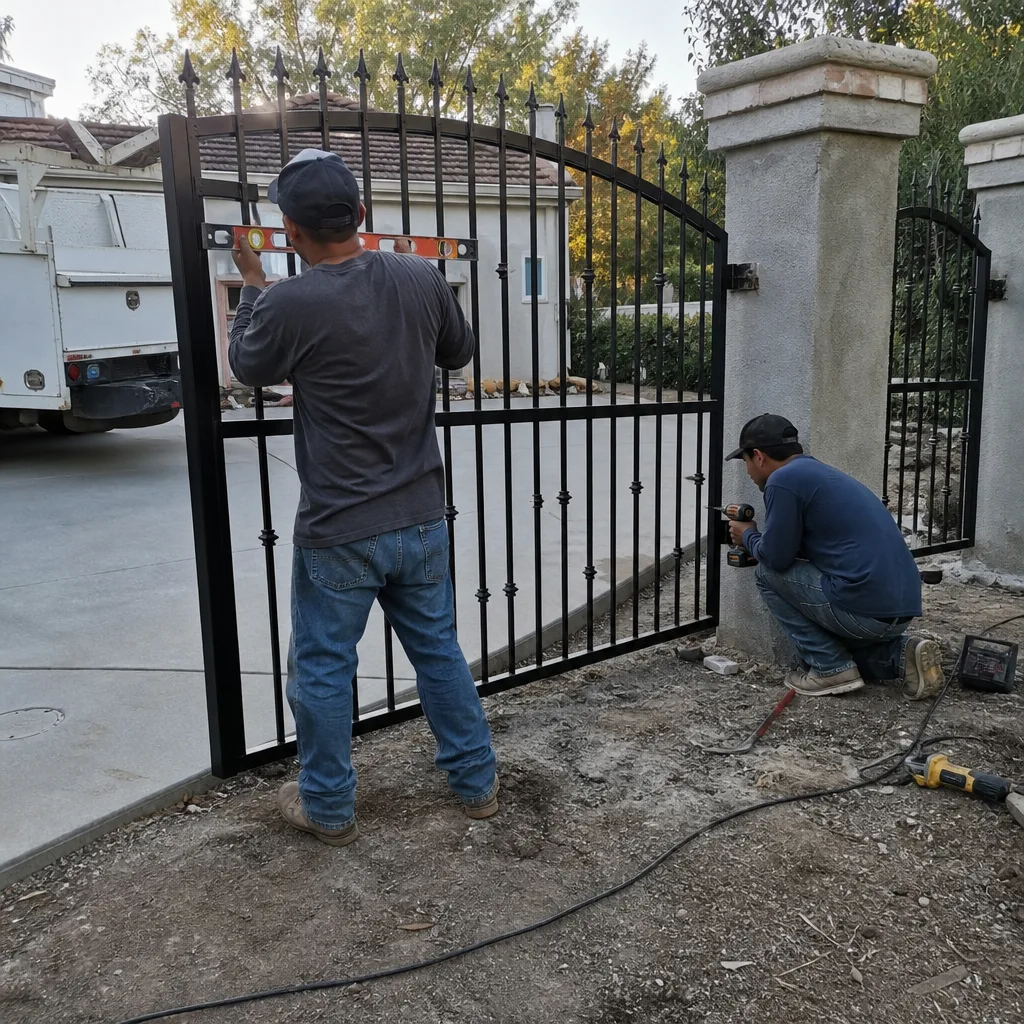
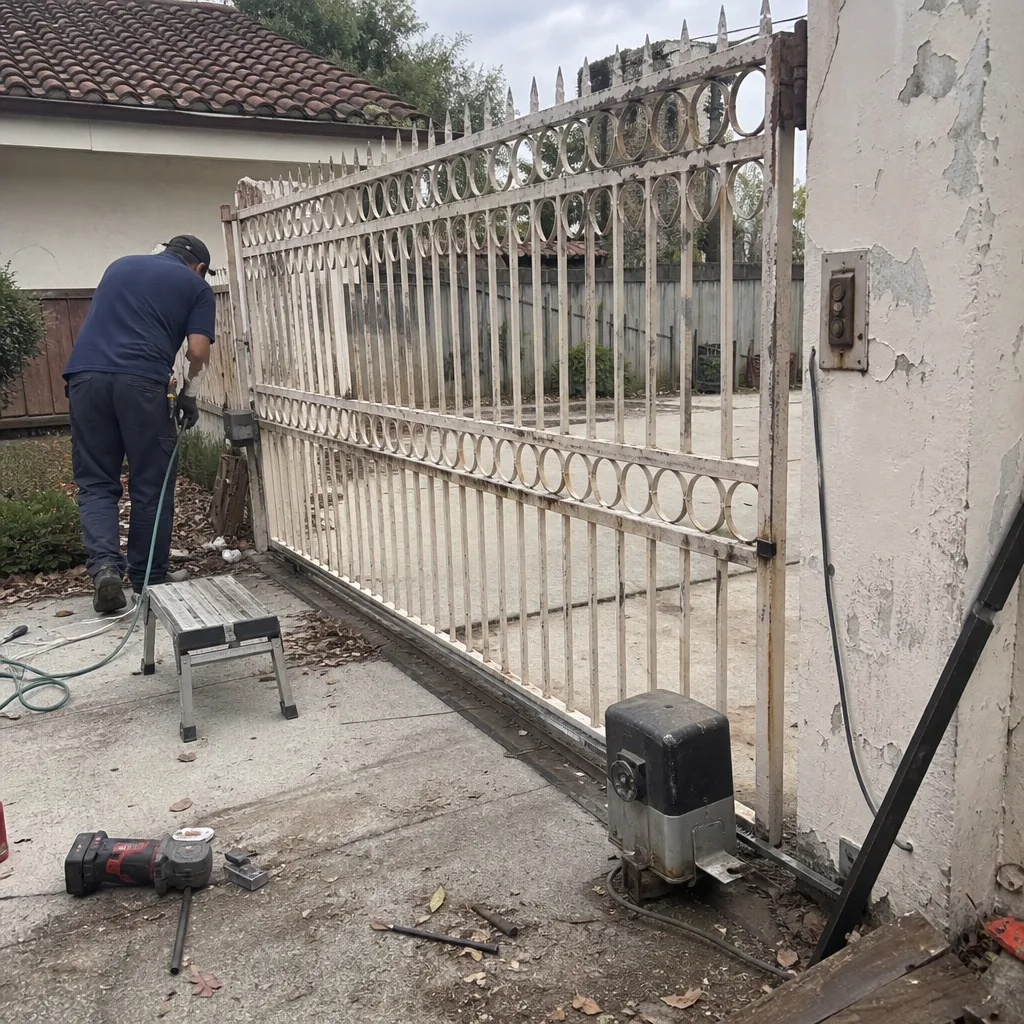 Before
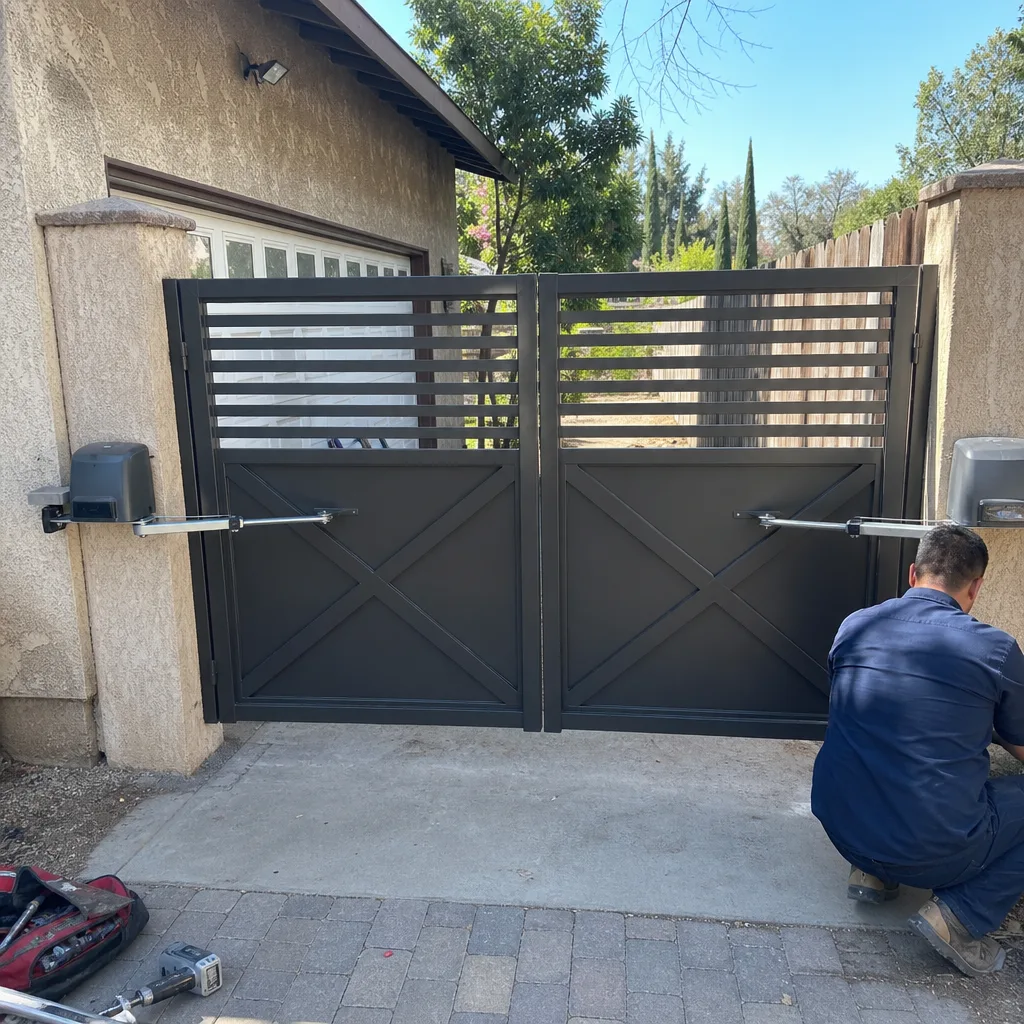 After
After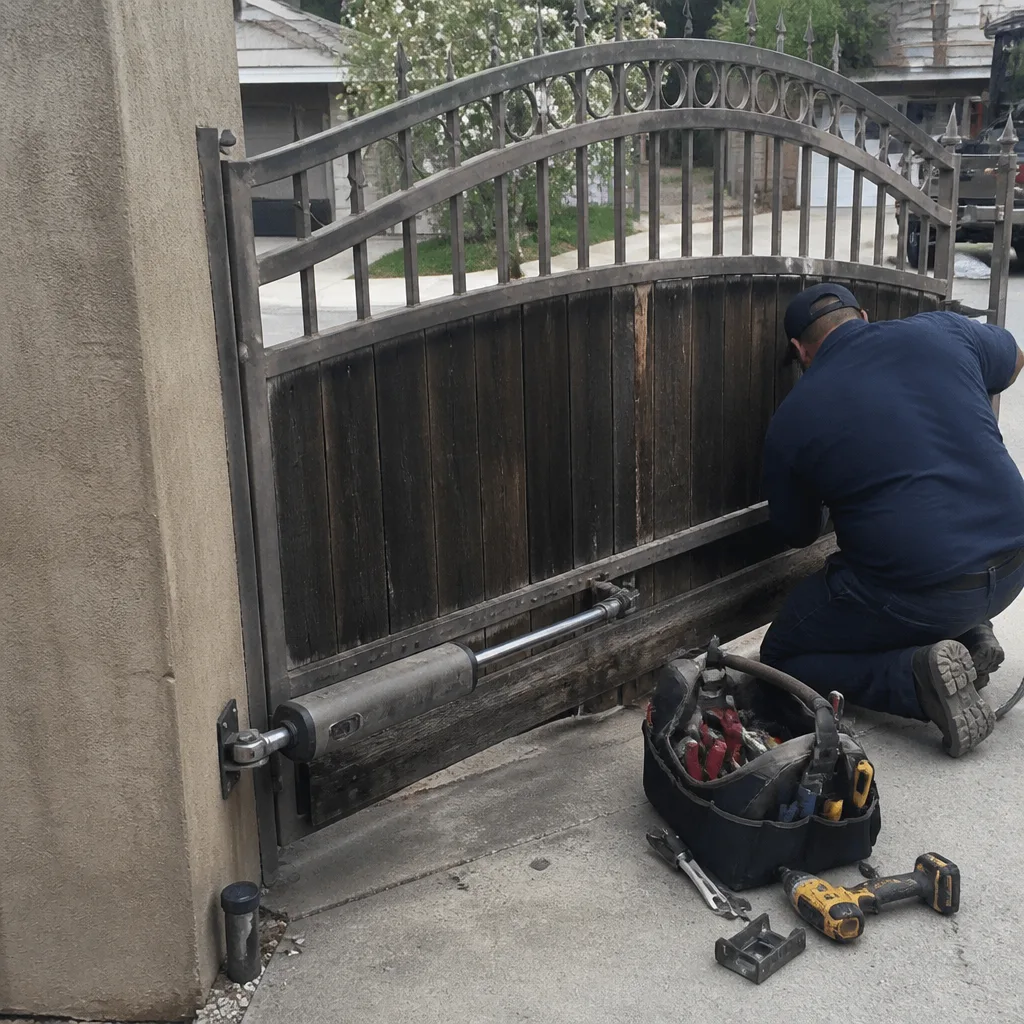 Before
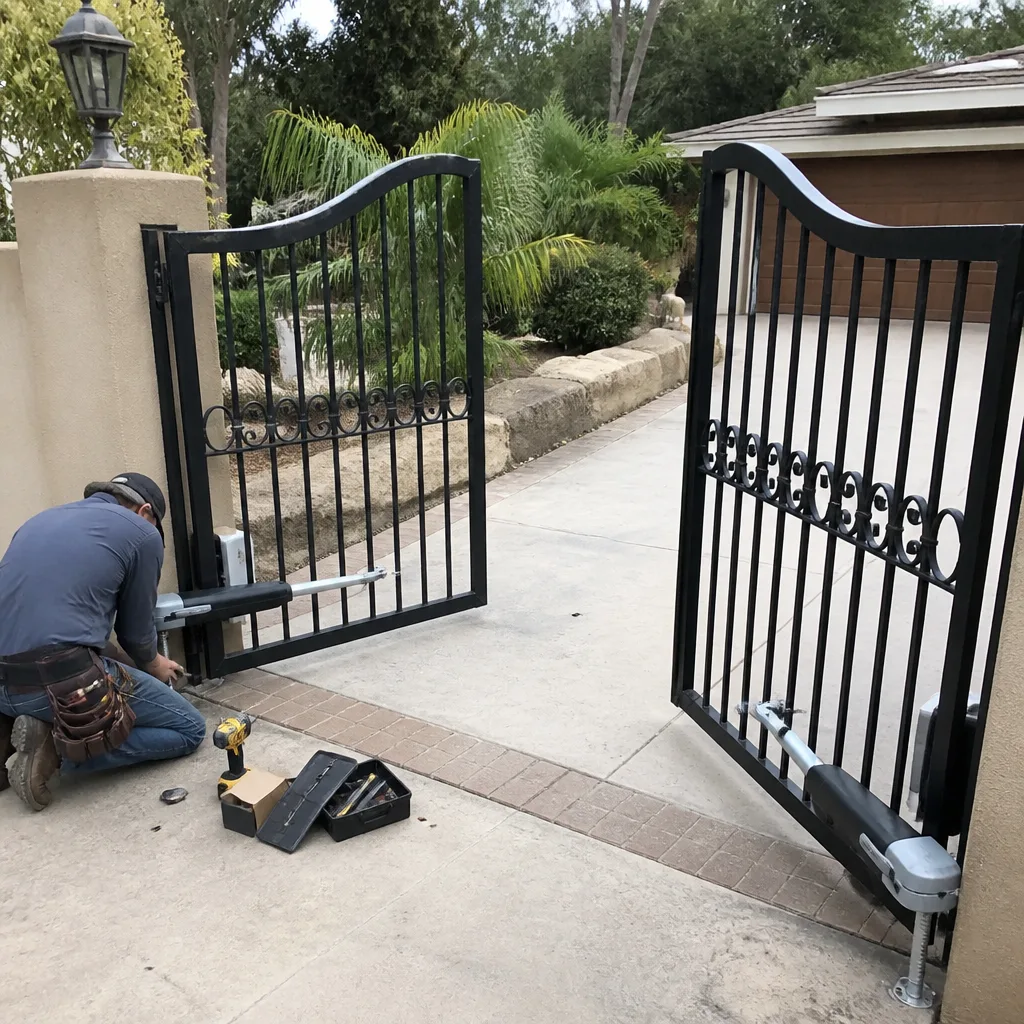 After
After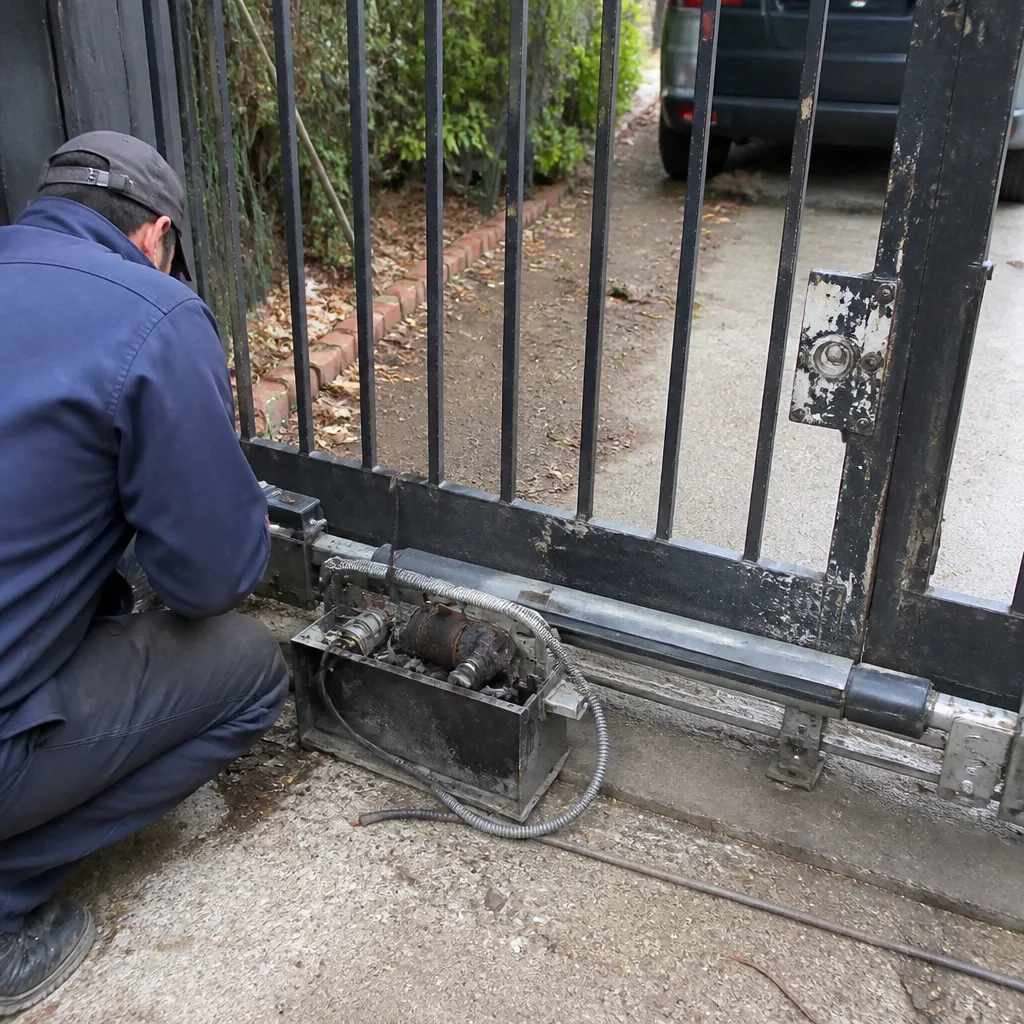 Before
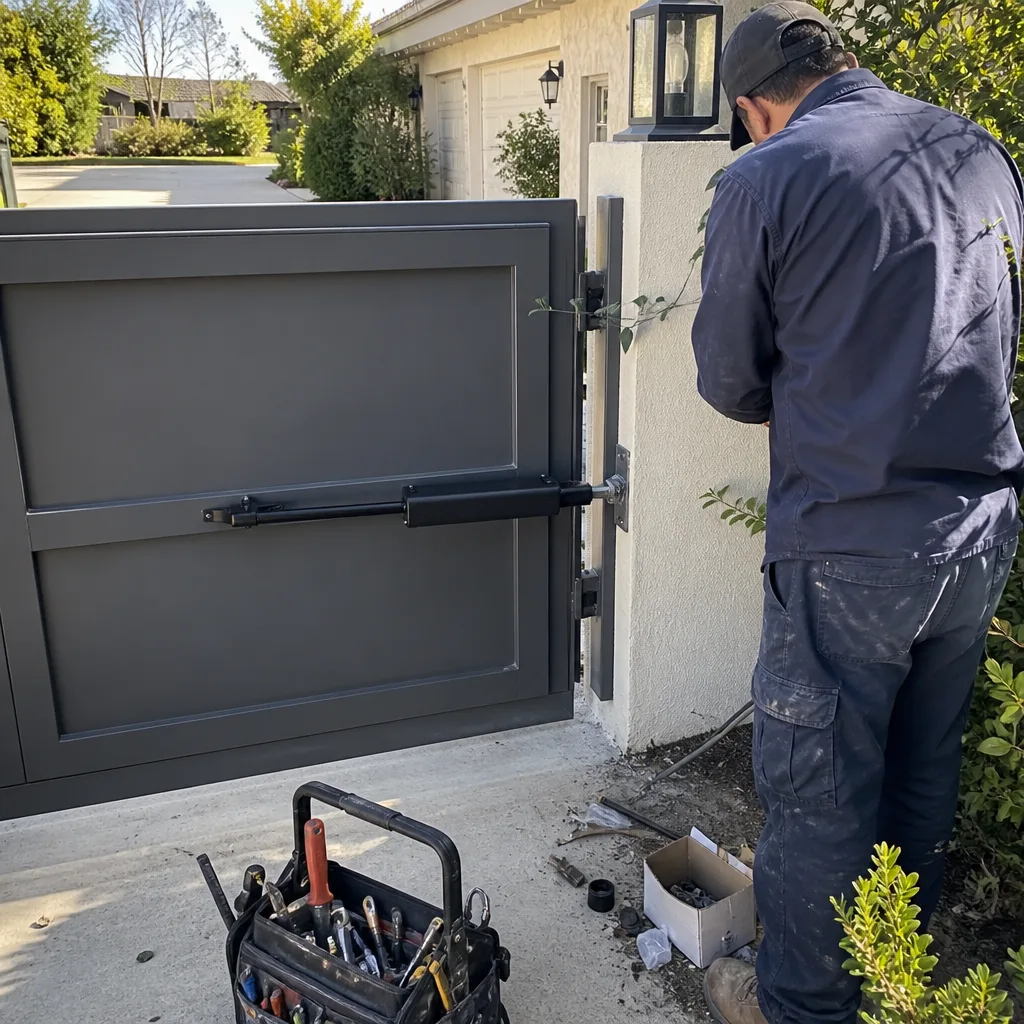 After
AfterThe Complete Guide to Gate Repair in Chatsworth
Most gate service calls in Chatsworth that start as “motor replacements” end as limit-switch adjustments. That’s roughly a $900 difference, and it hinges on whether you knew to ask one question before authorizing work: “Can you show me the reading on the limit switch before you sell me a new motor?” This guide maps Chatsworth’s specific failure landscape, sun-baked receiver lenses, caliche-heaved posts, Santa Ana wind stress on cantilever rollers, so you can name the right problem before anyone picks up a tool. You’ll learn to read symptom patterns, understand what a written scope must include under California contractor law, and recognize the documentation that separates a real repair from a guess.
Quick Answer
Gate repair in Chatsworth typically costs $95 to $180 for a service call and diagnosis, $150 to $400 for common mechanical repairs like hinge, roller, or bracket replacement, and $450 to $1,100 for gate motor or opener replacement when a motor genuinely fails. See our Gate Repair Cost Breakdown: The Chatsworth Homeowner’s Reference for 2026 for full details. Most gates that won’t open are not motor failures at all, they’re misaligned photo-eyes, baked limit switches, or caliche-heaved posts pulling the gate off its rack. Start with a diagnostic visit that includes a written finding, not a verbal estimate.
Table of Contents
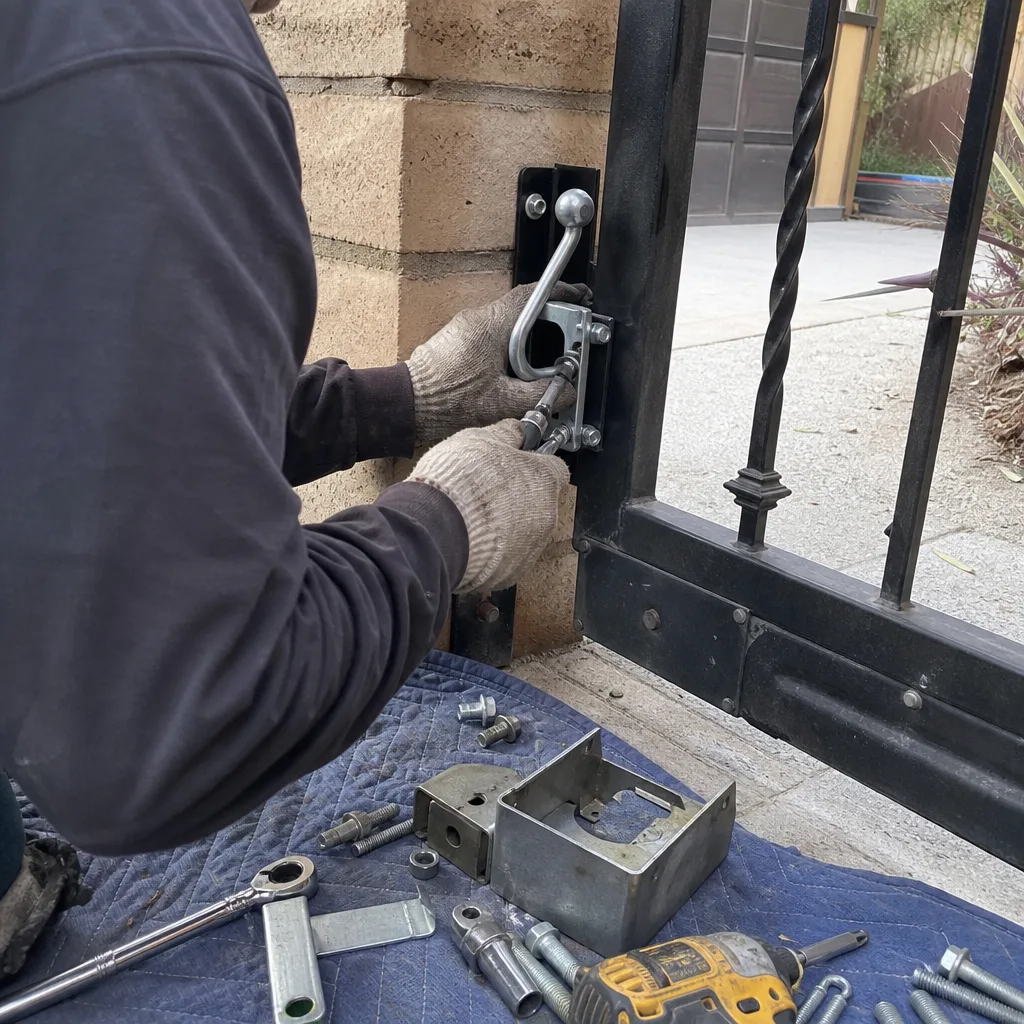
- Chatsworth’s Gate Failure Landscape: What Actually Breaks Here
- Reading Symptom Patterns: Sluggish Open vs. Hard Stop vs. No Response
- What a Written Scope of Work Must Include Under California Contractor Law
- The Three Documentation Items That Prevent Repeat Service Calls
- Chatsworth HOA and LA County Clearance Rules That Trigger Permits
- Repair vs. Replace: The Honest Math on Gate Motors
- Common Mistakes to Avoid
- When to Call a Professional
- Frequently Asked Questions
BeforeAfterChatsworth’s Gate Failure Landscape: What Actually Breaks Here
Chatsworth gates fail differently than gates in Pasadena or Woodland Hills. The San Fernando Valley’s northwest corner gets a specific combination of heat, soil chemistry, and wind that produces predictable failure patterns. After more than a decade working gates in Chatsworth, we can tell you what you’re most likely to face before we even roll the truck.
First, the sun. Chatsworth sees summer highs that routinely sit above 95°F, and that heat lands directly on the gate’s electronics. The plastic lenses on photo-eyes, the infrared beam sensors that stop a gate when something crosses its path, cloud and craze after a few seasons of direct exposure. A clouded lens scatters the beam, which makes the gate think an obstruction exists when nothing is there. The gate refuses to close, or reverses mid-cycle. It’s a $15 lens, not a $700 motor.
Second, the soil. Chatsworth sits on a mix of sandy loam and caliche, a calcium carbonate hardpan that expands and contracts with moisture far more aggressively than ordinary soil. Gate posts set in caliche can move half an inch or more between wet and dry seasons. That half inch is enough to pull a gate off its rack, bind a hinge, or misalign the photo-eye beam. We see this constantly in the neighborhoods around Mason Avenue and Lassen Street, where older gate installations predate modern footing-depth practices.
Third, the Santa Ana winds. Canyon-adjacent properties in Chatsworth catch gusts that hammer cantilever and slide gates along their entire track length. Trucks used for residential gates are rated for weight, not lateral wind load. A 60 mph gust pushing against a 14-foot gate creates leverage that bends rollers, walls out bearing blocks, and twists the gate frame itself. What looks like a motor laboring against a heavy gate is often just a wind-damaged roller assembly dragging the load.
When we take apart a gate in Chatsworth, we name what we found, not what we felt about it. The geography predicts the failure, and the failure predicts the fix. That’s the order we work in.
Reading Symptom Patterns: Sluggish Open vs. Hard Stop vs. No Response
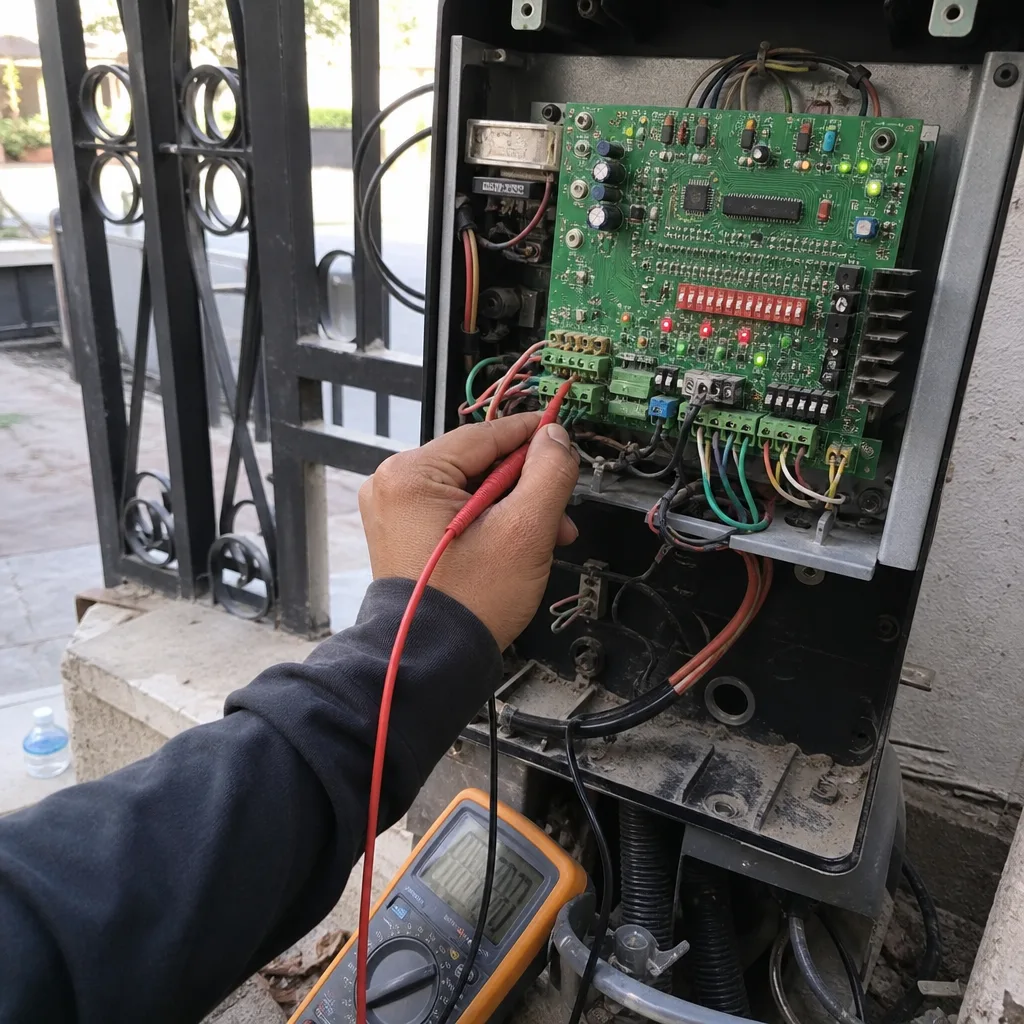
Before you call anyone, spend four minutes watching your gate. The way it fails tells you which subsystem is at fault, and that knowledge keeps you from paying for a motor replacement when the actual problem is a $40 limit switch. If you’re weighing whether to tackle it yourself, read our DIY vs Professional Gate Repair: The Chatsworth Homeowner’s Decision Guide. Here’s how to read the three most common patterns.
Sluggish open or close, gate moves but labors: This is almost never the motor. Electric gate motors are simple machines, they either spin or they don’t. When a gate moves slowly in one direction, the problem is mechanical resistance: a dry or failing roller, a hinge that’s pulling away from the post, a chain that’s too tight, or a gate that’s sitting slightly low and dragging the concrete. The motor is working harder to overcome friction. Fix the friction and the speed returns. We regularly find that a sluggish Chatsworth gate just needs two rollers replaced and the track de-gritted after a windy season.
Gate starts, stops hard, and reverses or trips a breaker: A hard stop mid-travel points to the limit switch. The limit switch tells the motor where the gate’s open and closed positions are. In Chatsworth’s heat, the switch’s internal contacts bake and drift. The motor thinks the gate has reached the end of its travel before it has, so it cuts power mid-cycle and reverses. This is the $900 difference we mentioned. We reset the switch, photograph the new position, and hand you the reading. In our experience, a large share of gate service calls in Chatsworth resolve at exactly this step.
No response at all, no hum, no click, no movement: Before you assume the motor died, check the receiver. The receiver is the small circuit board that listens for the signal from your remote. In Chatsworth’s sun, the receiver’s antenna connection and solder joints degrade faster than the motor itself. A dead receiver produces no response even though the motor is fine. A technician should test the motor by jumping it directly before anyone quotes a replacement. If a company quotes a motor without that test, get a second opinion.
Here’s the practical takeaway as a numbered diagnostic sequence:
- Watch whether the gate moves slowly, stops hard, or does nothing. Write it down.
- If slow: suspect rollers, hinges, or track drag. Not the motor.
- If hard stop: suspect the limit switch. Ask for a switch reading before any quote.
- If no response: suspect the receiver or a power interruption. Ask for a direct motor jump test.
- Only after these are ruled out does a motor replacement become a legitimate conversation.
This sequence won’t fix your gate, but it will make you harder to mislead. That’s exactly the point. For more guides & resources, see our blog.
What a Written Scope of Work Must Include Under California Contractor Law
California Business and Professions Code section 7159 requires that any home improvement contract over $500 be in writing, but even below that threshold, a written scope protects you in ways a verbal estimate cannot. A verbal estimate legally binds no one to anything. A written scope, by contrast, names the work, the materials, and the price, and it creates a record that matters if the work goes sideways.
We hand every Chatsworth customer a written scope before any tool comes off the truck. It’s not a courtesy; it’s Clause 1 of the Haven Standard, the operating standard we built for our own work. Here’s what a legitimate written scope should contain, item by item:
- Specific diagnosis: Not “gate not working” but “photo-eye lens degraded, beam scattered, unit part # XYZ.” If the scope doesn’t name the part, it isn’t a diagnosis, it’s a vibe.
- Line-item price: Labor and parts separated. You should see exactly what the motor costs and exactly what the labor costs. Blended pricing hides margin.
- Part numbers and brands: If a new opener is proposed, the scope names the brand and model. “Industry standard opener” is not a specification.
- Work timeline: When the work begins, how long it takes, and what happens if parts are backordered.
- Warranty terms: What’s covered, for how long, and the process for a callback. If the warranty is verbal, it doesn’t exist.
- Total price before tax: The number that will appear on the invoice. Written, initialed, and dated.
A verbal estimate you can’t hold in your hand is a signal, not a guarantee. Under California law, the burden of proof in a dispute falls on whoever produced the documentation. If you have nothing in writing, you have almost nothing in a dispute. That’s not legal advice; it’s practical reality drawn from watching too many Chatsworth homeowners pay twice for the same repair because the first technician’s work was never recorded.
When we leave a job, the written scope goes into the file and a copy goes to you. The price we quoted is the price you pay. No surprise invoice, no “we found more while we were in there” without a conversation and a second signature.
The Three Documentation Items That Prevent Repeat Service Calls
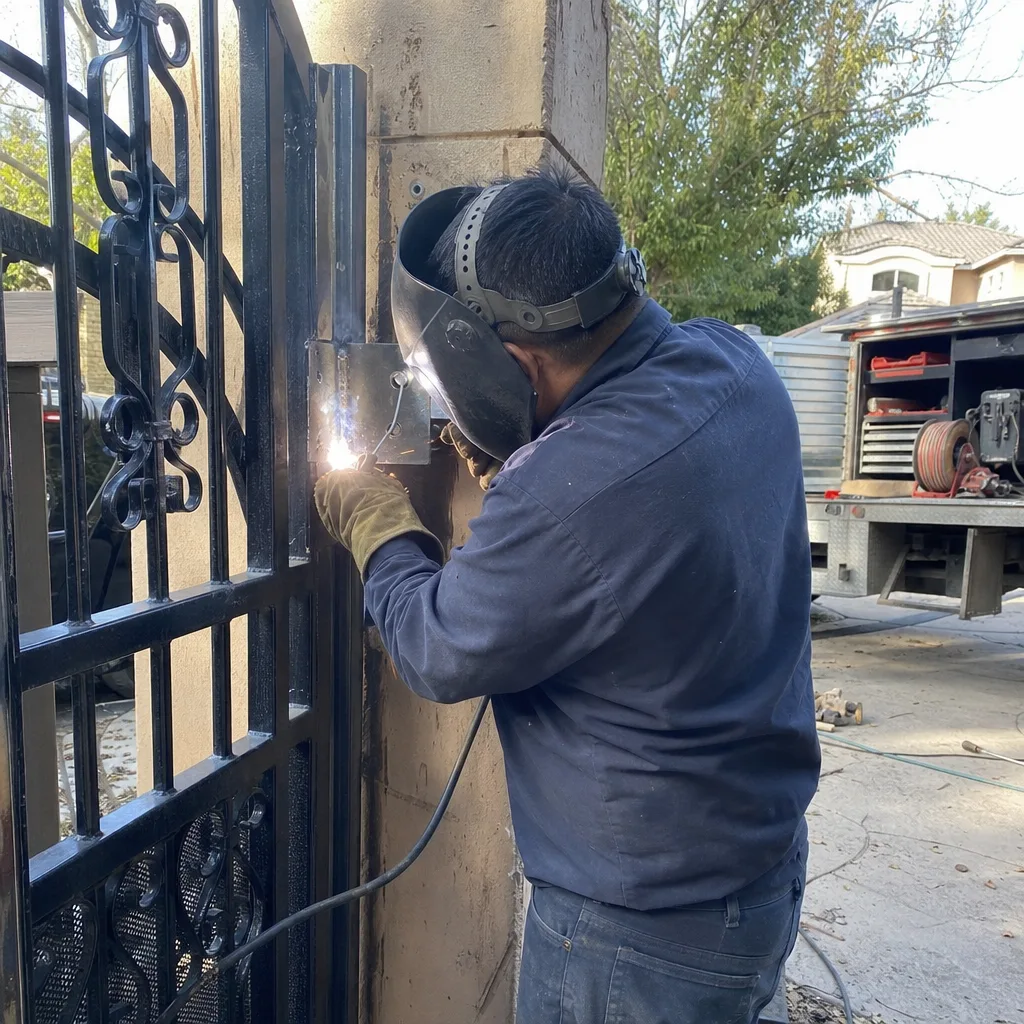
Every gate repair leaves behind a record, whether the technician writes it down or not. The problem is that unwritten repair knowledge lives only in the technician’s head, and when that technician doesn’t remember or didn’t look closely, the next visit starts from zero. You pay for the rediscovery. Here are the three documentation items that end that cycle, and they’re what we photograph and file on every single visit.
1. The wiring photo. Every gate control board has a specific terminal configuration. When a board is replaced or a splice is made, the actual wire placement should be photographed before disconnection and after completion. Six months later, when a different technician opens the panel, that photo answers the first question that otherwise costs an hour of tracing. We take the photo and leave it with you, filed in the job record under Haven Standard Clause 4: Evidence on every job.
2. The limit-switch reading. The limit switch’s position is a number, not an impression. “I set it about right” is how the same repair recurs. We record the exact setting, in degrees of travel or turns from zero, on the scope so the next adjustment becomes a refinement, not a re-diagnosis. In Chatsworth’s heat, switches drift, and a recorded baseline turns a future drift correction from a mystery into a five-minute calibration.
3. Hardware torque confirmation. Gates vibrate. Bolts back out. Hinges creep. The torque on the hinge bolts, roller axle nuts, and post brackets should be checked and written down. Not “tight enough” but actual confirmed snug on the spec range for that hardware size. This is the fastest way to catch a post that’s starting to move in caliche soil before the gate binds and the repair becomes structural.
Here’s the sequence we follow on every visit, and it’s the sequence you should insist on from any company touching your gate:
- Diagnose and write the finding, with the part name and the symptom observed.
- Photograph the condition before work, especially wiring and mechanical wear points.
- Perform the repair, recording every adjustment in numbers: switch position, torque, clearance.
- Photograph the completed work from the same angles as the before photo.
- Hand you a written record with the scope, the photos, and the part numbers installed.
If a company can’t produce documentation, they’re asking you to trust their memory. In our experience, memory is a poor warranty.
Chatsworth HOA and LA County Clearance Rules That Trigger Permits
Chatsworth is heavily governed by HOAs, and many of those HOAs have architectural guidelines that cover gates more strictly than LA County’s building code does. If you live in a Chatsworth HOA community, your gate repair can trigger a review even when the county wouldn’t require a permit. Here’s where the lines fall.
Repair vs. replacement distinction. LA County generally treats true repairs, replacing a broken roller, swapping a failed opener, rewiring a photo-eye, as maintenance that doesn’t require a permit. The moment the work changes the gate’s dimensions, adds a new post footing, changes the gate’s height or mass, or converts a swing gate to a slide gate, it crosses into construction territory that may require plan review. This is where “repairs” quietly become installations.
HOA clearance rules. Many Chatsworth HOAs have specific clearance requirements between the gate and the driveway apron, often a specific number of inches, and rules about how far a swing gate may extend over the public sidewalk. A gate that swings outward over a sidewalk is a liability and may violate both HOA rules and the county’s public right-of-way standards. If your repair proposal includes changing the swing direction, you’re probably in review territory.
Photoelectric safety edge requirements. Under UL 325, the standard that governs automatic gate operators, every automated gate must have a reversing mechanism, either a photo-eye or an edge sensor, and it must be tested and documented. If your gate opener was installed before these requirements tightened or if the safety edge has degraded in Chatsworth’s sun, a repair that touches the opener may need to bring the safety system up to current code. That’s not an upsell; it’s the law.
None of this means you should avoid repairing your gate. It means you should know which side of the repair line your job falls on before you sign anything. A verbal “don’t worry about permits” from a technician who isn’t pulling any is not due diligence. If the work is structural, get it in writing whether a permit is required. Chatsworth’s building and safety office will answer that question over the phone if the answer isn’t obvious from your HOA packet.
Repair vs. Replace: The Honest Math on Gate Motors
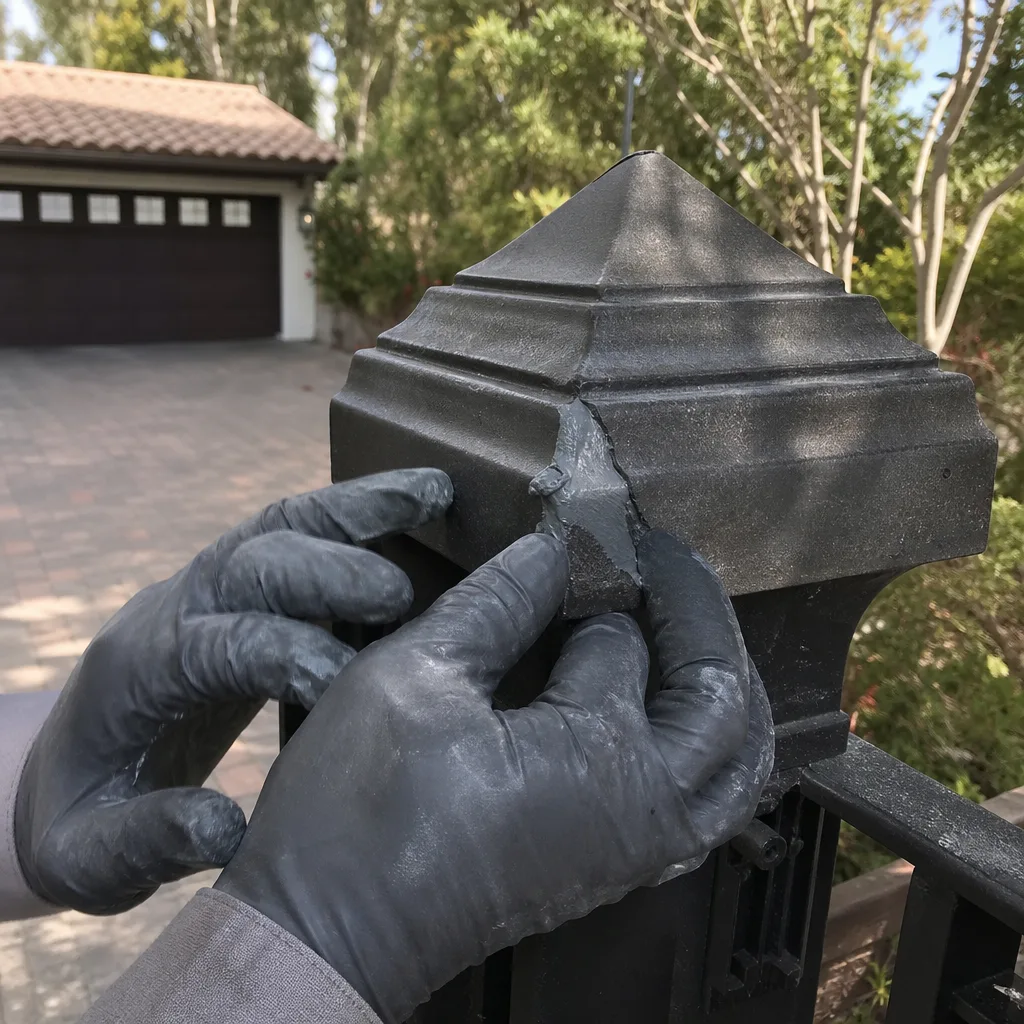
Gate motor or opener replacement in Chatsworth runs $450 to $1,100 depending on the brand, the arm configuration, and whether the existing bracket is reusable. That’s the number we quote most often when a motor truly fails. The question is whether it truly failed. Here’s how we make that call, and how you can too.
First, the age reality. Most residential gate operators from Mighty Mule, LiftMaster, FAAC, and BFT carry a design life of seven to twelve years in Southern California’s heat. If your opener is older than that and the failure is in the armature, the gear assembly, or the transformer, replacement is usually the honest call. Repairing a twelve-year-old motor often gets you another eighteen months for half the cost of new, which is fine if that’s the choice you want to make, and we’ll tell you the trade-off in writing before you choose.
Second, the bracket question. Every swing-gate motor is mounted to a bracket on the gate post and a bracket on the gate itself. In Chatsworth’s caliche soil, the post bracket is often the first component to move. If the post has shifted and the bracket is compromised, a new motor will fail the same way the old one did, within a season. The repair that matters is the post, not the motor. We measure bracket alignment before we ever quote a motor, and we write down the number.
Third, the compatibility reality. If a motor replacement is necessary, you are not limited to the brand already on the property, but there’s real value in staying with the existing manufacturer when the arm and bracket can be reused. A LiftMaster-to-LiftMaster swap with intact bracketry is often a one-visit job. A cross-brand swap may require new mounting hardware and arm geometry. Neither is wrong; one is simply more efficient. We service nine major automation brands, LiftMaster, FAAC, BFT, Linear, Viking, Ghost Controls, DoorKing, Elite, Mighty Mule, so the question is never “which brand do we sell” but “which brand is already installed and what’s the best path forward.”
Here’s the honest math in a compact form:
- Limit switch drift or photo-eye misalignment: $120-$225 repair. The motor is fine.
- Receiver failure: $180-$320 replacement. The motor is fine.
- Roller or hinge failure causing motor strain: $150-$400 repair. The motor is fine.
- Genuine motor failure on an opener under 7 years old: $450-$800 replacement. Reasonable repair.
- Genuine motor failure on an opener over 10 years old: $650-$1,100 replacement. Expected end of life.
Those are Chatsworth market ranges, not internet-search averages. Prices vary with gate weight, run length, brand, and arm type. What shouldn’t vary is whether you see the price before the work starts.
Common Mistakes to Avoid
- Authorizing a motor replacement without a limit-switch reading. The most common Chatsworth gate repair is a drifted switch, not a dead motor. If a company quotes a motor without testing the switch first, you’re paying for a guess.
- Accepting a verbal estimate. Under California law, a verbal estimate binds nothing. You want a written scope with a line-item price before any work starts.
- Ignoring gate movement before calling. Sluggish, hard stop, and no response point to three different subsystems. Four minutes of observation before the call can save you an unnecessary motor quote.
- Replacing the opener before checking the post. In Chatsworth’s caliche soil, post movement causes more repeat failures than motor wear. A new motor on a heaving post fails the same way the old one did.
- Skipping the safety edge check. UL 325 requires a functioning reversing mechanism. If a repair opens the control panel, the safety system should be tested and documented on the scope.
- Letting the technician leave without documentation. No photo, no reading, no torque confirmation means the next repair starts from zero. You’ll pay for the rediscovery.
- Assuming a noisy gate needs lubrication. Noise is usually mechanical wear, a roller, a hinge, a bearing, not a dry part. Lubricating a worn roller quiets it for a week and then it fails harder.
When to Call a Professional
Call our Gate Repair services when the gate’s failure involves the operator’s electrical system, the motor, the photo-eye wiring, or any spring under tension. Chatsworth’s heat and soil conditions compound these failures, and a misdiagnosed opener problem can leave your gate dead in the open position, which is exactly when you need it closed. Gate springs carry enough stored energy to break bone, and the control board terminals carry live voltage even when the gate is idle. We don’t recommend DIY work on the operator or springs, and we say that as the people who would benefit if you tried and then called us to fix it. Vance Gate Repair Chatsworth offers free estimates in Chatsworth, call (661) 495-2023 to schedule a diagnostic visit. You’ll get a written scope and a documented photo record before you decide anything.
Frequently Asked Questions
Gate repair in Chatsworth runs $95 to $180 for a diagnostic service call, $150 to $400 for typical mechanical repairs like roller, hinge, or bracket replacement, and $450 to $1,100 for a genuine motor replacement. Most failures fall in the $150 to $400 range because they’re mechanical, not motor failures. Call (661) 495-2023 for a written price on your specific gate, estimated free.
A humming motor with no gate movement usually means the capacitor has failed or the gate is mechanically bound, often from a caliche-shifted post or a failed roller. The fix is typically a $25 to $80 capacitor replacement or a $150 to $300 mechanical correction, not a new motor. Have a technician test the capacitor before any replacement is proposed.
We dispatch same-day for gate failures that leave the property unsecured or the gate stuck open, and a live person answers the phone 24/7 at (661) 495-2023, no voicemail loop, no callback queue. If the failure is an emergency, an open gate or a dead security gate, we’ll tell you the dispatch time on the call. If it’s non-urgent, we’ll give you the next available slot that day.
True repairs to existing gate hardware generally don’t require an LA County permit, but work that changes the gate’s dimensions, adds a post footing, changes swing direction, or crosses the public right-of-way may trigger HOA or county review. Chatsworth HOAs often have specific clearance rules between the gate and the driveway apron. If your repair changes the gate’s footprint, get the permit requirement in writing before work starts.
A gate that reverses before closing is usually a photo-eye that’s misaligned or a lens that’s clouded from Chatsworth’s sun, which scatters the infrared beam and makes the gate think something is in the path. The fix is typically a $120 to $180 alignment or lens replacement. It’s rarely a motor or control board issue.
Most residential gate motors in Chatsworth’s heat last seven to twelve years before the gear assembly or armature hits the end of its design life, but that lifespan drops if the gate is heavy, the post has moved in caliche soil, or the gate catches Santa Ana winds on a regular basis. If your motor is under seven years old and failing, we’d look hard at the mechanical load and post alignment before recommending replacement. Call (661) 495-2023 for a free diagnostic opinion.
The Bottom Line
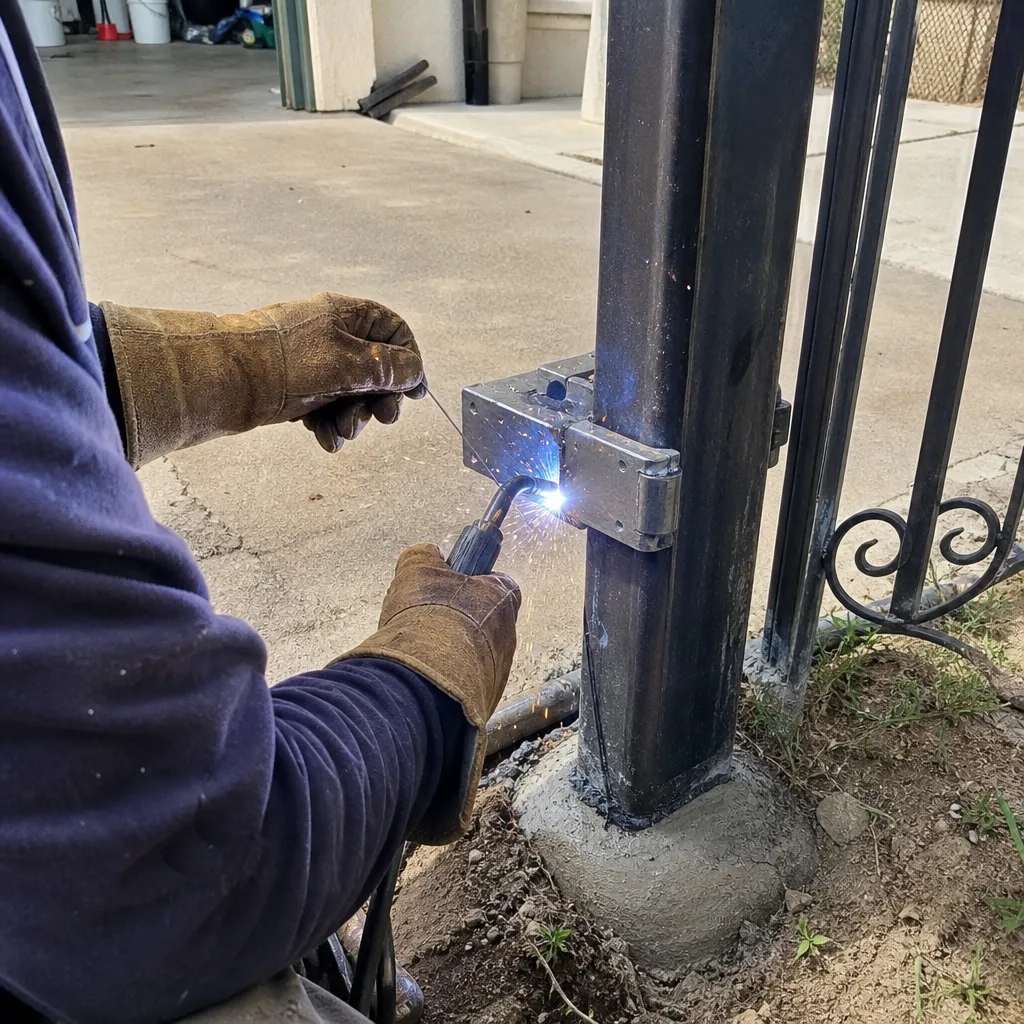
Gate repair in Chatsworth is predictable once you know what the geography does to the hardware. Sun bakes the limit switches and receiver lenses. Caliche moves the posts. Santa Ana winds beat on the rollers. Most failures that present as motor problems are mechanical or sensor problems with much smaller price tags. The protection is documentation: a written scope before work starts, a recorded limit-switch reading, a photo log when the technician leaves. If you remember nothing else from this guide, remember that a motor replacement should never be authorized without a switch reading, and a verbal estimate is worth exactly what it’s written on. Get the price in writing, get the evidence in photos, and get the work done right the first time.
Written by Adrian Vance, Owner at Vance Gate Repair Chatsworth, serving Chatsworth since 2014.