
Last updated September 20, 2026
Free on-site gate assessment - hinges, posts, and your LiftMaster or Nice gate operator checked before anything is quoted
The assessment is free and the quote is the invoice.
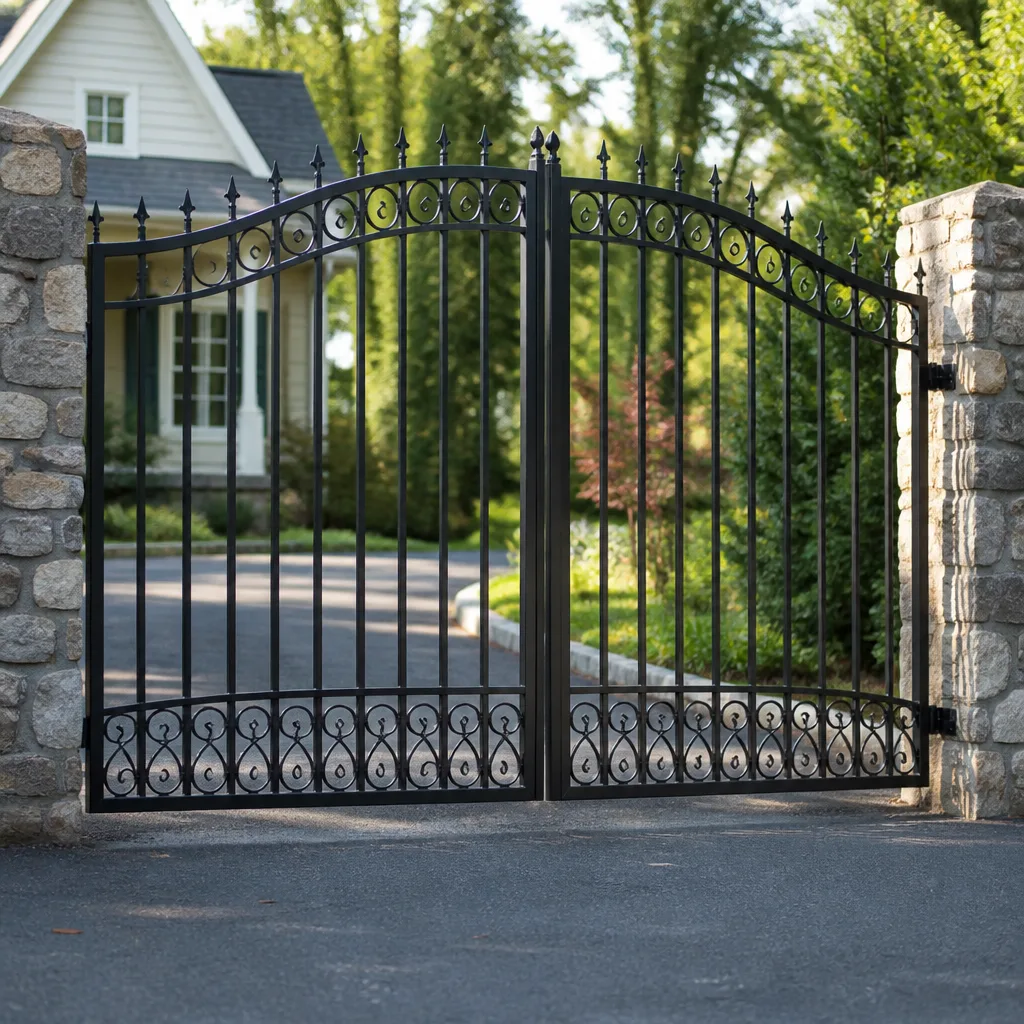
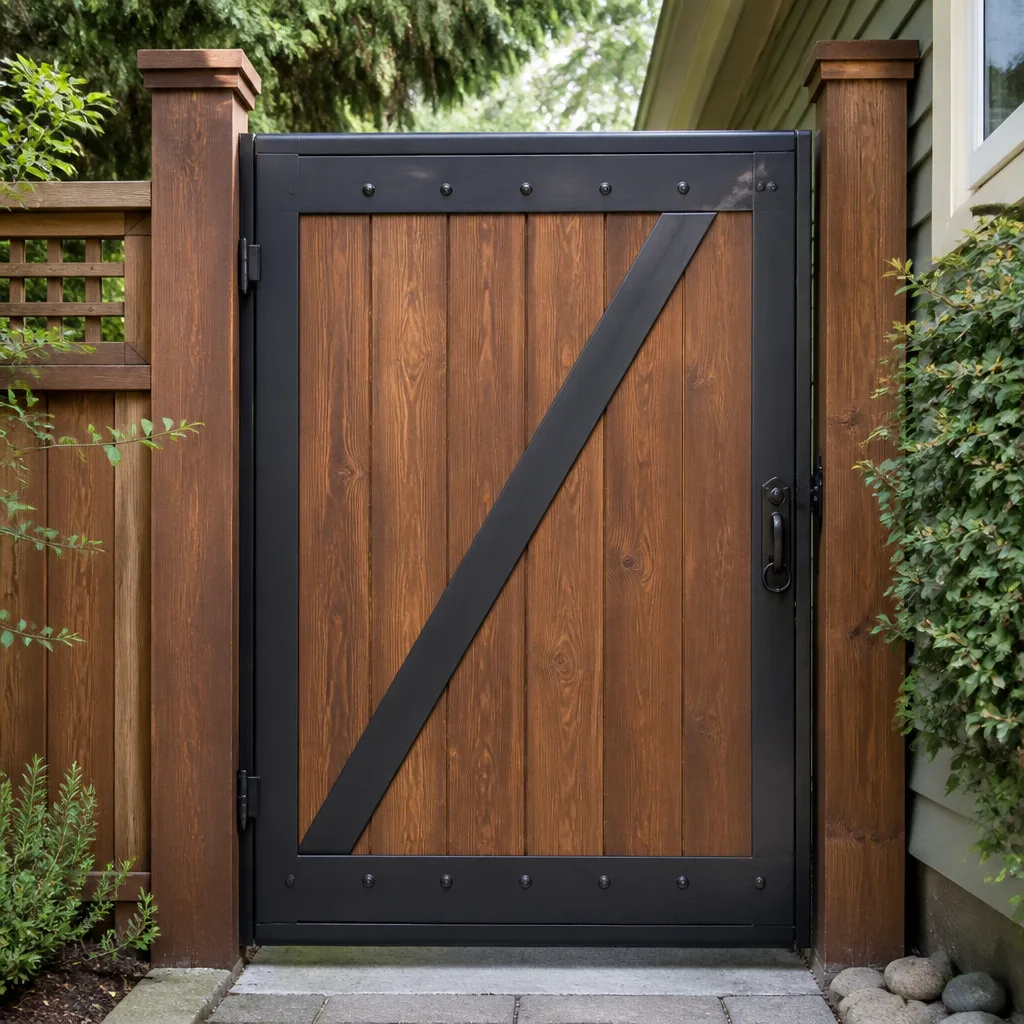
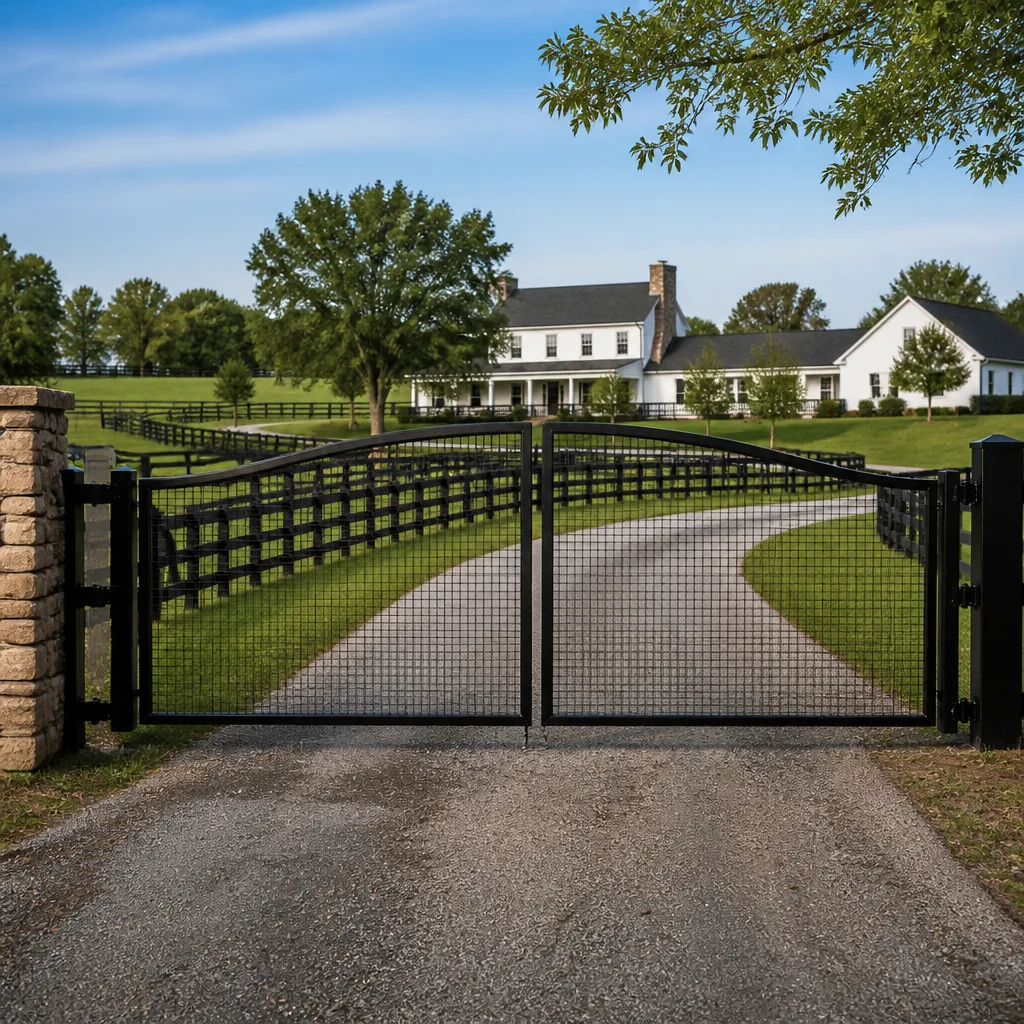
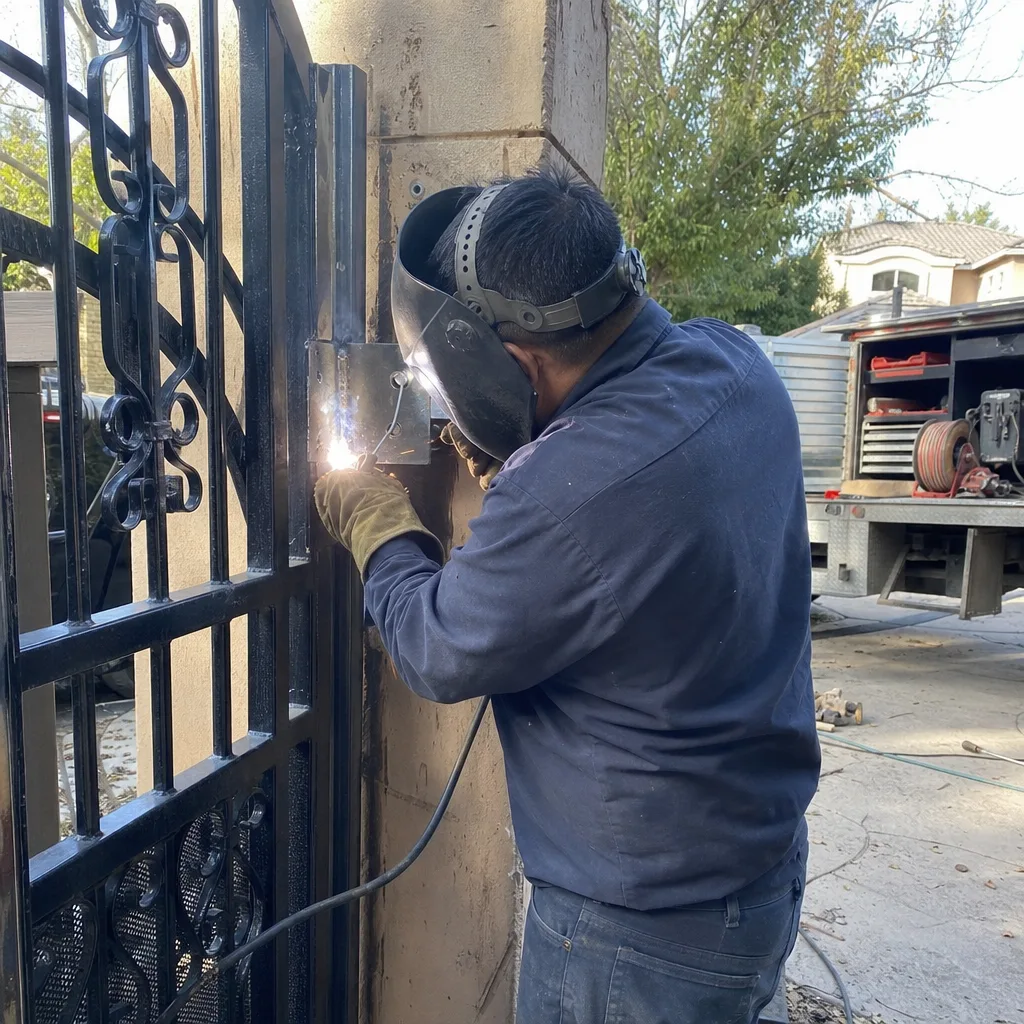
 Before
 After
After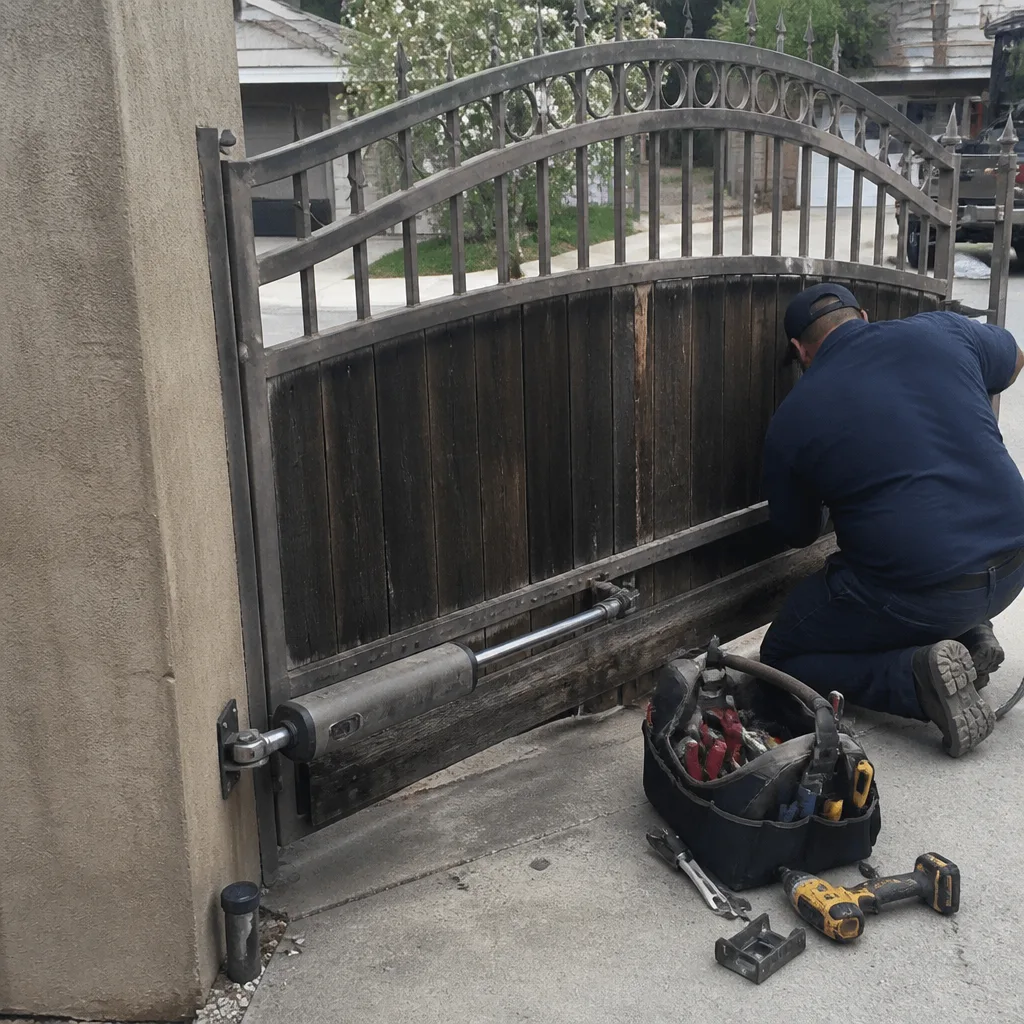 Before
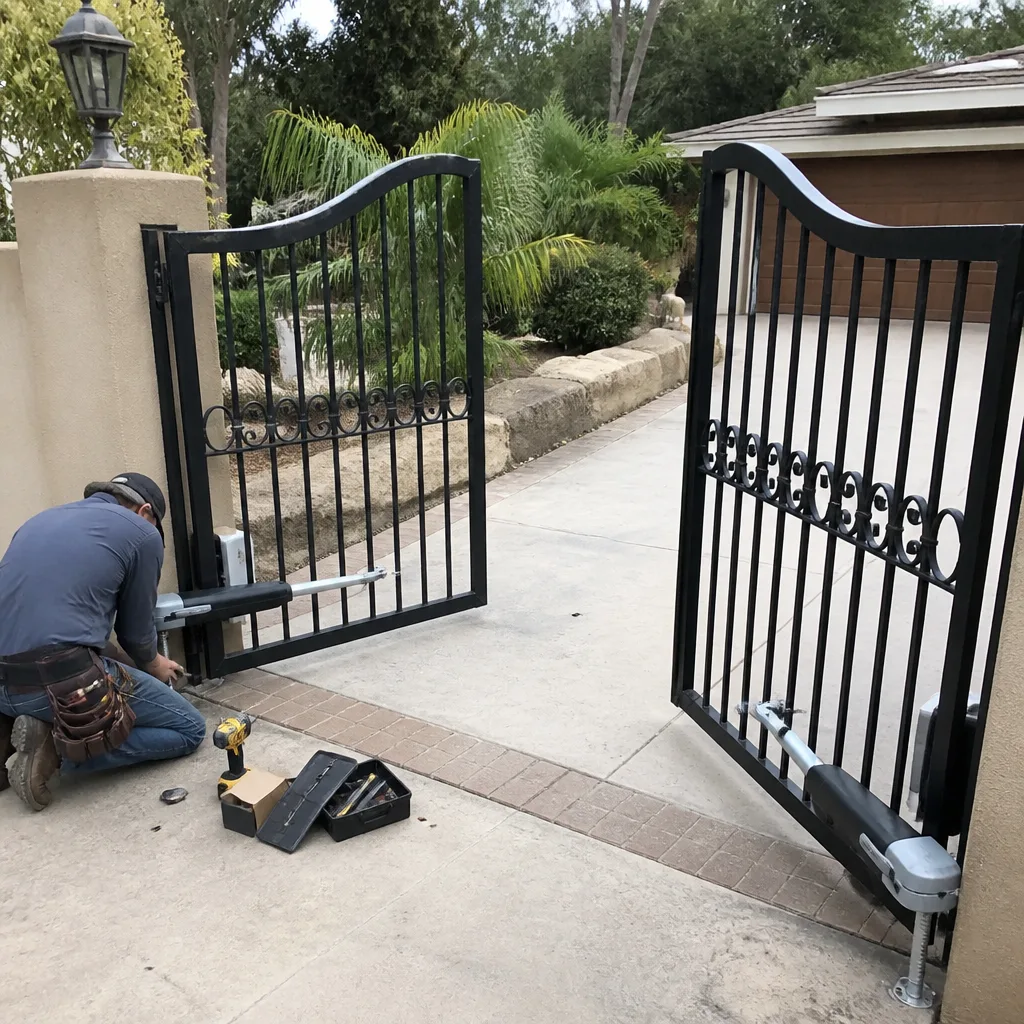 After
After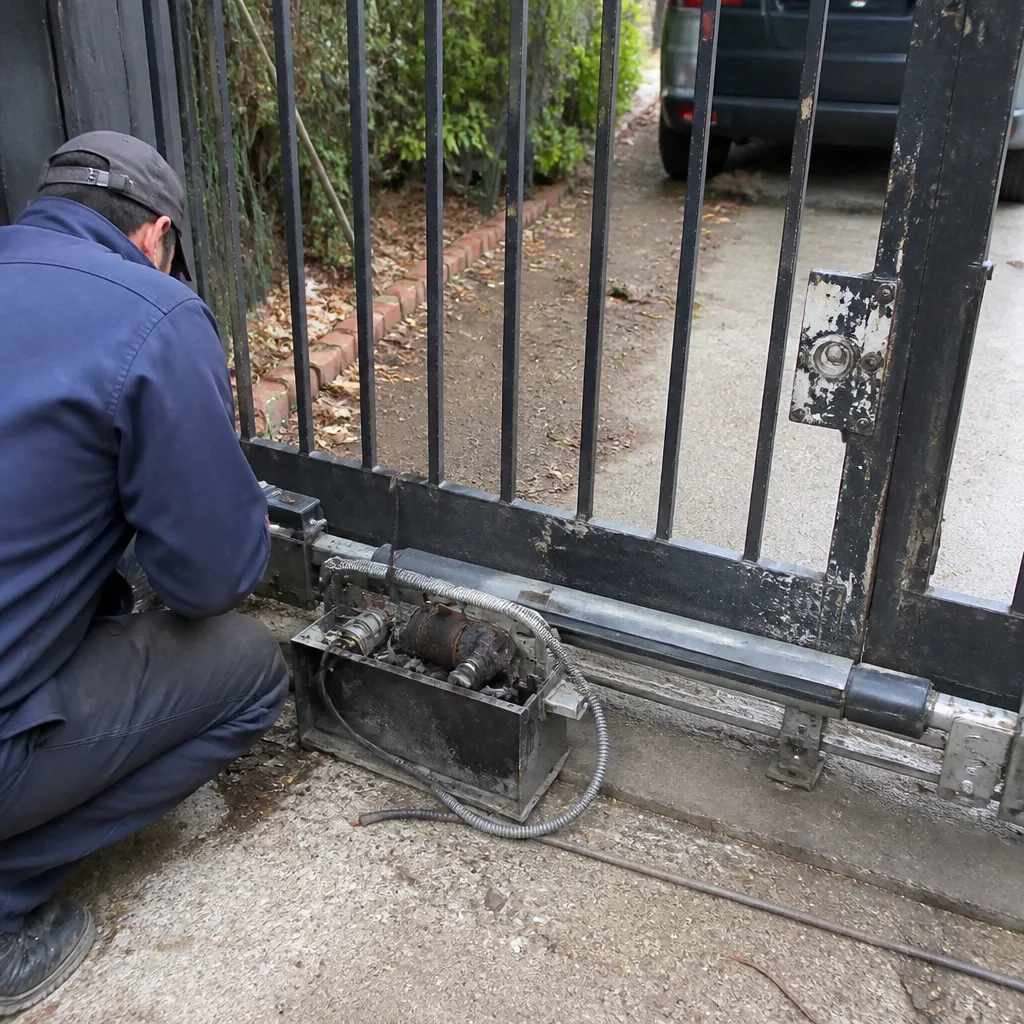 Before
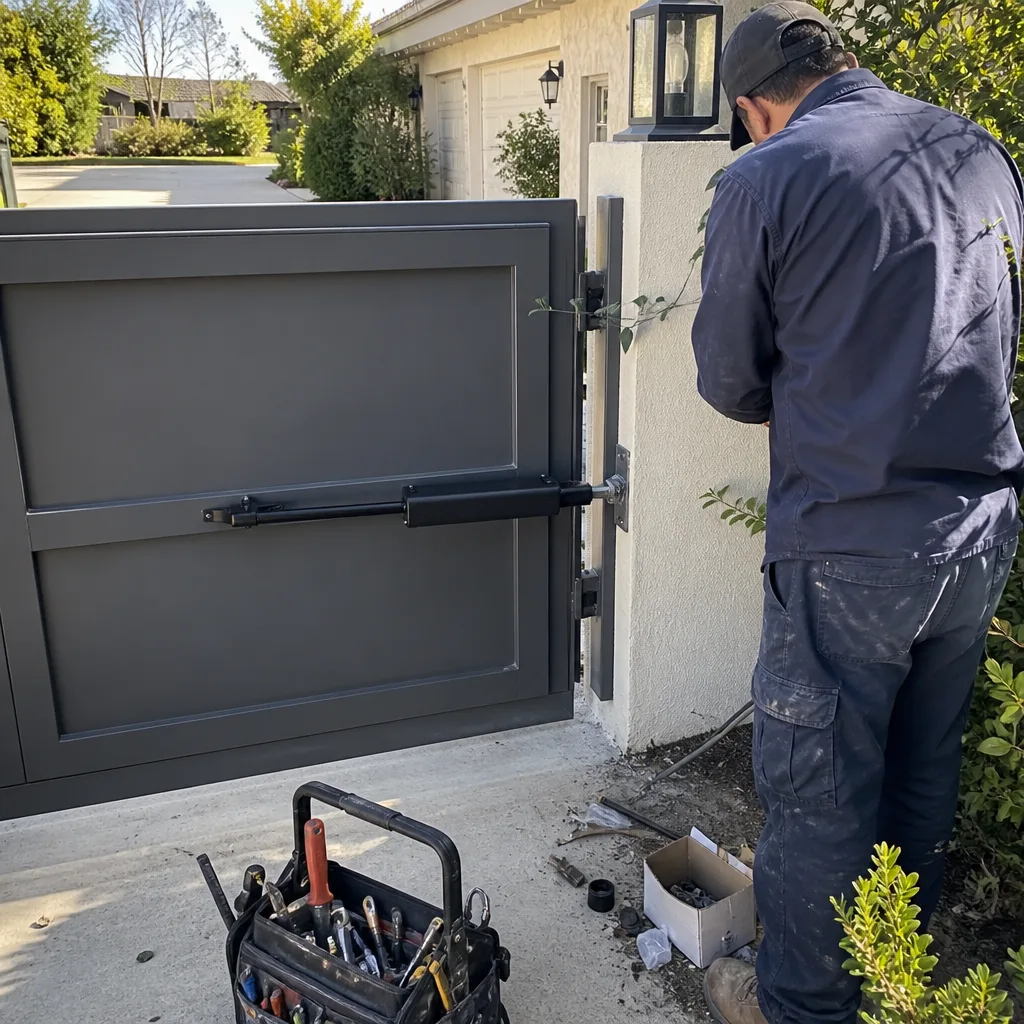 After
AfterGate Repair Warning Signs: A Chatsworth Homeowner’s Reference Guide
A gate that hesitates two seconds before moving isn’t a gate with a “glitch.” It’s a gate whose control board is reading a boundary sensor as partially obstructed, and that hesitation is the last warning before the board begins logging fault codes. In our experience across Chatsworth, most gate failures announce themselves weeks before they strand you outside or leave the driveway unsecured. The problem is that most homeowners only recognize the final symptom, not the early ones. This guide translates the observable behaviors of a failing gate into the specific components behind them, so you can act before a $45 part becomes an $850 replacement.
Quick Answer
Gate repair warning signs in Chatsworth fall into eight categories: hesitation before movement, hard stops mid-cycle, slow operation, gate drift after stopping, intermittent response, grinding or squealing noise, unexpected reversal, and complete non-response. Our Gate Repair services cover all of these symptoms. Each maps to specific failing components, from misaligned photo-eyes to worn drive gears. Most listed symptoms cost between $85 and $400 to repair when caught early, and many are addressable same-day.
Table of Contents
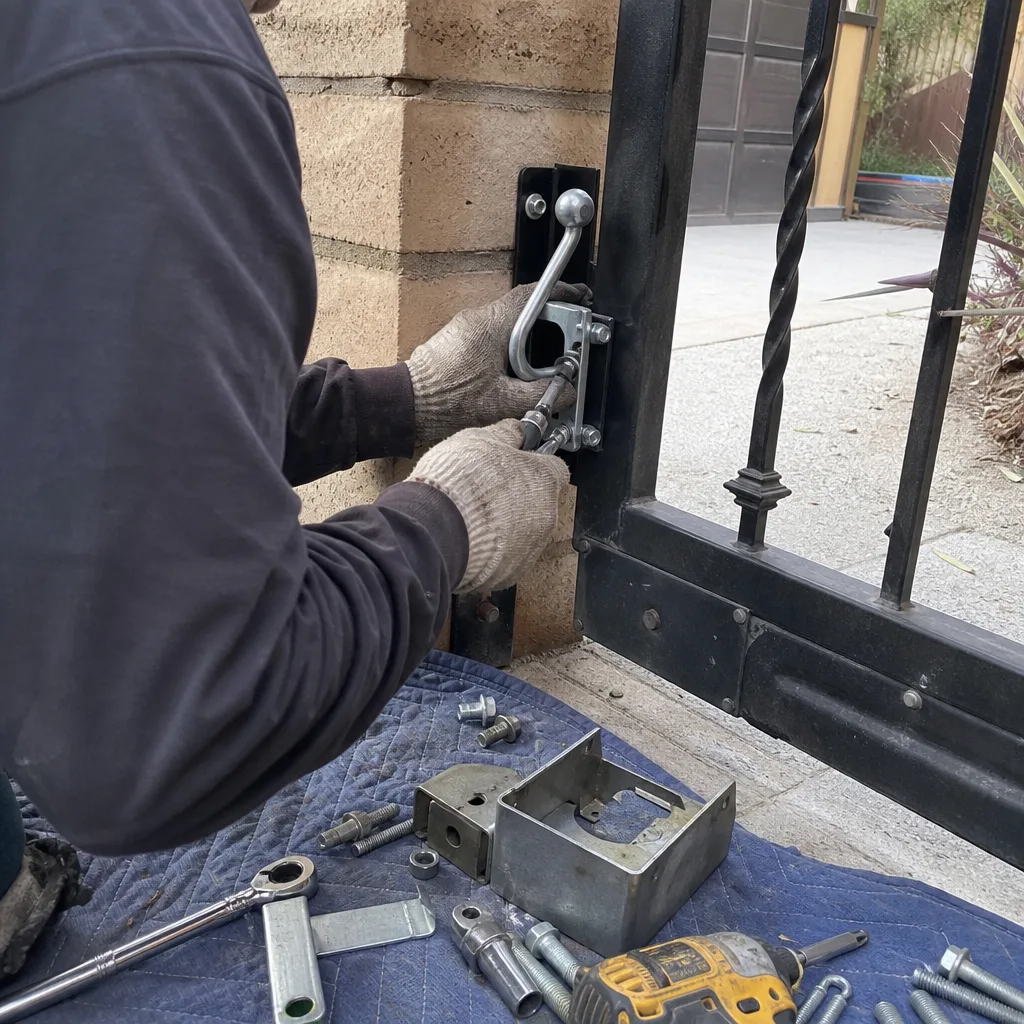
- The Symptom-to-Component Matrix: Eight Behaviors That Point to Specific Parts
- Hesitation Before Movement: What the Two-Second Wait Actually Means
- The Noise Taxonomy: Grinding, Chain Slap, and Roller Squeal
- Gate Drift: The Same Symptom With Two Different Root Causes
- Motor Warning Sign or Board Warning Sign: How to Tell Without Opening the Enclosure
- When a Warning Sign Is a UL 325 Safety Code Issue, Not Just a Mechanical One
- What Each Warning Sign Costs When Caught Early vs. Late
- Common Mistakes to Avoid
- When to Call a Professional
- Frequently Asked Questions
- The Bottom Line
BeforeAfterThe Symptom-to-Component Matrix: Eight Behaviors That Point to Specific Parts
Unusual noise tells a homeowner nothing actionable. But grinding that occurs only during the first six inches of open travel, then stops mid-cycle, points directly to a worn drive gear before it strips completely. That’s how a careful technician approaches a gate, and it’s how this guide is organized. What follows is the same diagnostic framework we use on service calls in Chatsworth, where the combination of dry heat and occasional Santa Ana wind gusts creates wear patterns that differ from coastal Los Angeles neighborhoods like Pacific Palisades or Redondo Beach.
Here is the matrix. Each behavior is observable from outside the gate, with the most likely hardware candidate listed first.
- Hesitation before movement (1-3 seconds): Photo-eye misalignment, boundary sensor obstruction, or control board capacitor degradation.
- Hard stop mid-cycle: Worn limit switch, obstruction in the track, or motor thermal overload engaging.
- Slow cycle (gate takes 30%+ longer than normal): Low hydraulic fluid, failing capacitor, or chain/belt tension loss.
- Gate drift after stopping: Swing gate: hydraulic bypass valve leak or wind load. Slide gate: worn drive gear or brake failure on the operator.
- Intermittent response from remote or keypad: Receiver antenna damage, battery ground corrosion, or control board relay wear.
- Grinding or metal-on-metal noise: Worn drive gear, failed bearing in the idler wheel, or loose rack mesh.
- Unexpected reversal mid-cycle: Photo-eye fault, obstruction detection triggering, or current-sensor sensitivity set too high.
- No response at all: Tripped GFCI, failed transformer, or control board power supply failure.
Each symptom has its own section below with the specific tests and cost implications, and we also publish more guides & resources for ongoing gate maintenance. If you’re currently standing at a gate that won’t move, call us at (661) 495-2023 and a live person will answer, no voicemail loop at any hour. But if you’re here because the gate still works and something feels off, keep reading.
We’ve now completed Gate Repair in Chatsworth jobs on more than 22,000 gates since 2014, and the pattern is consistent: gates that get addressed at the first symptom cost a fraction of the ones that get ridden until failure. The rest of this guide is built around that reality.
Hesitation Before Movement: What the Two-Second Wait Actually Means
A gate that pauses after you press the remote but before the motor engages is sending you a specific diagnostic message. The question is which component is doing the talking.
In a swing or slide gate system, the control board runs a pre-movement check before energizing the motor. It reads three inputs: the photo-eye circuit, the edge sensor (if installed), and the boundary/limit status. If any of those inputs reads as obstructed, even by a few millimeters of misalignment, the board hesitates while it re-reads the circuit. That pause is the board deciding whether to proceed with a fault condition active.
Here’s what to observe from outside the gate, no tools required:
- Watch the gate’s leading edge as it starts moving. If it hesitates, then moves normally, the board cleared the fault and proceeded. The most common cause in Chatsworth is a photo-eye that has shifted slightly in its mount, often because the gate post settled in the clay-heavy soil we see in the hillside areas.
- Look at the photo-eye housings. If either one is tilted, or a leaf or spider web is partially covering the lens, the board will read that as a boundary obstruction. Clean the lens and straighten the housing before assuming worse.
- Listen for a soft click before the hesitation. That’s the board energizing the motor relay. If the click is present and the hesitation is at least two full seconds, the board is likely reading a marginal capacitor, not an obstruction. A weak capacitor can’t dump enough current to start the motor immediately.
The repair path depends on which scenario applies. Photo-eye realignment is a $85-$140 service call. A failing start capacitor is typically $120-$200 for the part and installation. If a control board has begun logging fault codes from repeated boundary faults, a professional clearing and reconfiguration runs about $180, which is why addressing the photo-eye early matters. We leave every customer a photo log of the adjusted position under Haven Standard Clause 4, so if the issue recurs, we can see exactly what changed.
The Noise Taxonomy: Grinding, Chain Slap, and Roller Squeal
“My gate is making a noise” is the single most common call we get in Chatsworth. The noise itself, though, is never the diagnosis. Three distinct sounds, three distinct components, three distinct urgency levels.
Metal-on-metal grinding is the urgent one. When a swing gate’s drive arm or a slide gate’s rack and pinion gear loses lubrication, or the gear itself has worn teeth, you hear a sustained, low-pitched grind while the gate moves. This is the sound of mechanical wear creating metal particles. If left unaddressed, the drive gear will eventually strip. A stripped gear means the motor spins but the gate doesn’t move, and the repair is no longer a maintenance item. We replace the part, and on some brands like FAAC and BFT swing operators, a stripped drive gear can also score the internal worm drive, doubling the cost. In our experience, a grinding sound caught within the first 30 days of onset is usually a $45 gear and a service call. Caught at month three, it’s often a full operator replacement at $800-$1,500.
Chain slap sounds like loose metallic rattling, not grinding. It’s the chain hitting the inside of the operator housing or the chain guard because tension has been lost. Chain tensioners on slide gates wear with the thermal expansion and contraction cycles that Chatsworth’s summer heat creates, especially on long western-facing runs that bake in direct afternoon sun. This is a moderate-priority repair, typically $95-$165 to tension and re-lubricate. Because proper chain tension also affects limit-switch accuracy, correcting it early prevents a second, related symptom from appearing.
Roller squeal is a high-pitched, rhythmic squeak that corresponds to gate movement speed. It’s almost always a dry or failing wheel bearing in one of the support rollers on a slide gate, or a hinge bearing on a swing gate. This is the safest warning sign to address, because it does not typically cause a secondary failure if deferred. But the squeal itself will only get louder. Bearing replacement or lubrication is a $65-$120 job depending on access.
If you have a gate with a Viking or Linear operator, the noise profile may be slightly different simply due to motor housing acoustics. We work on both brands regularly in Chatsworth and can identify the source within the first minute of a service call. The written diagnostic, with photos, is included in every visit at no extra charge.
Gate Drift: The Same Symptom With Two Different Root Causes
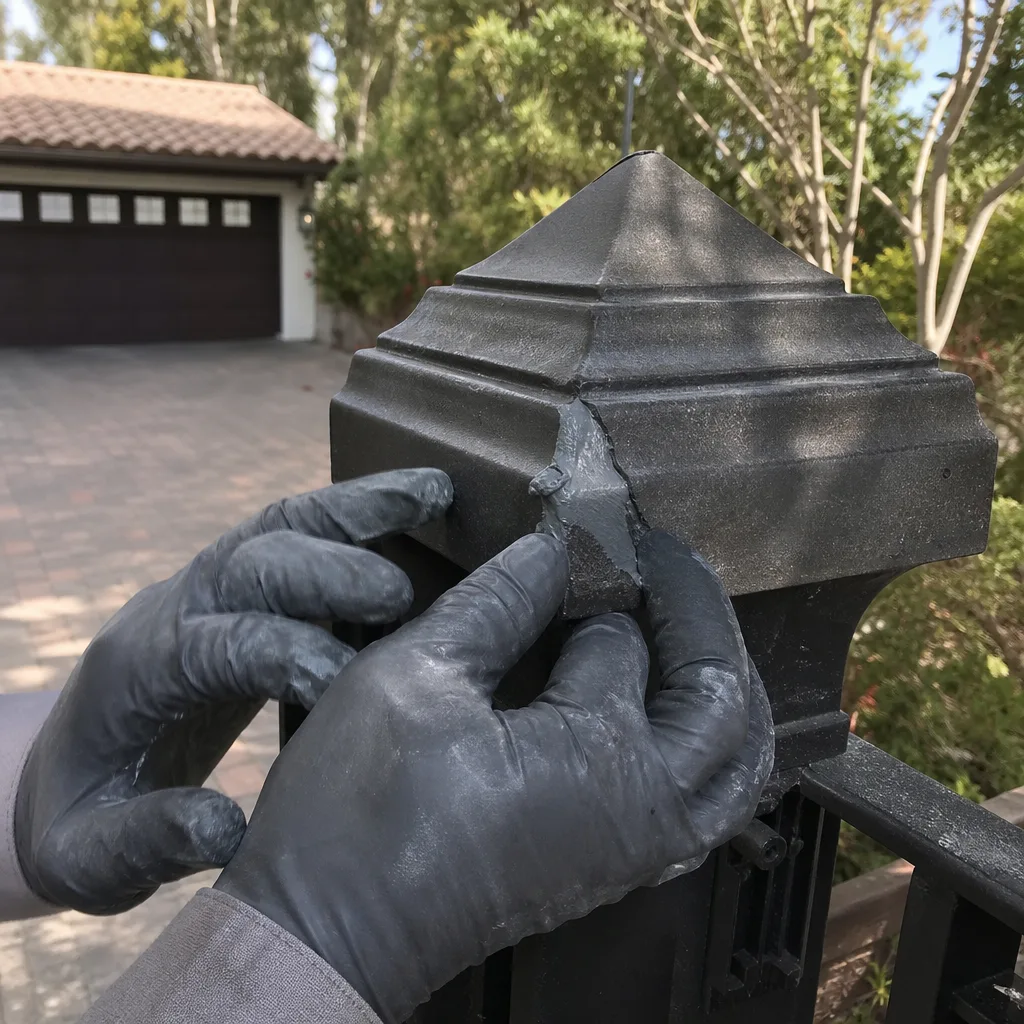
“Gate drift” is the term for a gate that slowly creeps or settles after it has stopped, rather than holding position. A swing gate might drift open or closed by a few inches. A slide gate might roll backward an inch or two after each cycle. The symptom looks identical to a homeowner, but the failure is completely different depending on gate type, and treating the wrong one means paying for the same symptom twice.
On a swing gate, drift is almost always a hydraulic issue. If the openers on the property are hydraulic, like many FAAC and BFT models, the piston or cylinder that holds the gate closed contains a bypass valve. When that valve wears, hydraulic fluid leaks past it internally, and the gate can’t maintain pressure. The gate creeps until the internal pressure equalizes. The repair is a valve or cylinder seal replacement, typically $180-$320 depending on the model. Some older hydraulic operators are no longer worth repairing, and we’ll tell you that directly rather than replacing seals on a unit that also needs a new housing. We price that conversation in writing before any work begins.
On a slide gate, drift has a different cause. Slide-gate operators hold position through a brake, and when the brake pad wears, the gate rolls back under its own weight or under wind load. The brake is a serviceable part on most professional operators, but the repair requires removing the operator housing and re-tensioning or replacing the pad. Brake service runs $150-$250. On some higher-end commercial-style operators used on residential properties in Chatsworth’s newer developments, the brake is electronic and the fix is a control-board parameter adjustment, which is a $120-$180 service call.
The important distinction here is sequence. If you have a hydraulic swing gate and a technician quotes you a slide-gate-style gear replacement, they’re about to solve a problem you don’t have. If you have a slide gate and someone quotes hydraulic work, the same applies. This is one of the reasons we always perform an operator identification before any quote, and why our written scope includes the specific operator model and serial number we’ll be working on. For a detailed walkthrough of selecting the right professional, see our guide on How to Hire a Gate Repair Contractor in Chatsworth: A Step-by-Step Guide.
Motor Warning Sign or Board Warning Sign: How to Tell Without Opening the Enclosure
A warning sign can originate from the motor, the control board, or something mechanical between them. Knowing which one saves you from purchasing a board replacement when the problem was a $40 capacitor, and from paying for a motor swap when the board was the issue all along.
Here’s how to distinguish them from the outside of the gate, with the enclosure closed.
If the gate moves but sounds weak, slow, or strained, the motor is the likely candidate, but the capacitor is the more common culprit. When a capacitor fails, the motor doesn’t start at full torque, and the initial movement is labored. A board fault would not produce labored movement; boards either command movement or they don’t. Labored movement that eventually completes suggests motor-side electrical supply, not control-board logic. In our experience, about 60% of “bad motors” called in Chatsworth are actually failing capacitors or chafed supply wires. Those are $100-$200 repairs, not $700 replacements.
If the gate sometimes works and sometimes doesn’t, with no pattern, the board is now the prime suspect. Intermittent behavior that doesn’t correlate with temperature, time of day, or recent weather points to relay degradation on the control board. When a relay begins to micro-weld, it sometimes closes and sometimes doesn’t. The clicks still happen, but the circuit doesn’t complete. The tell is inconsistency with no environmental correlation. Board-level intermittent faults typically warrant board replacement, which runs $300-$600 installed depending on the brand and whether the board is still manufactured. We service nine brands, so if your property has a Linear or BFT board that’s been discontinued, we can usually source a compatible replacement or an upgraded retrofit without recommending an entire operator replacement.
If the gate stops at the exact same spot every time, that’s mechanical or limit-switch, not board. A board fault wouldn’t create a consistent physical stopping point. A bent track section, a worn section of rack gear, or a limit switch that’s been knocked out of position creates exactly this pattern. The fix is $95-$250 depending on the component. And in Chatsworth, where some driveways run long on a slope, a gate that stops at the same spot, every time, on warm afternoons only, can indicate thermal expansion in the track or rack causing a bind point that releases when temperatures drop. We record ambient temperature on every service log for this reason.
When a Warning Sign Is a UL 325 Safety Code Issue, Not Just a Mechanical One
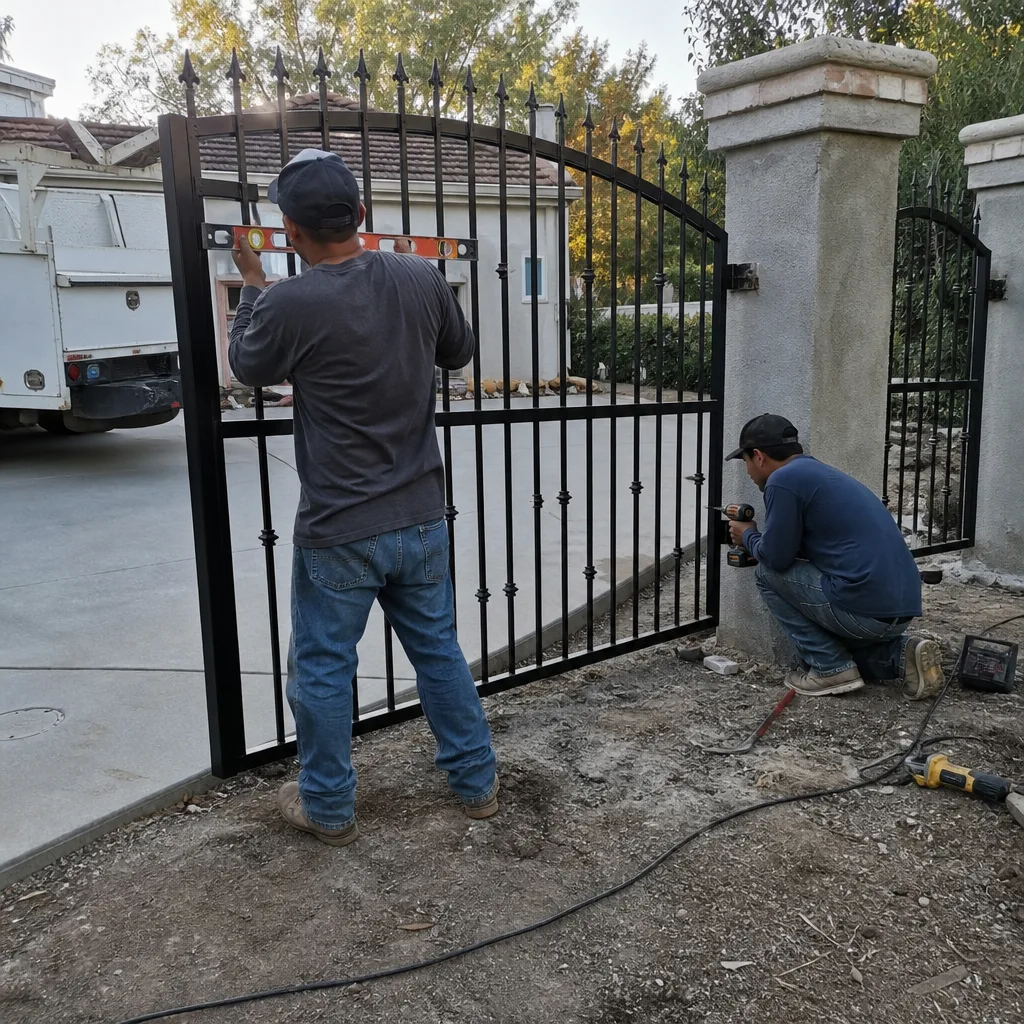
UL 325 is the federal safety standard for automated gates. It requires that gate operators detect obstructions and reverse rather than crush, and it mandates the photo-eyes and edge sensors that prevent entrapment. When a gate is not compliant, and someone is injured, the legal and financial liability shifts. That’s a fact it’s better to know before the gate hurts someone, not after.
Here’s what to know. If your gate exhibits any of these specific behaviors, the issue is potentially a UL 325 compliance failure, and the priority should be higher than it is for a mechanical noise:
- A gate that reverses but only after significant pressure: The obstruction sensor’s force threshold is set too high, meaning a person or pet gets pinched before the gate backs off. UL 325 sets maximum force limits; exceeding them is a code failure, not a tuning preference.
- A gate that does not reverse at all when a child’s bike is in the path: The photo-eye is nonfunctional or aligned incorrectly. This is the most common direct violation we correct on Chatsworth properties, especially on older installations predating the current standard.
- A swing gate that moves with no edge sensor or contact strip on the close side: Depending on the installation date, the gate may be grandfathered, but adding an edge sensor is a recommended upgrade, and on some property transfers it’s required before close of escrow.
- A gate that operates despite both photo-eyes being deliberately bypassed or covered: This is sometimes done by a previous owner or a property manager to fix a false-obstruction nuisance. It also removes the primary entrapment protection. If you purchase a home in Chatsworth with a bypassed photo-eye circuit, the seller’s disclosure should have caught it, but it often doesn’t.
None of these require you to open the control enclosure. They’re observable from outside. And they’re the category where calling a professional is not optional. UL 325 compliance involves specific force measurements with a pressure gauge and re-setting the current limiter to a tested value. We perform that procedure as part of any gate safety inspection, and the readings are documented on the photo log you receive.
The distinction matters because once a UL 325 violation exists and the property owner is aware of it, liability for an injury shifts from the original installer to the current owner in most civil claims. That’s a conversation no homeowner wants to learn about after the fact. If your gate is showing any of the behaviors above, the call to us at (661) 495-2023 is the cheapest insurance you’ll buy on the property this year.
What Each Warning Sign Costs When Caught Early vs. Late
The entire point of recognizing warning signs is avoiding the late-stage invoice. Here’s what that difference looks like in dollars for the most common warning signs we see in Chatsworth. These are the same ranges we quote in writing before any work starts, under Haven Standard Clause 1.
- Hesitation before movement: Early: photo-eye realignment, $85-$140. Late: control board replacement for fault-code lockout, $300-$600.
- Grinding (metal-on-metal): Early: drive gear replacement, $45-$180 part plus service. Late: stripped gear and scored worm drive, full operator replacement, $800-$1,500.
- Chain slap: Early: tension and lubrication, $95-$165. Late: chain replacement and re-tension, $250-$400.
- Roller squeal: Early: bearing lubrication or single roller replacement, $65-$120. Late: failed bearing allowed to run, wheel axle damage, track edge wear, $300-$600.
- Gate drift (swing, hydraulic): Early: bypass valve or seal replacement, $180-$320. Late: hydraulic cylinder failure, housing damage, $500-$900.
- Gate drift (slide, brake): Early: brake pad replacement, $150-$250. Late: brake caliper / rotor damage, gear stress from uncontrolled deceleration, $400-$700.
- Unexpected reversal: Early: photo-eye alignment or sensitivity adjustment, $85-$140. Late: if ignored and force threshold is also high, UL 325 non-compliance creates liability, and repair plus safety re-certification runs $200-$400.
- No response: Early: GFCI reset, transformer diagnosis, $85-$130. Late: power surge takes out board and transformer together, $350-$800.
These numbers are specific to the Chatsworth market, where the cost of parts and qualified labor reflects Los Angeles metro pricing. If you get a quote that’s dramatically lower, ask what’s being left out. If you get one dramatically higher, ask them to itemize it. We’ll give you a second opinion on any written estimate from another company at no charge, which is a small point of pride for us and a way of keeping our own discipline honest.
For any repair on a gate motor or operator, see our Gate Motor & Opener in Chatsworth page for brand-specific repair notes. And if this diagnostic guide has you thinking the whole system has outlived its usefulness, our Gate Installation in Chatsworth page covers new builds and full replacements, priced the same way: in writing first.
Common Mistakes to Avoid
- Lubricating a grinding gate with spray lubricant. The grinding is metal wear, not a dust squeak. Adding lubricant doesn’t restore lost tooth material, and in some cases the added oil traps abrasive metal particles against the remaining gear teeth, accelerating wear. We’ve disassembled gates in Chatsworth where an entire rack had been worn smooth within months of the first spray-lube application.
- Resetting the breaker without asking why it tripped. A tripped GFCI or breaker on a gate circuit means the operator pulled more current than the circuit allows. That’s a symptom, not the problem. Repeatedly resetting it can damage the control board’s power supply and mask the underlying short until the board fails completely.
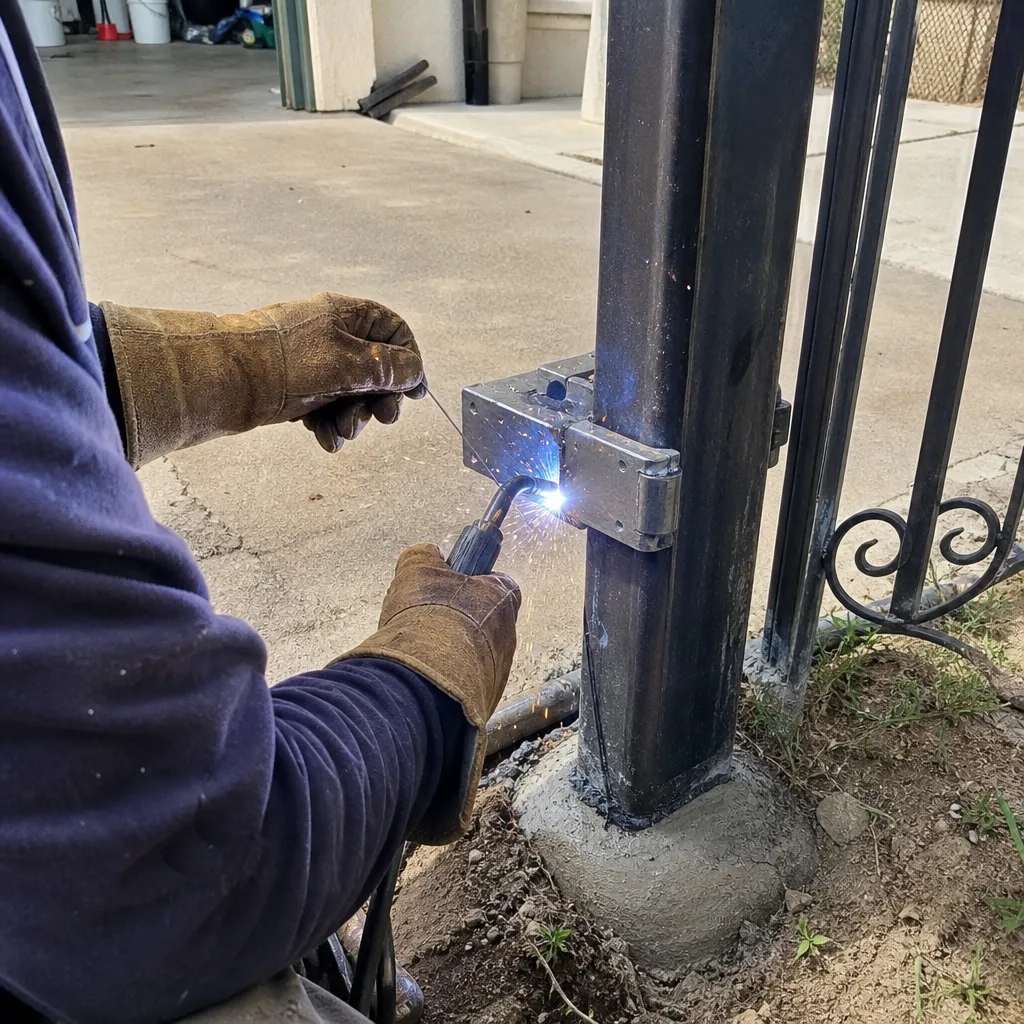
- Adjusting photo-eyes by eye instead of with a level and a meter. Photo-eye alignment tolerance is exact, and in Chatsworth where some gates sit on posts that settle slightly each year in the clay soil, a photo-eye can be visibly straight while being functionally misaligned. The board reads alignment, not appearance.
- Buying a replacement motor from a third-party marketplace and installing it yourself. Some residential operators use proprietary motor-to-board communication, and a non-matched motor can damage the board on first power-up. High-tension springs and cables on gate systems carry serious stored energy, and the same caution applies here as it does to garage door springs: if you’re not trained, don’t work on loaded components.
- Deferring a safety issue because the gate still “works”. A gate that reverses under pressure, or doesn’t reverse at all, is working right up until it isn’t. UL 325 compliance is not a comfort preference, it’s a legal and physical safety floor.
- Hiring a general handyperson instead of a gate specialist to save $50. Gates have both mechanical and electronic subsystems, and the diagnostic path we’ve laid out in this guide is exactly the part a generalist skips. By the time a handyperson has replaced a part that didn’t need replacing, the real fault has usually caused a second failure, and the total cost exceeds what a specialist would have charged in the first place.
- Deleting the photo log or refusing the written quote. Every repair we complete comes with a written record of what was found, what was set, and what was installed. If that documentation is discarded, the next technician starts from zero. The record is what prevents paying twice to rediscover the same problem.
When to Call a Professional
Some warning signs are informational; some are emergency-priority. Call a true gate repair company in Chatsworth if your gate exhibits any of the following: grinding metal-on-metal noise that has lasted more than a week, any UL 325 non-compliance symptom (no reversal, reversal only under force, bypassed photo-eyes), a gate that has stopped responding entirely, or any symptom where you’ve already paid someone to fix it once and it returned. The last one is the most expensive pattern we see. Vance Gate Repair Chatsworth home service area covers the city and surrounding communities. We offer free estimates in Chatsworth. Call (661) 495-2023 and a live person answers at any hour. The price is written before work begins, and every visit ends with a photo log of exactly what was done.
Frequently Asked Questions
Gate repair in Chatsworth typically ranges from $85 for a photo-eye realignment or minor lubrication to $1,500 for a full operator replacement when a drive gear has stripped and damaged the worm drive. Most residential repairs fall between $120 and $400. We quote a flat, written price before starting any work, so the number you see on the estimate is the number you pay, and no surprise invoice appears at the end. Call (661) 495-2023 for an exact quote on your specific symptom and gate operator.
Yes, in most cases. We maintain same-day availability for non-responsive gates and safety-related failures in Chatsworth, and a live person answers the phone 24 hours a day, seven days a week. Emergency calls are prioritized based on whether the gate is creating a security exposure or a vehicle entrapment situation. Call (661) 495-2023 to get a technician scheduled and on the way.
A full operator replacement includes the new motor and control board assembly, mounting hardware, limit switch setup and travel adjustment, photo-eye alignment and force testing to UL 325, and a written photo log of every setting. Depending on your existing setup, it may also include new safety edges or edge sensor wiring. We service nine brands including FAAC, BFT, Linear, and Viking, so we can often match the replacement to your existing arm bracket and mount, reducing labor cost. The written quote lists every part and line item before we begin.
Yes. New gate installations in Chatsworth, including trenching for low-voltage power and data, photo-eye mounting, edge sensor installation, and final UL 325 compliance testing, are part of the scope. The power run for a gate operator is typically 120-volt from the panel to the operator location, plus low-voltage wiring for the photo-eyes and keypad. We quote the entire installation as a written scope, and you approve it before any trenching or mounting begins. See our Gate Installation in Chatsworth page for details on materials and operator options.
Half-cycle reversal is almost always caused by a photo-eye that is marginally aligned, so the board reads it as clear during the first portion of travel but obstructed once the gate’s own frame vibrates the beam out of position. It can also be caused by a sensitivity setting on the obstruction current sensor that is too tight. Both are corrected in one service call. If the problem repeats after an alignment, the photo-eye mount itself is likely loose or the board’s edge-sensor input is reading a phantom signal. We trace the exact cause with the photo log from your previous visit.
That depends on the operator model, the condition of the mechanical structure, and whether parts are still available. We repair gates that other companies replace, including older FAAC, BFT, and Linear operators that work fine but need a specific seal, gear, or board. If replacement is the better financial call, we’ll show you the math in writing and recommend the option that costs less over five years, not the one that costs you less today. The evaluation is free, and we’ll leave you the written findings either way.
The Bottom Line
A gate that hesitates, grinds, drifts, or reverses erratically is not having a vague “issue.” It is reporting a specific component failure, and each warning sign has a cost curve that gets steeper the longer it’s ignored. In Chatsworth, where heat and clay soil create predictable wear patterns on gates, recognizing these signs early is the difference between a $100 service call and a $1,200 replacement. Watch the gate, learn its normal sound and speed, and make the records you receive part of how you maintain the property. Our Seasonal Gate Repair Care for Chatsworth: Year-Round Homeowner’s Guide can help you build that routine. When a warning sign appears, get it diagnosed in writing before the gate makes the decision for you.
Written by Adrian Vance, Owner at Vance Gate Repair Chatsworth, serving Chatsworth since 2014.