
Last updated September 20, 2026
Free on-site gate assessment - hinges, posts, and your LiftMaster or Nice gate operator checked before anything is quoted
The assessment is free and the quote is the invoice.
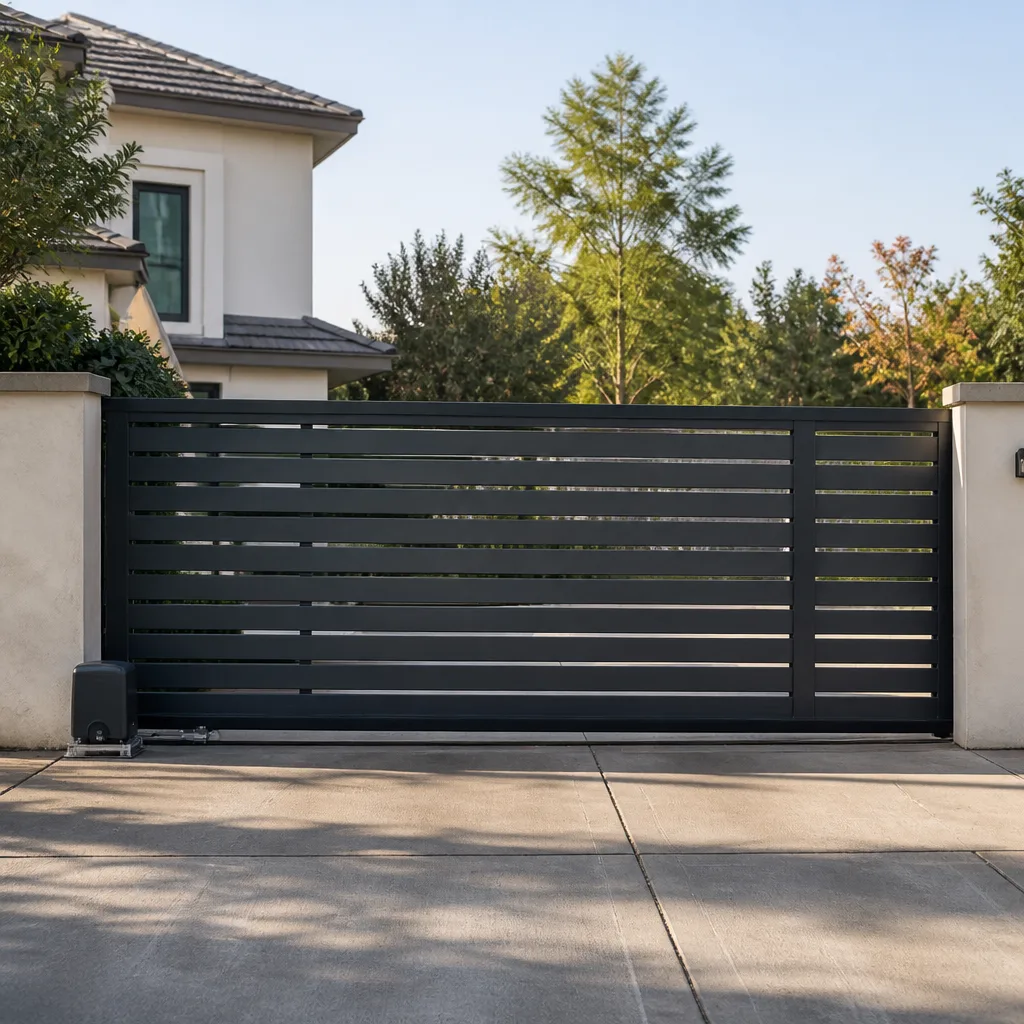
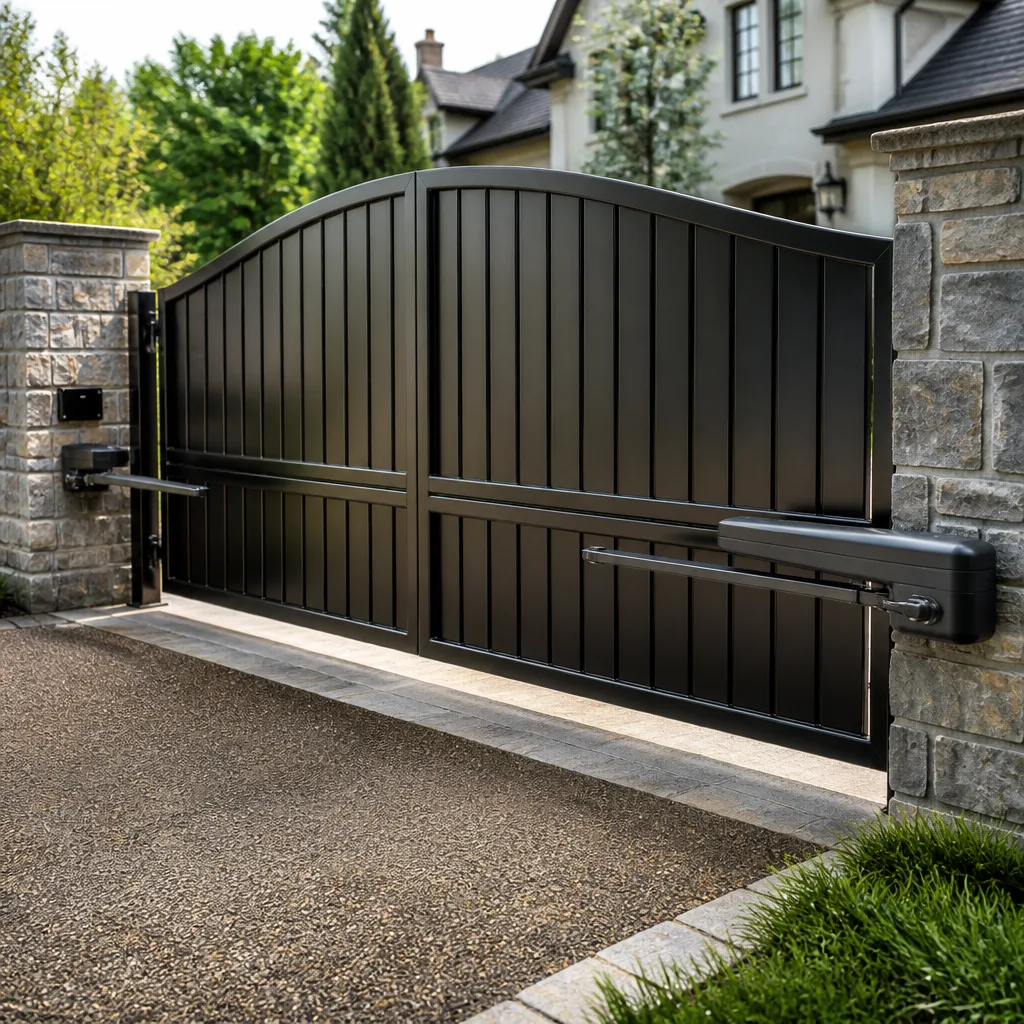
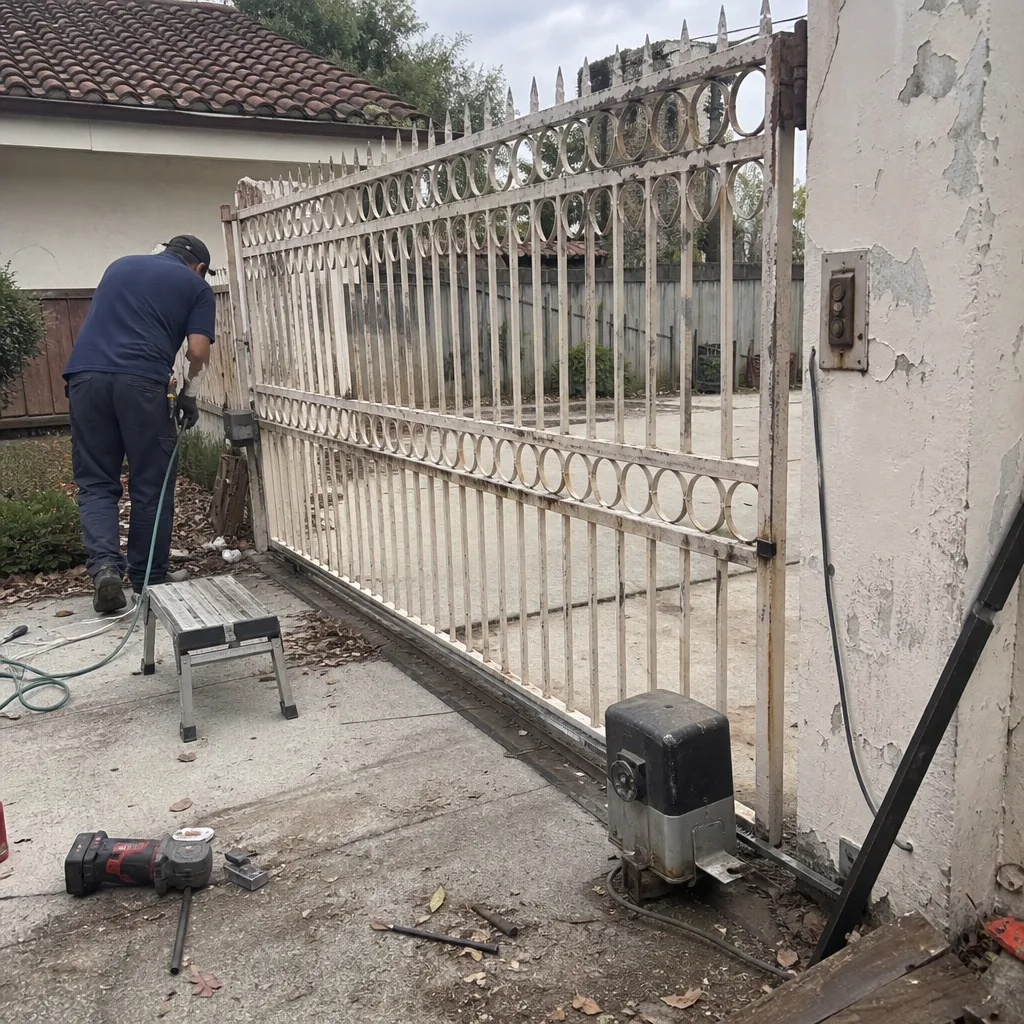 Before
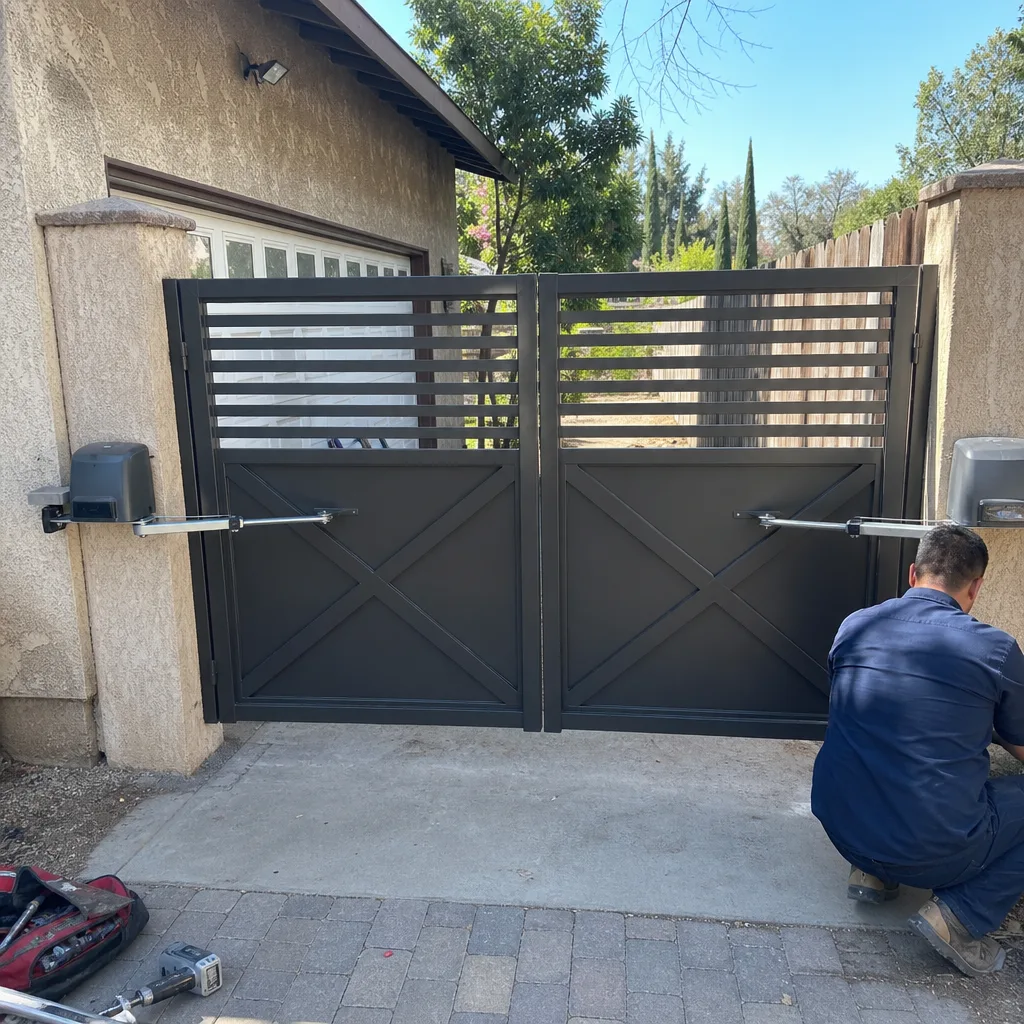 After
After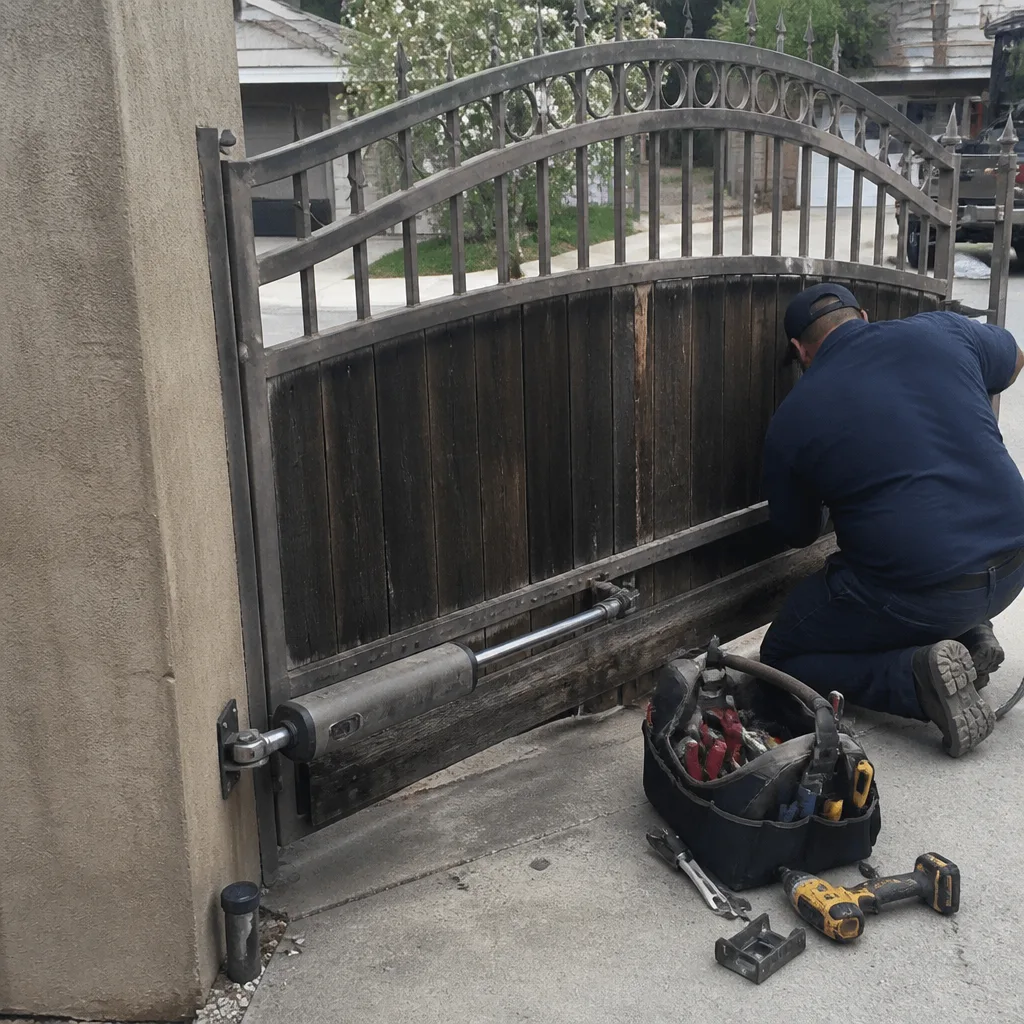 Before
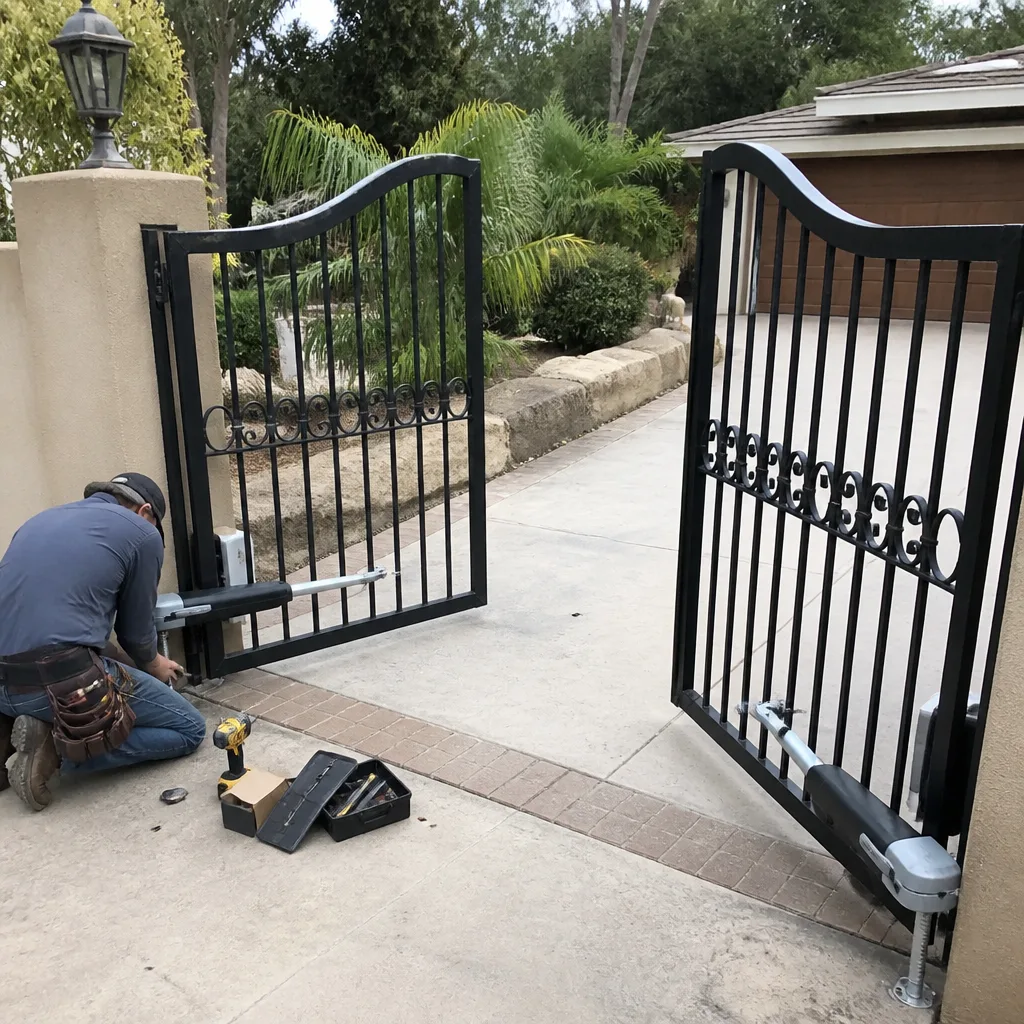 After
After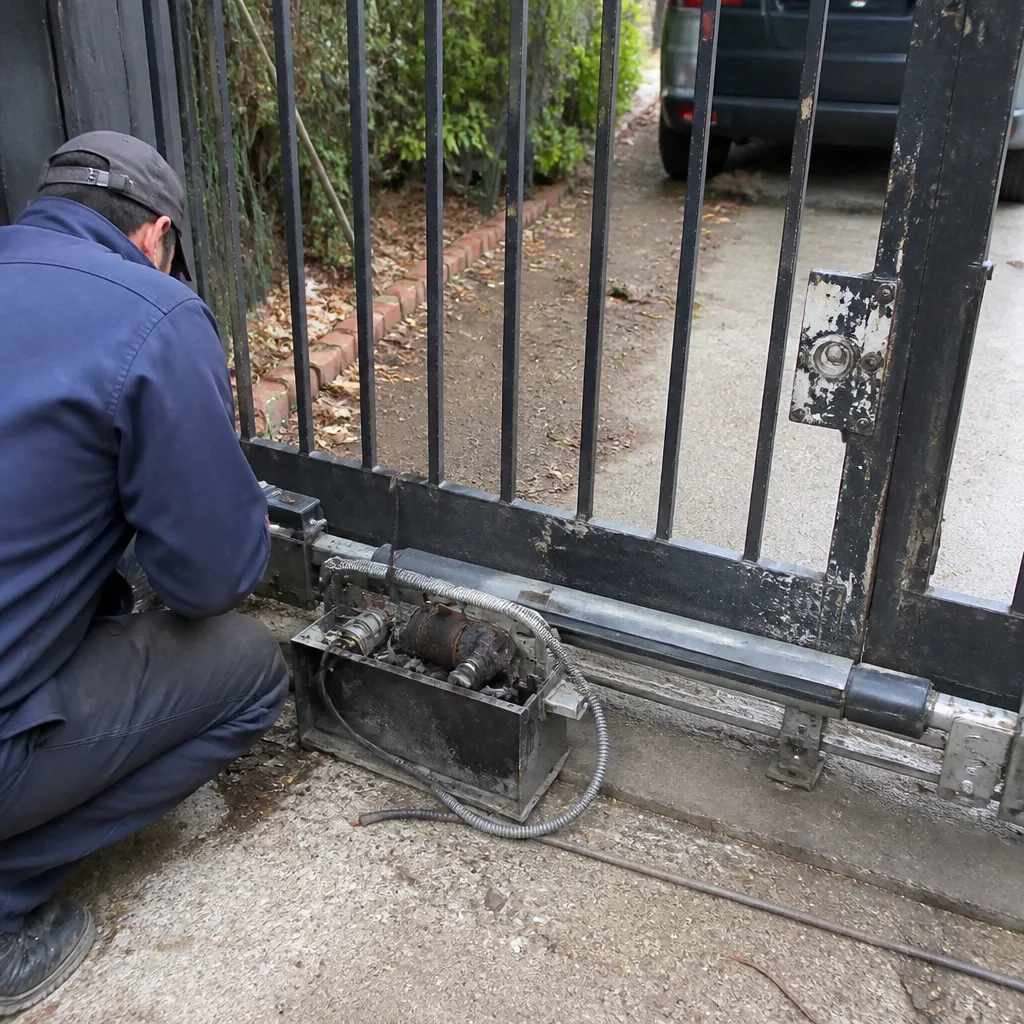 Before
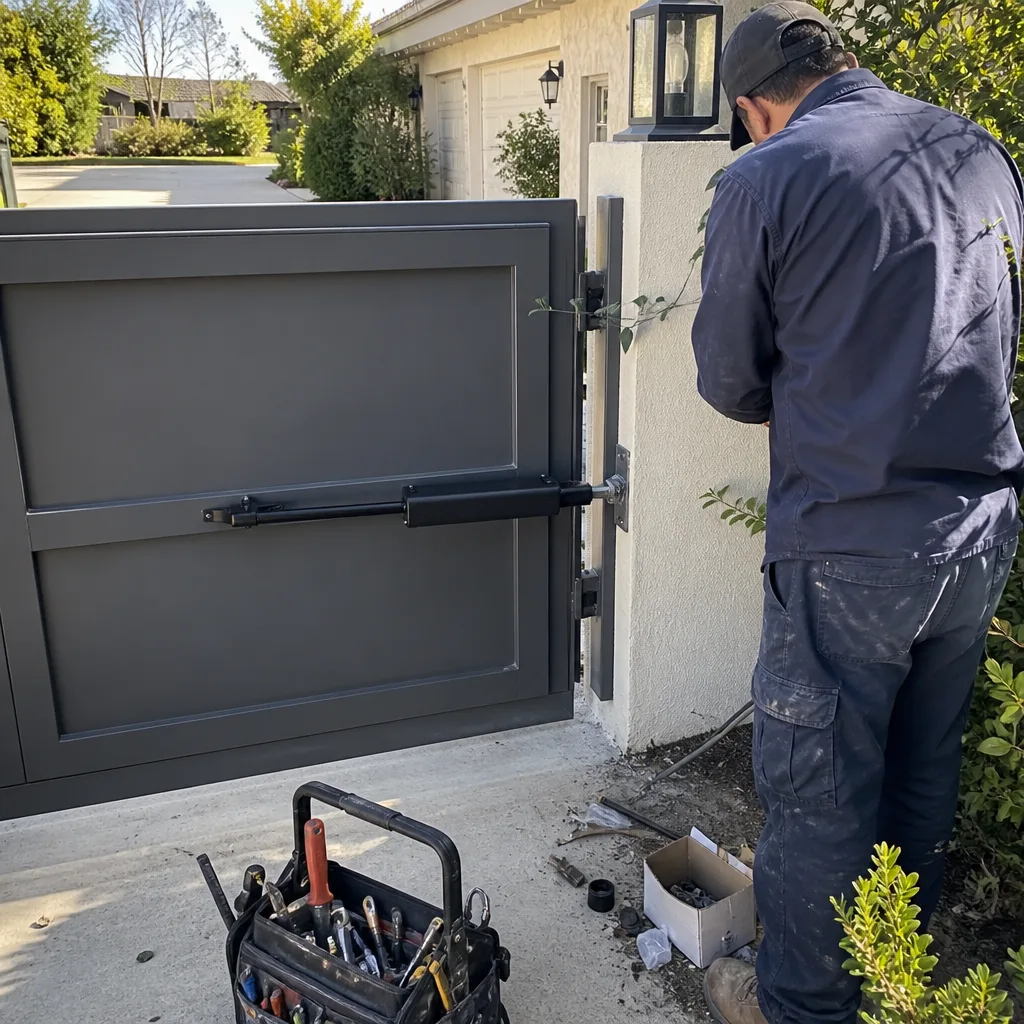 After
AfterGate Repair Permits, Codes & Inspections in CA: What You Need to Know
Here’s the statistic nobody puts in a brochure: a meaningful share of the gate operator swap-outs we get called to inspect in Chatsworth were installed without a permit, and the homeowner never knew. Usually the contractor just didn’t want to wait for plan review, so they framed it as a simple repair, collected the check, and drove off. Two years later the seller’s disclosure form asks the question and the whole transaction wobbles. This guide names the specific triggers, the code sections, the inspection checklist, and what your real exposure is if the paperwork was never pulled.
Quick Answer
Gate repairs like replacing a hinge, circuit board, photo-eye, or limit switch generally do not require a permit in Los Angeles County. The line is crossed when the work becomes an alteration: swapping the operator for a different type or voltage class, adding a new operator where none existed, running new power, or pouring new concrete footings that change the gate’s structural path. The inspector’s core concern on automated gates is UL 325 entrapment protection, and unpermitted operator swaps typically surface at resale or after a liability claim, not at the time of the work.
Table of Contents
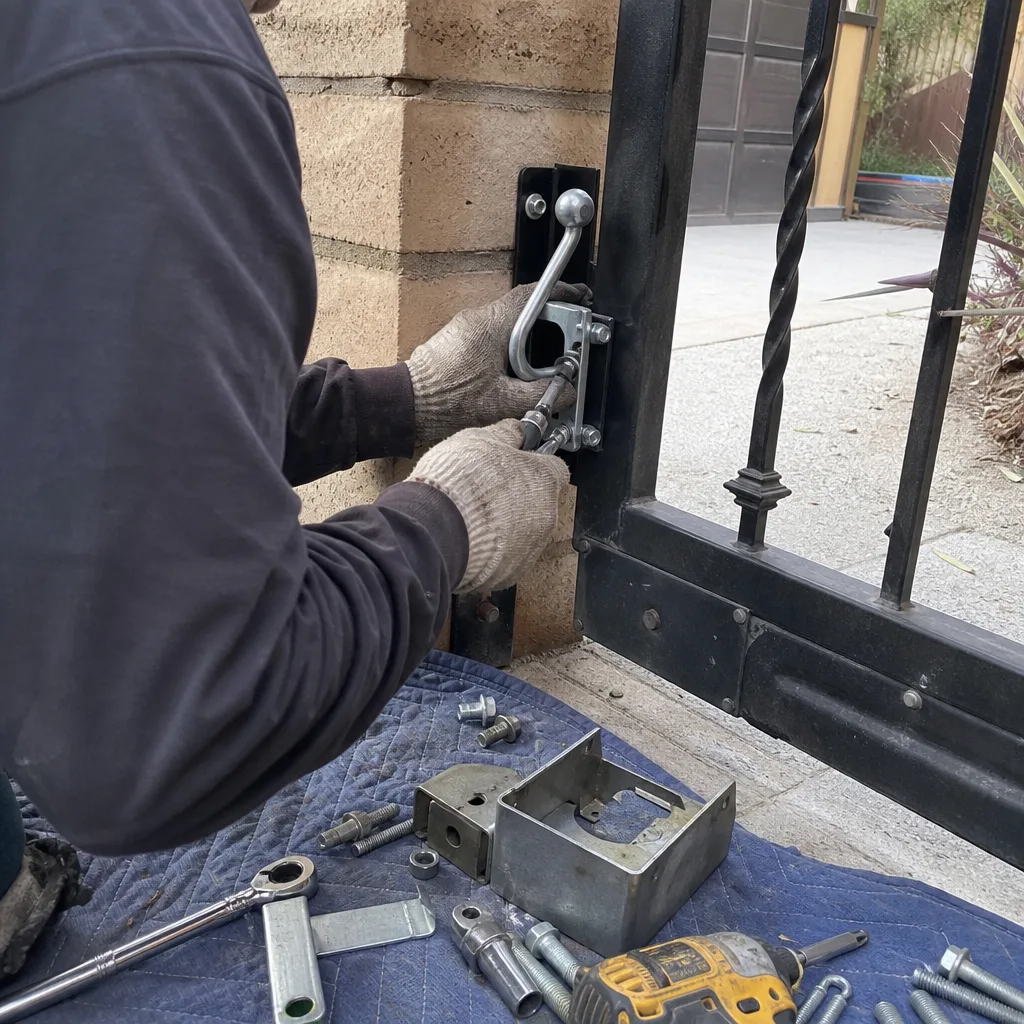
- Repair vs. Alteration: Where L.A. County Draws the Line
- What Actually Triggers a Permit on a Gate Job
- UL 325 Compliance: What the Inspector Checks on an Automated Gate
- HOA Architectural Review vs. County Permit: Two Parallel Tracks
- What Unpermitted Gate Work Does to Your Resale and Insurance
- Pulling the Permit Yourself vs. Making the Contractor Pull It
- Common Mistakes to Avoid
- When to Call a Professional
- Frequently Asked Questions
- The Bottom Line
BeforeAfterRepair vs. Alteration: Where L.A. County Draws the Line
The California Building Code treats a repair and an alteration as two different things, and the distinction controls whether a permit is required. A repair restores something to its original, approved condition using like-for-like parts. An alteration changes the system’s configuration, capacity, or structural behavior, even slightly. Los Angeles County building departments apply this same logic to gate work, and the three most common jobs we see around Chatsworth fall on opposite sides of the line.
A like-for-like circuit board swap on a LiftMaster opener: repair, no permit. Replacing a bent gate hinge with the same size and pattern: repair, no permit. Realigning a photo-eye and resetting a limit switch: repair, no permit. But change the voltage class from 120V to a low-voltage solar operator, and you’ve altered the electrical configuration. Replace a sliding gate’s steel track with a different profile and pour new concrete beneath it, and you’ve altered the structural assembly. Add a gate opener to a manual gate that never had one, and you’ve created a new automated installation, which is a permit trigger in every jurisdiction we work with.
One practical note for Chatsworth homeowners: the permit counter is not asking for your maintenance receipts. Nobody expects a homeowner to pull a permit for a gear rack adjustment or a battery replacement. The rule exists to catch the jobs that change what the gate is, not the jobs that keep it working as it was originally built. When a contractor tells you “this is just a repair, no permit needed,” the honest test is whether they are putting the same thing back or installing something different.
What Actually Triggers a Permit on a Gate Job
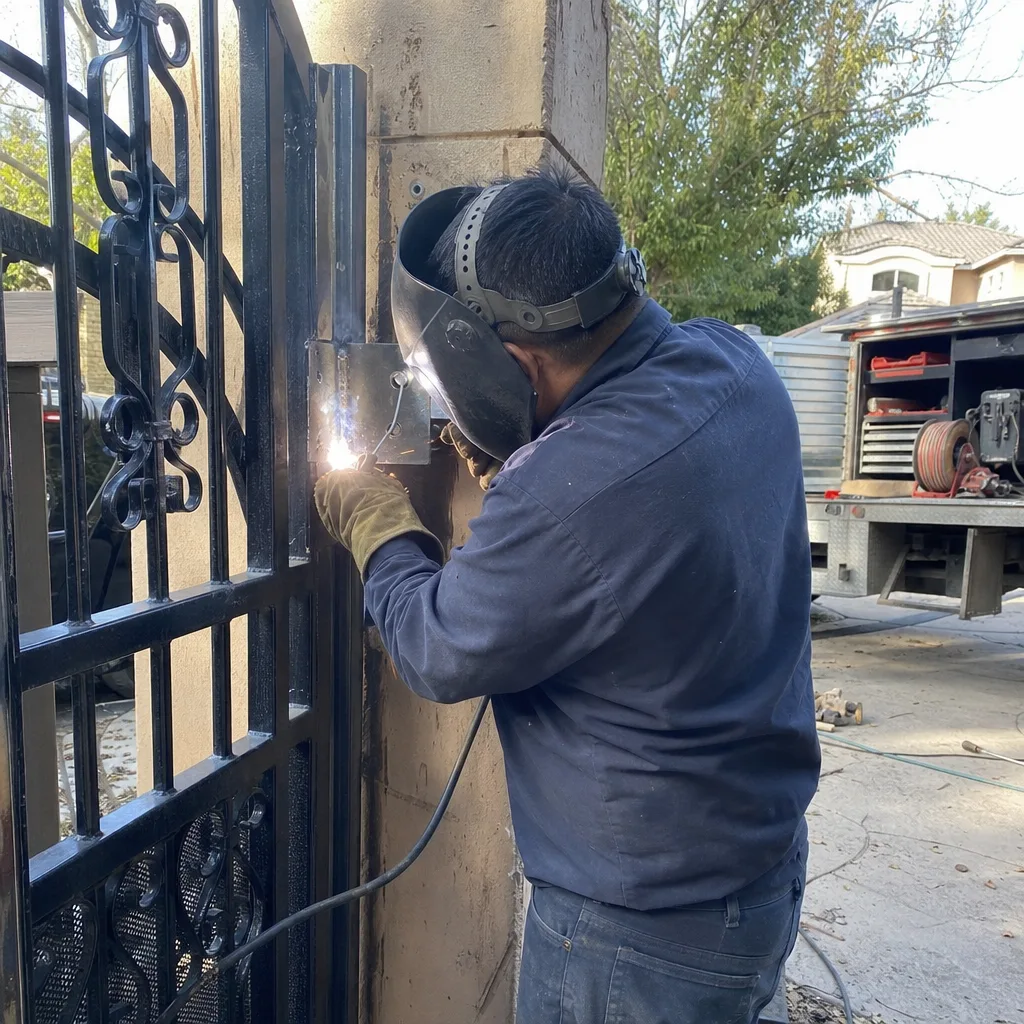
Rather than think in vague categories, it helps to name the specific job types (see our Gate Repair Warning Signs: A Chatsworth Homeowner’s Reference Guide). These are the ones where a Chatsworth homeowner should insist on seeing a permit number before the work starts, because these are the ones that fail a resale inspection when the paper trail is missing.
- Operator replacement with a different type or class. Swapping a linear arm opener for a ram-style opener, changing from 120V to solar or vice versa, or replacing a small residential opener with a commercial-duty model all count as alterations. The electrical load changes, the mounting pattern changes, and the code that governs entrapment protection may change with it.
- New operator installation on a previously manual gate. This is a new automated gate under code, not an upgrade. It triggers the full UL 325 review, including edge sensors, obstruction reversal, and warning signage.
- New concrete footings or a reconfigured slide track. Once you pour concrete for a new gate post or alter the track path, the structural review kicks in. This is true even if the gate itself is being reused.
- New electrical circuit run from the panel to the gate. Running new conduit and wire to feed a gate operator is electrical work under the California Electrical Code and requires its own review, often as part of the same permit.
- Gate replacement that changes the opening dimensions. If the new gate is taller, wider, or substantially heavier than the one it replaces, the wind load and hinge calculations change, and the county wants to see those numbers.
What does not trigger a permit in L.A. County: replacing a damaged hinge bracket with an identical one, swapping a photo-eye sensor, installing a new remote control receiver, replacing a gear inside the operator, welding a cracked gate frame member, or replacing a gate wheel on a sliding gate. These are maintenance items, and no permit counter we’ve dealt with in Chatsworth’s jurisdiction wants paperwork for them.
UL 325 Compliance: What the Inspector Checks on an Automated Gate
UL 325 is the safety standard for automated gate operators, and it’s the document the inspector actually has open on the clipboard during a gate permit inspection. It defines the entrapment protection requirements that every automated gate in California must meet, and most of the failures we find on older Chatsworth installations trace back to this standard being ignored during an unpermitted swap.
Here’s what the inspector is looking for, point by point:
- Obstruction reversal. The gate must reverse direction when it encounters resistance while closing. Many older openers have a mechanical clutch that wears over time, and the reversal force drifts out of calibration. The inspector will physically block the gate with a rigid object and watch it reverse within two seconds.
- External entrapment protection devices. On gates with pinch points, which include nearly all sliding gates and many swing gates, photo-eyes and/or contact edge sensors are required. The inspector will break the photo-eye beam and verify the gate stops or reverses. A misaligned beam that reads “clean” from some angles but not others is a common failure.
- Modulated closing force. The operator’s force setting must be low enough to prevent serious injury but high enough to move the gate through wind. Inspectors look for the manufacturer’s force setting data and often ask the technician to demonstrate the measurement.
- Warning signage. Every automated gate needs the UL 325 compliant placard mounted on both sides of the gate, visible from the approach. Missing or sun-faded signage is a fast fail.
- Proper grounding and bonding. The operator chassis and any metallic gate components must be bonded per the National Electrical Code. This one catches a lot of unpermitted installations where the installer never pulled a ground to the operator.
What Fails Most Often on Older Chatsworth Installations
In our experience around Chatsworth, the most common inspection failures are not exotic. They are photo-eyes wired in but mechanically misaligned, force settings cranked too high because the gate was binding, missing or illegible warning placards, and operators that were swapped from a 120V model to a low-voltage model without redoing the grounding. None of these are expensive to fix when caught early, but all of them fail a permit inspection immediately.
HOA Architectural Review vs. County Permit: Two Parallel Tracks
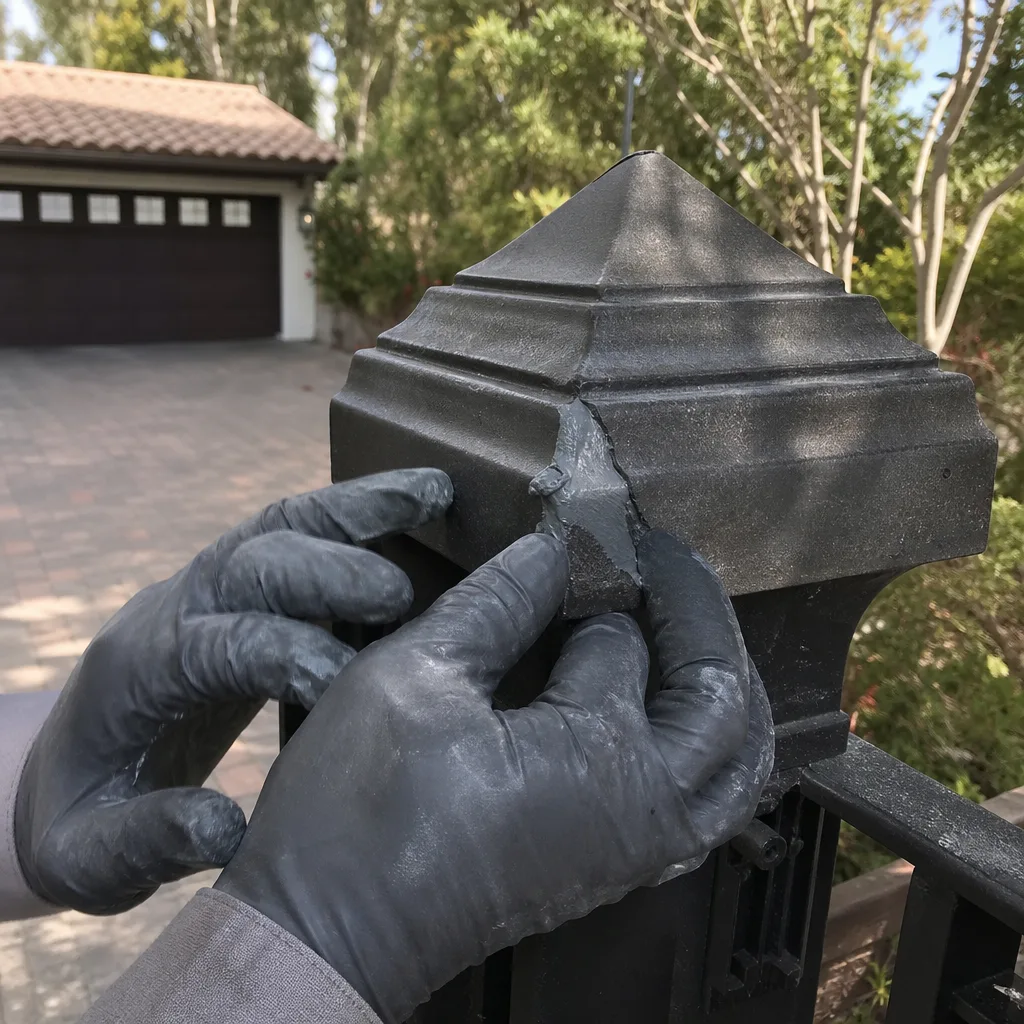
Many Chatsworth homes sit in HOAs with architectural review committees, and homeowners often assume that HOA approval covers the legal requirement. It does not. The HOA reviews aesthetics, setback, height, and neighborhood consistency. The county reviews life safety, electrical compliance, and structural adequacy. Neither body checks what the other checks, and skipping one does not excuse the other.
A gate installation can pass HOA architectural review and still be structurally or electrically noncompliant, or vice versa. We’ve seen HOAs approve a gate height that the county later flagged for wind load, and we’ve seen the county sign off on a design the HOA had never reviewed. The safe sequence is to obtain HOA approval first, since it’s typically the slower process, then pull the county permit with the HOA’s sign-off attached so both records reference the same design.
When a homeowner skips the HOA review but pulls a county permit anyway, the HOA can still demand removal or modification after the fact. Their enforcement power is contractual, not statutory, and it works. When a homeowner gets HOA approval but skips the county permit, the county’s interest typically goes dormant until a complaint is filed, a property is sold, or an insurance claim is opened. Neither shortcut is worth it.
What Unpermitted Gate Work Does to Your Resale and Insurance
An unpermitted gate operator installation in Chatsworth does not announce itself. It sits quietly for years. Then one of two things happens. Either you sell the house, or the gate strikes a person or a vehicle and the insurance company opens a file.
At resale, California’s Real Estate Transfer Disclosure Statement specifically asks the seller to disclose any work performed without a building permit. A seller who answers truthfully triggers a repair negotiation or a price reduction. A seller who answers falsely has committed disclosure fraud, which carries liability after close of escrow. A listing agent who becomes aware of unpermitted work and does not address it has their own exposure. The gate operator that seemed like a money-saver at the time becomes a transaction liability that costs more than the permit would have.
On the insurance side, if an automated gate strikes a vehicle or a person, the carrier will request the permit history during the liability investigation. An unpermitted installation complicates coverage and can lead to a reservation of rights letter while the carrier sorts out whether the claim is excluded. Some policies exclude injury arising from unpermitted work outright. Even when coverage holds, the homeowner is now negotiating a bodily injury or property damage claim from a weaker position because the work was never inspected.
The permit is not just paperwork. It is the document that proves the installation met code on the day it was completed, and that proof is what protects the homeowner when something goes wrong years later.
Pulling the Permit Yourself vs. Making the Contractor Pull It
A homeowner in Los Angeles County may pull their own permit for work on their own property, including gate alterations. Some choose to do this because it keeps them in control of the process. The tradeoff is that the permit holder is the party the county holds responsible for the work meeting code.
When the contractor pulls the permit, the contractor’s name, license, and bond are attached to the permit record. If the installation fails inspection, the contractor must resolve it before the permit closes. If the work fails structurally or electrically years later, there is a documented permit trail back to the licensed contractor who performed it. This is the arrangement we recommend on automated gate work, because UL 325 compliance is not a homeowner-diagnosable condition (learn How to Hire a Gate Repair Contractor in Chatsworth: A Step-by-Step Guide).
When the homeowner pulls the permit, the homeowner becomes the responsible party. The contractor is working under the homeowner’s permit, and if the work fails inspection, the county pursues the permit holder. The homeowner can hire a more qualified contractor to fix it, but the permit record names the homeowner as the party accountable. This arrangement sometimes saves a few hundred dollars. It is a poor fit for work involving entrapment protection, electrical circuits, or structural modifications.
The pragmatic position: if you are painting the gate or replacing a picket, pull your own permit if you want to. If the job involves the operator, the power, or the footings, the contractor should hold the permit. A contractor who does not want the permit in their name is telling you something about the quality of record they intend to leave behind.
Common Mistakes to Avoid
- Accepting “it’s just a repair” without asking what part is changing. A new operator of a different class is an alteration, not a repair. Ask whether the replacement is identical to the original, and write the answer down.
- Assuming HOA approval covers the county requirement. These are parallel processes. HOA sign-off does not close the permit record, and the county does not care what the design committee approved.
- Skipping the permit to keep the sale timeline short. The unpermitted work is disclosed later, and the sale is now negotiating against you over a permit that would have cost less than a carpet allowance.
- Letting a contractor “self-certify” UL 325 compliance without an inspection. The standard requires verification, not assertion. If no inspector sees the gate, no verification exists.
- Hiring a generalist who does not work on automated gates regularly. We are called to Chatsworth gates weekly to correct installations done by fence contractors who knew gates as a side product. The motor is not a side product.
- Burying the paperwork. File the permit record, the inspection sign-off, and the photos with the house documents. The next buyer will want them, and so will your insurer.
When to Call a Professional
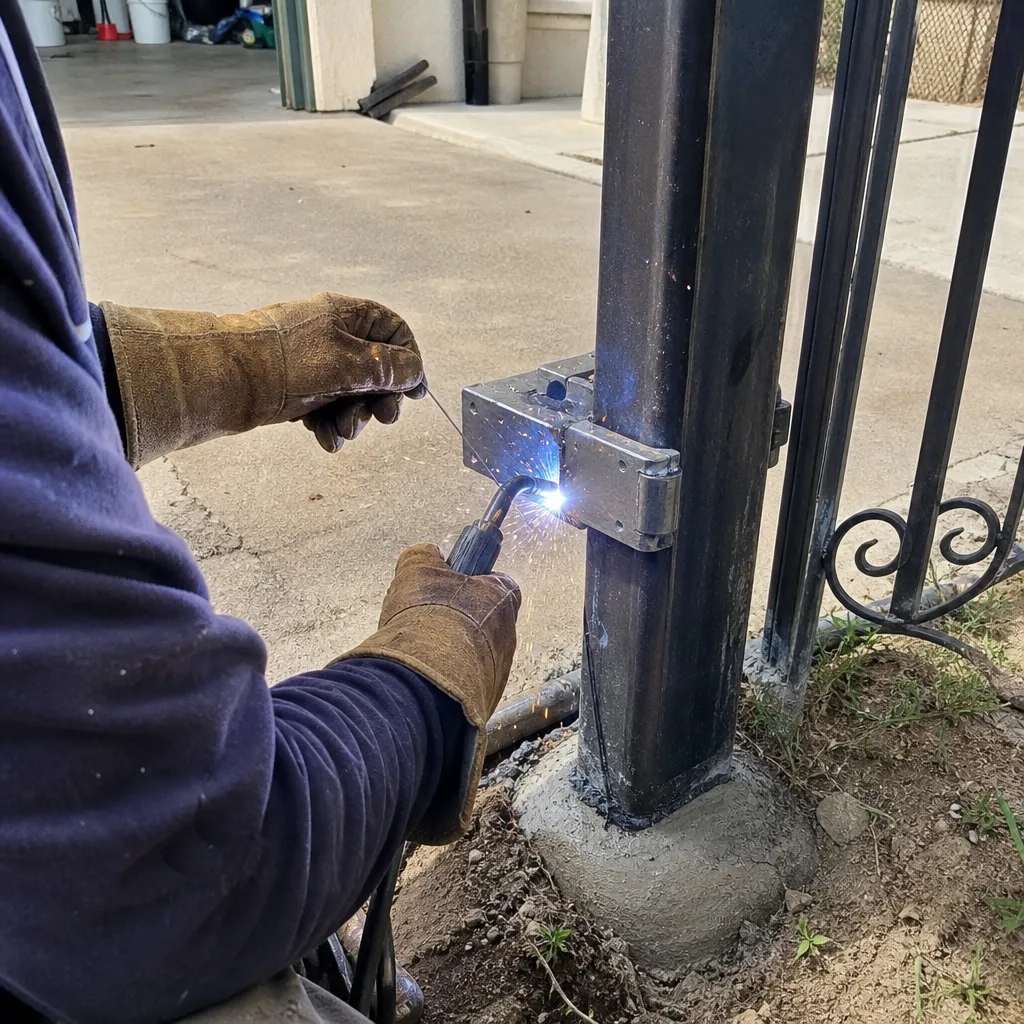
If the job involves a new operator, a voltage class change, new concrete, or a gate that will carry automation for the first time, call a gate specialist before the work is scheduled. The consultation should cover what triggers a permit, what the inspection will check, and who will hold the permit. A professional who cannot answer those three questions clearly is not ready to do the work. Vance Gate Repair Chatsworth offers free estimates in Chatsworth, with the permit scope, the written price, and the documentation plan laid out before anything is ordered. For more guides & resources, visit our blog. Call (661) 495-2023.
Frequently Asked Questions
No permit is required for like-for-like repairs such as hinge replacement, photo-eye realignment, circuit board swaps, gear replacement, or limit switch adjustment. A permit is required when the work changes the gate’s configuration, electrical class, structural path, or introduces automation that was not previously present.
Permit fees vary by the scope of the work and the county’s current fee schedule. A simple operator swap permits often runs in the low hundreds, while a full new gate installation with electrical and structural review runs higher. The permit fee is generally a small fraction of what an unpermitted installation costs at resale. Call (661) 495-2023 for guidance on what your specific job should cost to permit.
The inspection covers UL 325 entrapment protection: obstruction reversal, external entrapment devices such as photo-eyes and edge sensors, closing force calibration, warning signage, and electrical grounding and bonding. On structural jobs, the inspector also verifies footings, hinge sizing, and wind load compliance against the approved plans.
You can sell the house, but the unpermitted work must be disclosed on the Transfer Disclosure Statement. Failure to disclose creates post-sale liability and can unravel the transaction. The more common outcome is a price reduction or a repair demand negotiated during escrow, which usually costs more than pulling the permit originally would have.
No. HOA architectural review and county permitting are separate processes with different scopes. The HOA reviews appearance and neighborhood standards. The county reviews life safety, structural, and electrical compliance. Both are required where both apply, and neither substitutes for the other.
The homeowner carries the liability. The insurance carrier will investigate the claim, request the permit history, and may limit or deny coverage based on what the investigation finds. The contractor who installed the work may also be named, but the homeowner’s policy and the homeowner’s property are the first stop. For a full permit and documentation check on your existing gate in Chatsworth, call (661) 495-2023.
The Bottom Line
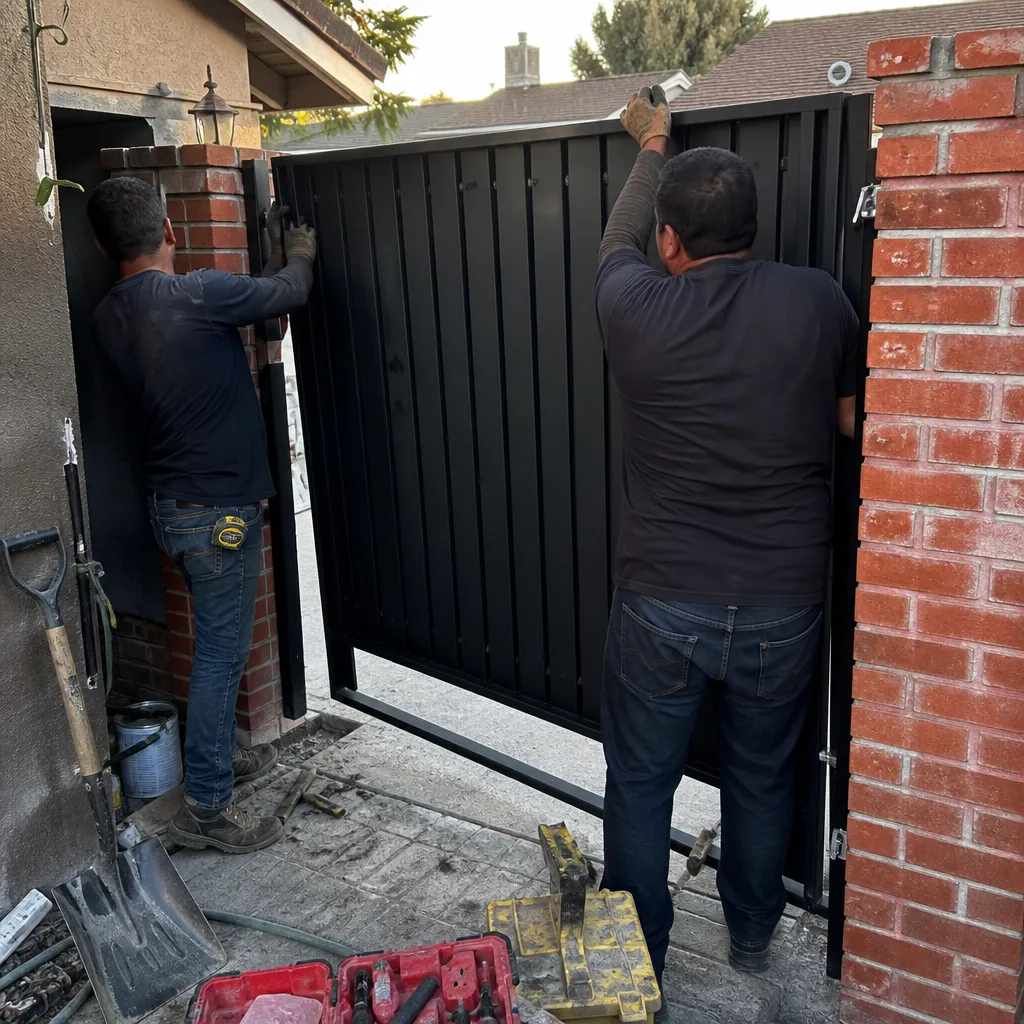
In Los Angeles County, the difference between a repair and an alteration is the whole game. Like-for-like fixes need no permit. New operators, voltage change, new automation, new footings, or a reconfigured track all need one. The inspection is a UL 325 entrapment protection review, and it is the document that protects the homeowner at resale and after an incident, not just the work done on the installation day. A permit record, an HOA sign-off, and a documentation package that includes photos and part numbers are the three files every automated gate should have. The gate that costs the most is never the one with the permit. It’s the one without it.
Written by Adrian Vance, Owner at Vance Gate Repair Chatsworth, serving Chatsworth since 2014.